The Coastal Health District of Georgia serves the counties of Bryan, Camden, Chatham, Effingham, Glynn, Liberty, Long & McIntosh

Posts by District_PIO


Eastern Equine Encephalitis Detected in Effingham Co. Horse

A horse in Effingham County has tested positive for Eastern Equine Encephalitis (EEE). EEE has also been detected in the mosquito population in western Chatham County. EEE is a mosquito-borne virus that causes swelling of the brain and is fatal in horses 70 to 90 percent of the time.

Horse and large animal owners are encouraged to vaccinate their animals against the virus and to clean out watering sources, such as buckets and troughs, every three to four days to prevent mosquitoes from breeding there. The primary mosquito that transmits EEE breeds in freshwater swamps. No human cases of disease have been reported in Georgia this year; however, humans are susceptible to EEE. All residents are also encouraged to use EPA-registered insect repellents containing 20%-30% DEET, Picaridin, IR3535, or Oil of Lemon Eucalyptus to protect themselves from mosquitoes to get rid of standing water around the home and in the yard where mosquitoes can breed.

Remember in 5Ds of mosquito bite prevention can also help prevent mosquito bites and breeding:

Dusk/Dawn – Avoid dusk and dawn activities during the summer when mosquitoes are most active.
Dress – Wear loose-fitting, long sleeved shirts and pants to reduce the amount of exposed skin.
DEET – Cover exposed skin with an insect repellent containing the DEET, which is the most effective repellent against mosquito bites.
Drain – Empty any containers holding standing water – buckets, barrels, flower pots, tarps – because they are breeding grounds for virus-carrying mosquitoes.
Doors – Make sure doors and windows are in good repair and fit tightly, and fix torn or damaged screens to keep mosquitoes out of the house.
For more information on EEE, click HERE.

Vaccinating on Time is Important for Disease Protection

Parents agree that feeding and sleep schedules are important to help keep their children healthy. The same goes for childhood immunizations. Vaccinating children on time is the best way to protect them from 14 serious and potentially deadly diseases before their second birthday.

“The recommended immunization schedule is designed to offer protection early in life,” said Dr. Candice Robinson, a pediatrician at the Centers for Disease Control and Prevention (CDC), “when babies are vulnerable and before it’s likely they will be exposed to diseases.”

Public health and medical experts base their vaccine recommendations on many factors. They study information about diseases and vaccines very carefully to decide which vaccines kids should get and when they should get them for best protection.

Although the number of vaccines a child needs in the first two years of life may seem like a lot, doctors know a great deal about the human immune system, and they know that a healthy baby’s immune system can handle getting all vaccines when they are recommended.

Dr. Robinson cautions against parents delaying vaccination. “There is no known benefit to delaying vaccination. In fact, it puts babies at risk of getting sick because they are left vulnerable to catch serious diseases during the time they are not protected by vaccines.”

When parents choose not to vaccinate or to follow a delayed schedule, children are left unprotected against diseases that still circulate in this country, like measles and whooping cough.

The United States experienced a record number of measles cases during 2014, with 667 cases from 27 states reported to CDC’s NCIRD. This was the greatest number of cases in the U.S. since measles was eliminated in 2000.  Staying on track with the immunization schedule ensures that children have the best protection against diseases like these by age 2.

Parents who are concerned about the number of shots given at one time can reduce the number given at a visit by using the flexibility built into the recommended immunization schedule. For example, the third dose of hepatitis B vaccine can be given at 6 through 18 months of age. Parents can work with their child’s health care professional to have their child get this dose at any time during that age range.

“I make sure my kids are vaccinated on time,” said Dr. Amanda Cohn, a pediatrician at CDC. “Getting children all the vaccines they need by age 2 is one of the best things parents can do to help keep their children safe and healthy.”

If you have questions about the childhood immunization schedule, talk with your child’s doctor or nurse. For more information about vaccines, go to www.cdc.gov/vaccines/parents.


Increase in West Nile Virus in Mosquitoes Prompts Precautions

Chatham County Mosquito Control reported finding West Nile Virus (WNV) in mosquitoes in midtown Savannah as well as a significant increase in WNV in the mosquito population in eastern Chatham County. This is in addition to previous activity detected in eastern and southeastern parts of the county. Residents are encouraged to remain vigilant about preventing mosquito breeding and protecting themselves from mosquito bites.

WNV is transmitted by the bite of infected mosquitoes. About 80 percent of people infected with WNV will not show any symptoms at all; however, cases can range from mild to severe. Mosquitoes that carry the West Nile Virus are more likely to bite during the evening, night, and early morning.

Chatham County Mosquito Control will continue to take steps to reduce the mosquito population but county residents also play a big role in that effort. Residents are strongly encouraged to drain, fill, or get rid of items that hold water in yards and neighborhoods and keep vegetation cut low to prevent landing sites for adult mosquitoes. In addition, use EPA-registered insect repellents with 20-30 percent DEET when outside.

Remember in 5Ds of mosquito bite prevention can also help prevent mosquito bites and breeding:

Dusk/Dawn – Avoid dusk and dawn activities during the summer when mosquitoes are most active.
Dress – Wear loose-fitting, long sleeved shirts and pants to reduce the amount of exposed skin.
DEET – Cover exposed skin with an insect repellent containing the DEET, which is the most effective repellent against mosquito bites.
Drain – Empty any containers holding standing water – buckets, barrels, flower pots, tarps – because they are breeding grounds for virus-carrying mosquitoes.
Doors – Make sure doors and windows are in good repair and fit tightly, and fix torn or damaged screens to keep mosquitoes out of the house.
Chatham County Mosquito Control is actively treating all areas of Chatham County for mosquitoes. Residents should expect to see Mosquito Control’s low flying, yellow helicopters on a regular basis throughout the county.

World Breastfeeding Week Events Scheduled August 4 and 5

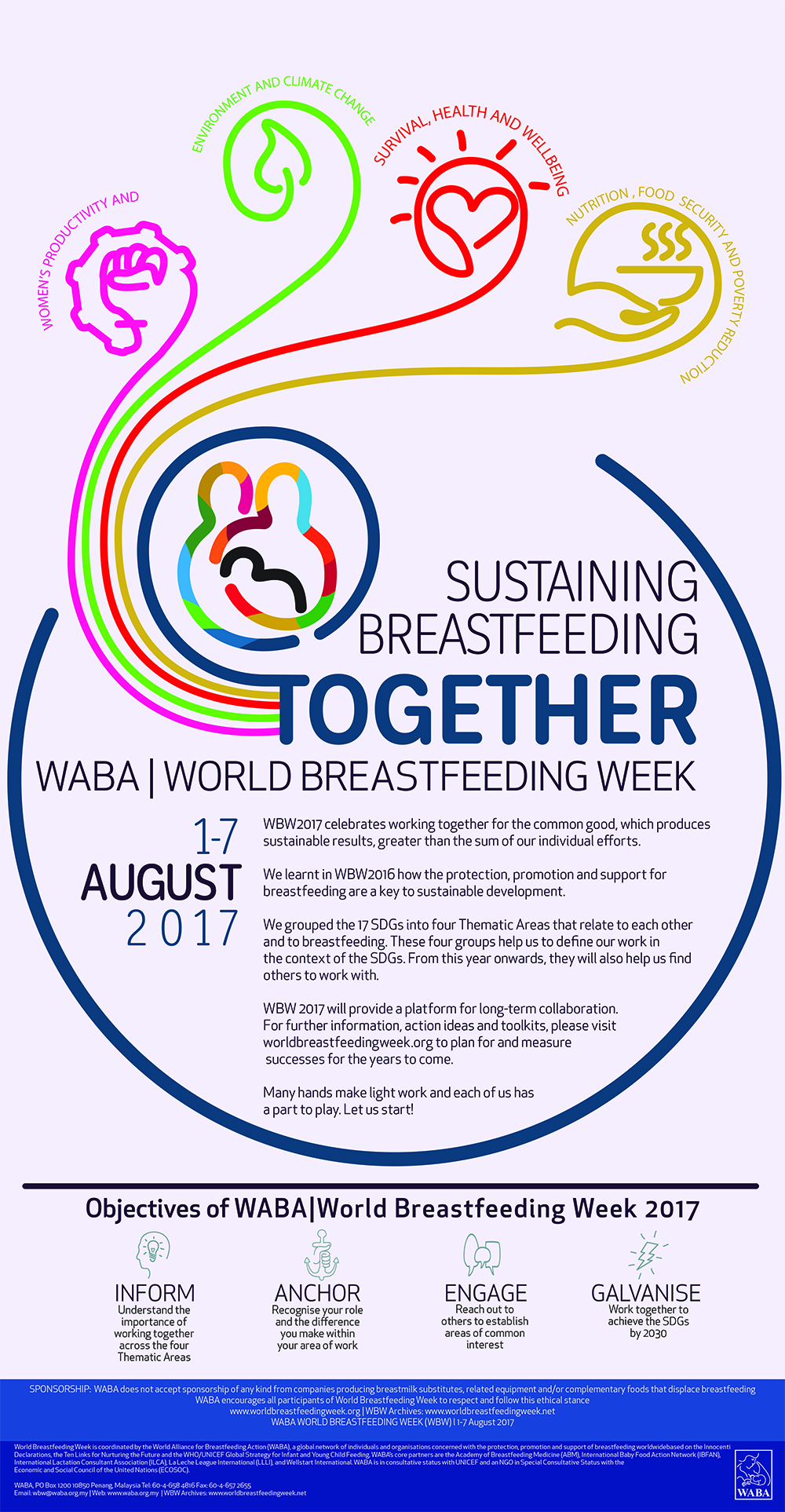
The Coastal Health District Women, Infants, and Children’s (WIC) nutrition program will hold two World Breastfeeding Week celebrations in early August. The first event will take place from 4 p.m. to 6 p.m. on Friday, August 4 at Jekyll Island Square on Newcastle Street in Brunswick and the second event will take place from 8 a.m. to 11 a.m. on Saturday, August 5, at the Forsyth Farmers’ Market in Savannah. The celebrations will include public walks, prize giveaways, and information on the benefits of breastfeeding. All events are free and family friendly.

Those who register for the events by going to www.coastalhealthdistrict.org/bf will receive a free T-shirt while supplies last.

World Breastfeeding Week is celebrated during the first week in August every year in more than 170 countries to encourage breastfeeding and improve the health of babies around the world.  This year’s theme is “Sustaining breastfeeding together” and is focused on working together for the common good. The key to best breastfeeding practices is continued day-to-day support for breastfeeding mothers within their home and community. The Coastal Health District is committed to helping mothers breastfeed their babies because breastfeeding is so important for good health. Breast milk is easy to digest, with just the right amount of fat, sugar, water, and protein for a baby’s growth and development. Breastfed babies usually get sick less often, because breast milk contains antibodies that can protect infants from bacterial and viral infections.

For more information on the objectives of World Breastfeeding Week 2017, click HERE.

For more information on the scheduled Coastal Health District events, contact Monica Lightfoot at Monica.Lightfoot@dph.ga.gov.

[JPG, 2.02 MB]

Homerun to Wellness Health Fair Aug. 12

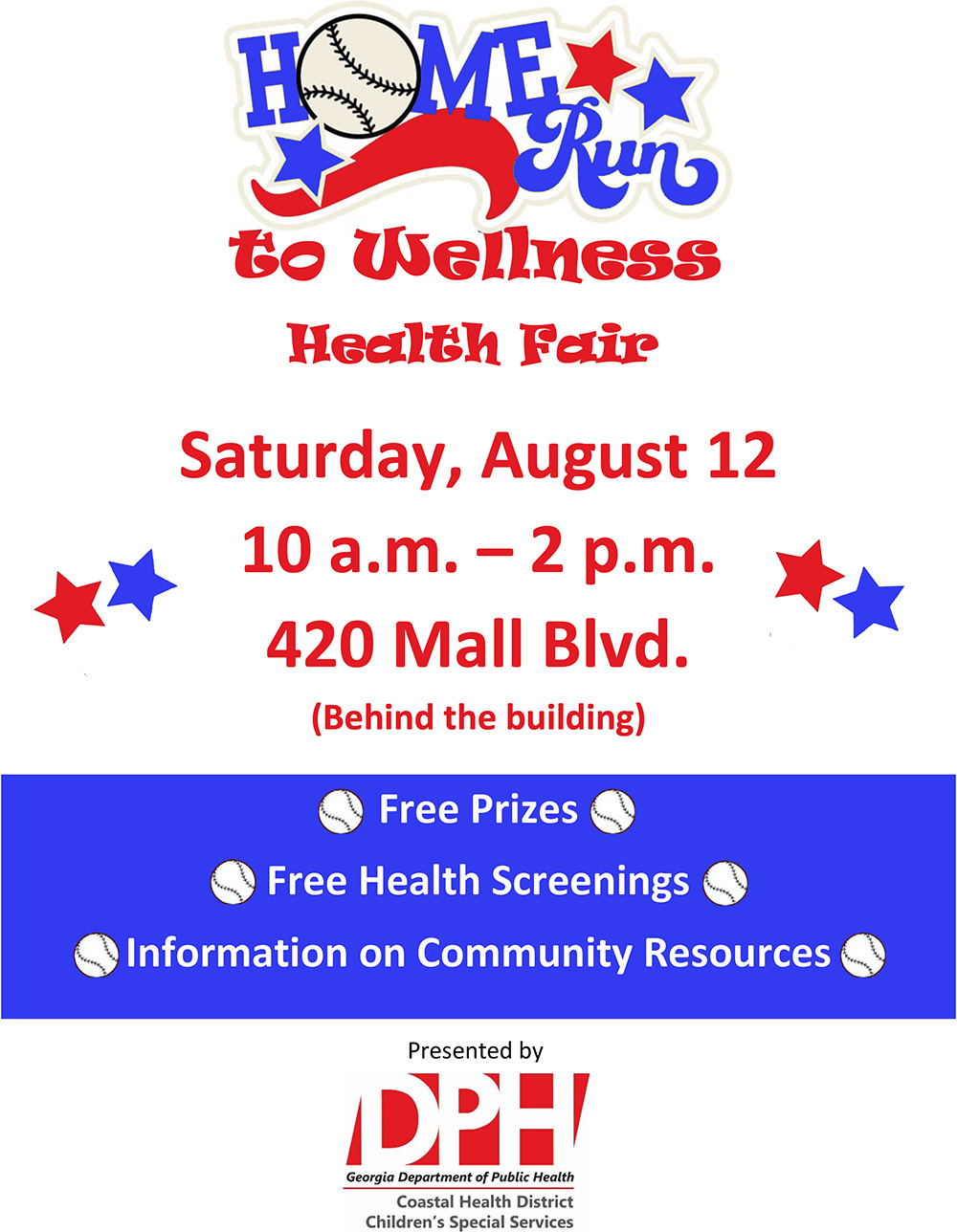
Children’s Special Services, a variety of programs designed to identify and address, needs early in life so that children can reach their maximum potential will hold the Homerun to Wellness Health fair from 10 a.m. to 2 p.m. on Saturday, August 12. The event will take place at 420 Mall Boulevard in Savannah.

The health fair is open to the public and will include free health screens (blood pressure, blood glucose, and BMI) and door prizes. Other agencies – such as Safe Kids Savannah, Peach State Health Plan, CareSource, and Amerigroup – will also be on hand.

Children’s Special Services includes programs such as Children 1st, Babies Can’t Wait, Children’s Medical Services, and Early Hearing Detection and Intervention. Children may be linked to one or more of these early intervention programs based on their risk factors and age.

For more information on Children’s Special Services, click HERE. For more information on the event, please call 912-644-5805.


[JPG, 298.96 KB]

Boil Water Advisory Lifted for City of St. Marys

The Boil Water Notice that was issued by the City of St. Marys has been lifted.  Free chlorine residual measurements and coliform bacteria samples were collected from enough sites to adequately represent all areas of the distribution system, following the Environmental Protection Division’s recommendations.  Free chlorine residuals were detected throughout the distribution system and all microbiological tests were performed by a certified laboratory and were negative for total coliform bacteria. A copy of the laboratory results are being sent to the Environmental Protection Division, and based upon the laboratory results, the City of St. Marys has decided to rescind the boil water notice effective immediately.  Thank you for your understanding as the City worked through the process of ensuring that the microbiological quality of the water in the distribution system is safe for human consumption.

If you should have any questions please call St. Marys Public Works at 882-4415.

Cupcakes & Condoms: Candid Conversations for Women & Teen Girls

The Coastal Health District HIV Prevention Program will host Cupcakes & Condoms, an afternoon of cupcakes and girl talk about sexual health, from 2 p.m. to 4 p.m.  on Saturday, August 12, at University Meeting Room located at Savannah State University, 3219 College Drive in Savannah.

Cupcakes & Condoms is a program presented by the Red Pump Project to engage women and teen girls in an open dialogue about sexual health. Attendees are treated to complimentary desserts while engaging in discussion designed to foster healthy intimate relationships and promote positive choices to aid in the prevention of HIV and STIs. Founded in 2009, The Red Pump Project ® is a nonprofit organization that raises awareness about the impact of HIV/AIDS on women and girls.

Today, about one in four people living with HIV in the United States is female. Only about half of women living with HIV are getting care, and only four in 10 of them have the virus under control. Women face unique HIV risks and challenges that can prevent them from getting needed care and treatment. Addressing these issues remains critical to achieving an HIV- and AIDS-free generation.

To register, please click HERE.


[JPG, 296.39 KB]

Eastern Equine Encephalitis Detected in Chatham County; Officials Urge Residents to Take Precautions

Chatham County Mosquito Control has confirmed that Eastern Equine Encephalitis (EEE) has been detected in western Chatham County. Mosquito Control has subsequently conducted mosquito abatement activities in that area. West Nile Virus (WNV) has also been detected in mosquitoes in Chatham County. It’s shaping up to be an active mosquito season and continued precautions to prevent mosquito breeding and bites are encouraged.

EEE is a mosquito-borne virus that causes swelling of the brain. In horses, it is fatal 70 to 90 percent of the time. Horse and large animal owners are encouraged to vaccinate their animals against the virus and to clean out watering sources, such as buckets and troughs, every three to four days to prevent mosquitoes from breeding there. The primary mosquito that transmits EEE breeds in freshwater swamps. No human cases of disease have been reported in Georgia this year; however, humans are susceptible to EEE.

EEE is one of several viruses that can be transmitted by the bite of infected mosquitoes including West Nile Virus, chikungunya, and Zika.

One of the most effective ways of preventing the spread of mosquito-borne viruses is controlling the mosquito population by eliminating standing water around the home and in the yard. In addition, clean out gutters, remove piles of leaves, and keep vegetation cut low to prevent landing sites for adult mosquitoes. For containers without lids or that are too big to tip over or toss out (bird baths, garden pools), use larvicides such as Mosquito Dunks or Pre-Strike Mosquito Torpedoes and follow the label instructions. These larvicides will not hurt birds or animals.

It is also important to protect yourself from mosquito bites. Use EPA-registered insect repellents containing 20%-30% DEET, Picaridin, IR3535, or Oil of Lemon Eucalyptus. Wear light colored clothing with long sleeves, long pants and socks to help prevent mosquito bites.

Residents are always encouraged to remember the 5 D’s of Prevention:

  • Dusk/Dawn – Mosquitoes usually bite at dusk and dawn, so avoid or limit outdoor activity at these times.
  • Dress – Wear loose-fitting, long sleeved shirts and pants to reduce the amount of exposed.
  • DEET – Cover exposed skin with an insect repellent containing DEET, which is the most effective repellent against mosquito bites.
  • Drain – Empty any containers holding standing water because they are excellent breeding grounds for virus-carrying mosquitoes.
  • Doors – Make sure doors and windows are in good repair and fit tightly, and fix torn or damaged screens to keep mosquitoes out of the house.

For more information on mosquito-borne diseases click HERE or go to mosquitocontrol.chathamcounty.org.


Coastal Health District to Host National Dance Day Event

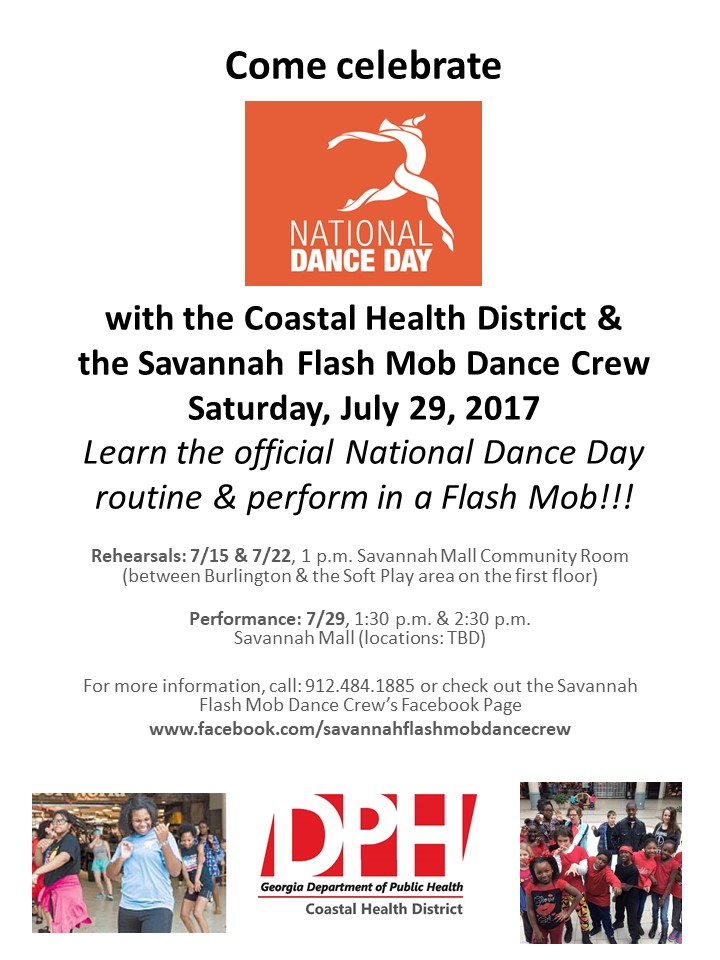
The Coastal Health District Chronic Disease Prevention Program, in conjunction with Savannah Mall, will host a National Dance Day event at 1:30 p.m. and 2:30 p.m. on Saturday, July 29, at Savannah Mall. The event is free and open to the public.

The Savannah Flash Mob Dance Crew will be on hand at the event to teach participants the 2017 National Dance Day dance. Anyone interested in learning the dance prior to National Dance Day so that they can help teach the dance at the event can attend dance tutorials at the at 1 p.m. on Saturday, July 15, and Saturday, July 22, in the Community Room at Savannah Mall (between Burlington and the Soft Play area on the first floor).

“Dancing is a great way to increase physical activity to help promote a healthier and more active lifestyle,” said Director Chronic Disease Prevention for the Coastal, Cristina Gibson. “Dancing is fun and it’s also good for you. Including dance as part of a regular exercise routine can help prevent chronic disease and obesity.”

National Dance Day was started in 2010 by Nigel Lythgoe, co-creator of the television show “So You Think You Can Dance” and co-president of Dizzy Feet Foundation, a national organization created to “support, improve, and increase access to dance education in the United States.” National Dance Day is celebrated annually on the last Saturday in July.

For more information, please call 912.484.1885 or check out the Savannah Flash Mob Dance Crew’s Facebook Page at www.facebook.com/savannahflashmobdancecrew


[JPG, 138.99 KB] [JPG, 138.99 KB]

Mosquito-borne Virus Activity Detected in Chatham County; Officials Advise Taking Protective Measures

Chatham County Mosquito Control has confirmed that a sampling of mosquitoes collected in southeast Chatham County has tested positive for West Nile virus (WNV).  This indicates that WNV is actively circulating in local mosquito populations this year.  Mosquito control personnel are surveying all areas of Chatham County and scheduling control operations as required. No human cases of WNV have been confirmed in any Coastal Health District counties, including Chatham.

WNV is transmitted by the bite of infected mosquitoes and can cause mild to serious illness. Mosquitoes that carry the West Nile Virus are more likely to bite during the evening, night, and early morning. The Chatham County Health Department and Chatham County Mosquito Control urge residents to take appropriate precautions now and throughout the summer to minimize mosquitoes around their property.

One of the most effective ways of preventing the spread of mosquito-borne viruses is controlling the mosquito population by eliminating standing water around the home and in the yard. Tip ‘n Toss containers after every rain and at least once a week. Dump out standing water in flowerpots and planters, children’s toys, pet dishes. In addition, clean out gutters, remove piles of leaves, and keep vegetation cut low to prevent landing sites for adult mosquitoes. By helping to limit potential breeding grounds for mosquitoes, every resident can contribute to reducing the nuisance caused by mosquitoes and stop the transmission of mosquito-borne diseases.

Residents are always encouraged to follow the 5Ds of mosquito bite prevention:

Dusk/Dawn – Avoid dusk and dawn activities during the summer when mosquitoes are most active.
Dress – Wear loose-fitting, long sleeved shirts and pants to reduce the amount of exposed skin.
DEET – Cover exposed skin with an insect repellent containing the DEET, which is the most effective repellent against mosquito bites.
Drain – Empty any containers holding standing water – buckets, barrels, flower pots, tarps – because they are breeding grounds for virus-carrying mosquitoes.
Doors – Make sure doors and windows are in good repair and fit tightly, and fix torn or damaged screens to keep mosquitoes out of the house.

Chatham County Mosquito Control is actively treating all areas of Chatham County for mosquitoes. Residents should expect to see Mosquito Control’s low flying, yellow helicopters on a regular basis throughout the county.


July 12 UPDATE

Chatham County Mosquito Control has identified positive West Nile Virus (WNV) mosquito samples in east Savannah and the Islands area. This is in addition to the positive samples identified last week in southeast Chatham County. Chatham County Mosquito Control will increase abatement efforts and public health’s message remains the same: We encourage residents to prevent mosquito breeding and mosquito bites.

After every rainfall – or at least once a week –  tip out water in flowerpots, planters, children’s toys, wading pools, buckets and anything else around your yard that can hold water. If it holds water and you don’t need it (old tires, bottles, cans), toss it out.
Use EPA-registered insect repellents containing 20%-30% DEET, Picaridin, IR3535, or Oil of Lemon Eucalyptus when outdoors.
Other tips:

  • Clean out gutters.
  • Remove piles of leaves.
  • Tightly cover water storage containers (buckets, cisterns, rain barrels) so that mosquitoes cannot get inside to lay eggs.
  • Keep vegetation cut low to prevent landing sites for adult mosquitoes.
  • Homeowners associations and neighborhoods are encouraged to sponsor community cleanup days.
  • Make sure to keep doors shut and cover windows with screens. Repair or replace any screens with holes in them.