The Coastal Health District of Georgia serves the counties of Bryan, Camden, Chatham, Effingham, Glynn, Liberty, Long & McIntosh

Posts by District_PIO


Coastal Health District HIV Director Receives Prestigious National Award

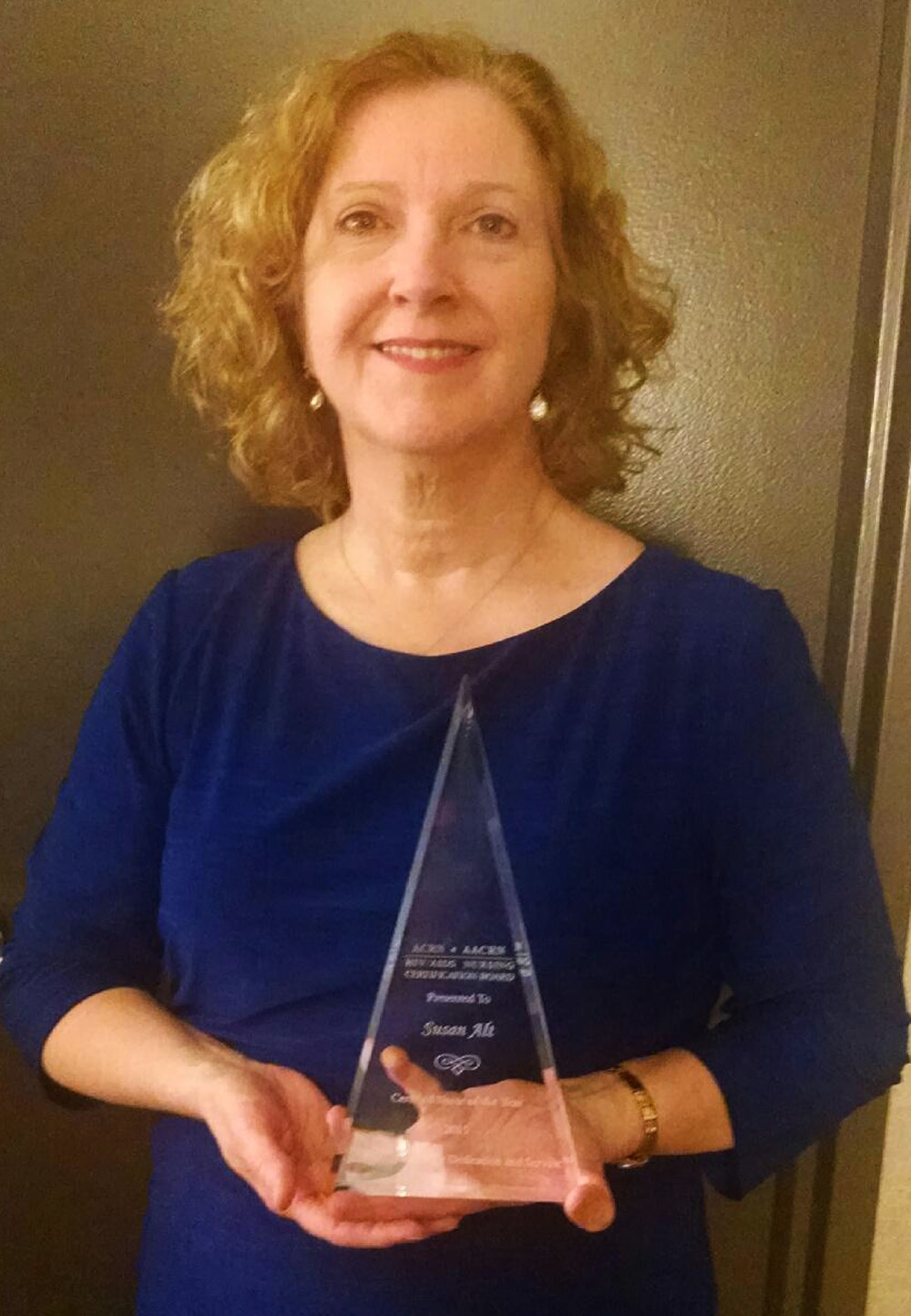
HIV Director for the Coastal Health District, Susan Alt, BSN, ACRN, has been named the HIV/AIDS Nursing Certification Board’s Certified Nurse of the Year. The HIV/AIDS Certified Nurse of the Year is a prominent national award that recognizes an AIDS Certified Registered Nurse (ACRN) who exemplifies excellence in HIV/AIDS nursing and advances the mission of the HIV/AIDS Nursing Certification Board. Alt, who has maintained certification in HIV/AIDS nursing since 1997, recently received the award at the Association of Nurses in AIDS Care (ANAC) 28th Annual Awards Ceremony in Chicago.

Alt, who has been involved in HIV nursing for more than 31 years, essentially started with Chatham County Health Department’s HIV program in 1989 when there were only 40 patients. The program now serves more than 1,300 active patients throughout the eight-county Coastal Health District and Alt has been there every step of the way.

“Susan’s leadership and guidance has been instrumental in building an HIV program that addresses all the needs of our patients,” said Coastal Health District Health Director, Diane Weems, M.D. “Her commitment to this program and the patients who are part of it has been unwavering from day one. Susan is deeply devoted to making sure that those with HIV get into care, stay in care, and get all of the resources they need to live healthy and productive lives.”

Under Alt’s leadership, the Coastal Health District was the first public health district in the state of Georgia to conduct HIV clinical trials. The District is currently engaged in 16 trials providing much needed opportunities for patients facing the most difficult obstacles. She has developed strong partnerships that have ultimately benefited the patients and community she serves.

Alt has influenced the quality of HIV care throughout Georgia through her contribution on statewide committees and workgroups including the Georgia AIDS Task Force, the Public Health Nurse Protocol Committee, the Georgia Ryan White Part B Program Quality Management Team, and the Ryan White Part B Program Leadership Group. She serves as a mentor to other Ryan White program leaders, providing technical assistance to programs throughout the state. According to the ANAC award recipient description, “Her work on the development of HIV/AIDS nursing protocols helped define HIV/AIDS nursing practice of Georgia public health nurses.”

“The most important things to Susan are preventing the spread of HIV and making sure that those living with HIV are treated not only medically but also with respect and compassion,” said Weems. “She is most deserving of this recognition and all of us at the Coastal Health District are incredibly proud of her accomplishments.”


Susan Alt ACRN Award [JPG, 271.71 KB]

World AIDS Day Events Planned for Dec. 1

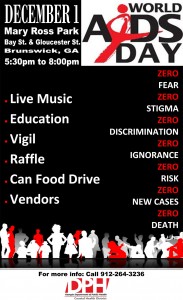
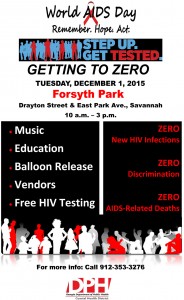
World AIDS Day is December 1 and the Coastal Health District has events planned in both Chatham and Glynn counties. The Chatham County event will be held from 10 a.m. – 3 p.m., on Tuesday, December 1, at Forsyth Park in Savannah and will include free and confidential HIV testing, vendor displays, education, music, and a balloon release. The Glynn County event will be held from 5:30 p.m. – 8 p.m., on Tuesday, December 1, at Mary Ross Park in Brunswick and will include vendor displays, education, vigil, and raffle.

The Centers for Disease Control and Prevention (CDC) estimates that 1.2 million people in the United States are living with HIV, and nearly one in eight of those are not aware that they are infected. World AIDS Day is observed every year on December 1 in an effort to raise awareness of the HIV epidemic, remember those who have died, celebrate survival, and focus on the importance of getting tested for HIV.

Volunteers are also needed to help with the HIV testing events. When you sign up to volunteer with World AIDS Day you are making a difference while helping raise awareness about HIV/AIDS in our communities.

For more information about the Chatham County event please call 912-353-3276 or e-mail Diane.DeVore@dph.ga.gov. For more information about the Glynn County event please call 912-264-3236.

Diabetes. It’s a Big Deal.

Diabetes Big Deal Logo [JPG, 77.38 KB]

According to the American Diabetes Association, close to 30 million children and adults in the United States have diabetes and another 86 million Americans have prediabetes and are at risk for developing type 2 diabetes. It is estimated that one in four people who have diabetes don’t even know they have the disease. Those are startling statistics proving that diabetes is a very big deal in our country. But diabetes is preventable. Getting regular exercise and eating healthy are the two best ways to avoid diabetes. Step one is to find out if you are at risk for diabetes. Could your health history make a difference? Absolutely. Take the Family Health History Quiz. You can also lower your risk by making healthy lifestyle choices.

If you have just been diagnosed with diabetes, or have been living with diabetes for a while, diabetes education and support are important to help you stay healthy.
You are the most important member of your health care team. Learn as much as you can about your disease and talk to your diabetes care team about how you can best care for your diabetes to stay healthy. Learning to manage your diabetes from the start can help you have fewer health problems from diabetes later. Living with the day-to-day demands of diabetes can be challenging. Having a network of support can help.

Diabetes education is needed throughout your lifetime, not just at diagnosis.
Research has shown that diabetes education and support improve health outcomes for people with diabetes, such as lowering average blood sugar, reducing diabetes related complications, and decreasing diabetes-related distress. Studies have also shown diabetes education and support to be cost-effective by reducing hospital admissions and re-admissions.

As you get older, your diabetes needs will change over time. Understanding those changes and how to manage your disease continues to be important. For instance, as you get older, you may experience some other health problems associated with diabetes, such as heart disease, kidney disease, vision problems, or nerve damage. You may also experience other life changes, such as changes that affect your living situation. Continued diabetes education and support can help you manage your diabetes during these times of change.

Having a network of support can help you better cope with the day-to-day demands of living with diabetes.
Being diagnosed with diabetes is often overwhelming. There is a lot to learn about this disease and what you need to do to stay healthy. This means understanding how to:

  • Manage your Diabetes ABCs (blood sugar, blood pressure, cholesterol, and stopping smoking)
  • Make healthy food choices
  • Stay physically active; and
  • Take medicines as prescribed.

Be Smart About Your Heart: Manage the ABCs of Diabetes
Many people with diabetes do not realize that having diabetes increases their chances of having a heart attack or stroke. While most people may think about diabetes-related health problems such as kidney disease, blindness and amputation, adults with diabetes are nearly two times more likely to die from heart disease or stroke than a person without diabetes. If you have diabetes, the National Diabetes Education Program (NDEP) and [insert name of organization] wants you to know that you can lower your chance of having a heart attack or stroke by managing your Diabetes ABCs.

  • A is for the A1C test (A-one-C). This is a blood test that measures your average blood sugar (glucose) level over the past three months.
  • B is for Blood pressure.
  • C is for Cholesterol.
  • S is for stopping smoking.

If you have diabetes, talk to your doctor about your A1C, Blood pressure, and Cholesterol numbers. Your ABC goals will depend on how long you have had diabetes, and other health problems. If you smoke, ask for help or call the Georgia Tobacco Quit Line:

English: 1.877.270.STOP (1.877.270.7867)
Spanish: 1.877.2NO.FUME (1.877.266.3863)
Hearing Impaired, TTY Services: 1.877.777.6534


American Diabetes Month Facts and Figures*

  • Diabetes affects nearly 30 million children and adults in the U.S. today—nearly 10 percent of
    the population.
  • Another 86 million Americans have prediabetes and are at risk for developing type 2 diabetes.
  • Recent estimates project that as many as 1 in 3 American adults will have diabetes by 2050 unless
    we take steps to Stop Diabetes®.
  • Every 19 seconds someone in the U.S. is diagnosed with diabetes.
  • African Americans and Hispanics are almost twice as likely to have diabetes as non-Hispanic whites.
  • Diabetes nearly doubles the risk for heart attack and for death from heart disease.
  • Diabetes is the leading cause of kidney failure.
  • Diabetes is the leading cause of new cases of blindness among working-age adults.
  • The rate of amputation for people with diabetes is 10 times higher than for people without diabetes.
  • Roughly 60 to 70 percent of people with diabetes have mild to severe forms of nerve damage that
    could result in pain in the feet or hands, slowed digestion, sexual dysfunction and other nerve problems.
  • The American Diabetes Association estimates that the total national cost of diagnosed diabetes in
    the U.S. is $245 billion.
  • Direct medical costs reach $176 billion and the average medical expenditure among people
    with diabetes is more than two times higher than those without the disease.
  • Indirect costs amount to $69 billion (disability, work loss, premature mortality).
  • 1 in 10 health care dollars is spent treating diabetes and its complications.
  • 1 in 5 health care dollars is spent caring for people with diabetes.

*Source: American Diabetes Association

Making Healthy Choices
Want to know more about meal planning, shopping tips, grocery lists, chef’s preparation secrets, delicious recipes? Check out Diabetes Forecast.

Additional Diabetes Fact Sheets
Women at High Risk for Diabetes
If You Had Diabetes While Pregnant [PDF, 284.06 KB]
Gestational Diabetes [PDF, 706.98 KB]

McIntosh Co. Health Department to Host Child Car Seat Class on November 24

The McIntosh County Health Department will hold a child car seat class at 10 a.m. on Tuesday, November 24, at the health department located at 1335 Georgia Hwy. 57 in Townsend. Parents and caregivers will be taught how to correctly install their car seat(s) and educated on how to properly secure a child in a seat.

A Certified Child Passenger Safety Technician will teach the class and will also be available to examine child safety seats for recalls and to ensure correct installation in vehicles. At the completion of the class, car seats will be given out – free of charge – based on a need assessment by health department staff.

Motor vehicle crashes are the leading cause of death among children ages 2-14 and the leading cause of injury-related death for children under two. Each year an estimated 2,446 children die in motor vehicle crashes. When installed and used correctly, child car seats and seat belts can prevent injuries and save lives.

The class is made possible through a grant from the Miller Family Fund, a component fund of the Communities of Coastal Georgia Foundation. The Health Department received funding earlier this year to educate families on the proper installation of car seats and general seatbelt safety.

The event is free and open to the public. For more information, please call the health department at 912-832-5473.

Liberty County Health Department to Hold Drive-Through Flu Vaccination Clinic Nov. 17

The Liberty County Health Department will hold a drive-through flu vaccination clinic from 9 a.m. to 1 p.m. on Tuesday, November 17, at Shuman Recreation Center located at 800 Tupelo Trail (behind the health department) in Hinesville. Flu shots will be available for $29. High-dose flu vaccine, offered for people 65 and older, will be $50. The purpose of the event is two-fold:  To provide a quick, easy way for residents to get vaccinated against the flu and to test public health emergency preparedness and response procedures.

Liberty County is one of several Coastal Health District counties hosting a drive-through flu vaccination clinic on November 17 as part of a statewide exercise being conducted by the Georgia Department of Public Health. Several partner agencies, including Liberty County Emergency Management Agency, Liberty Regional EMS, Hinesville Police Department, American Red Cross, and Liberty County Recreation Department, will also take part in the event.

“Getting vaccinated is the best protection against the flu and there is no more convenient way to get vaccinated than never having to leave your own vehicle,” said Coastal Health District Health Director, Diane Weems, M.D. “We are also using this clinic as a way to assess public health’s ability to quickly provide medication should it become necessary during a real world event.”

Public health – through local health departments – is responsible for providing vaccine or other medication to the general public in response to large scale public health emergencies and other disasters. If such an event were to take place, the drive-through method of dispensing medication would likely be used.

“We are always in preparation mode,” said Weems. “It just makes sense to test that preparation during flu season when we can make it easy for people to get vaccinated.”

The Centers for Disease Control and Prevention (CDC) recommends everyone six months of age and older receive a yearly flu vaccine. The flu vaccine cannot cause the flu. Getting vaccinated is the first and best line of defense against the flu. It takes about two weeks after vaccination for the immune system to fully respond to the vaccine and provide the body protection.

On average, more than 200,000 people in the United States are hospitalized each year for illnesses associated with seasonal influenza virus infections and it is estimated that more than 36,000 Americans die each year from influenza-related illness.

The flu virus is easily spread through coughs and sneezes and by touching something with the virus on it and then touching your eyes, nose or mouth. That’s why good health habits are also important including staying home when you’re sick; avoiding close contact with people who are sick; coughing or sneezing into your elbow and not your hand; washing your hands often with soap and water; avoid touching your eyes, nose and mouth; and cleaning and disinfecting surfaces and objects that may be contaminated with germs like the flu.

Cash and checks will be accepted at the drive-through clinic. The following insurance will also be accepted: Aetna, Cigna, Blue Cross/Blue Shield, and Coventry. Medicare and Medicaid will also be accepted.

To save even more time, residents are encouraged to download the flu vaccine consent form HERE [PDF, 62.13 KB] and bring the completed form with them to the clinic.

For more information on the flu or flu vaccine, go to cdc.gov/flu.


Effingham County Health Department to Hold Drive-Through Flu Vaccination Clinic Nov. 17

The Effingham County Health Department will hold a drive-through flu vaccination clinic from 2:30 p.m. to 4:30 p.m. on Tuesday, November 17, at the health department located at 802 Hwy. 119 South in Springfield. Flu shots will be available for $29. High-dose flu vaccine, offered for people 65 and older, will be $50. The purpose of the event is two-fold:  To provide a quick, easy way for residents to get vaccinated against the flu and to test public health emergency preparedness and response procedures.

Effingham County is one of several Coastal Health District counties hosting a drive-through flu vaccination clinic on November 17 as part of a statewide exercise being conducted by the Georgia Department of Public Health. Several partner agencies, including Effingham County Emergency Management Agency, will also take part in the event.

“Getting vaccinated is the best protection against the flu and there is no more convenient way to get vaccinated than never having to leave your own vehicle,” said Coastal Health District Health Director, Diane Weems, M.D. “We are also using this clinic as a way to assess public health’s ability to quickly provide medication should it become necessary during a real world event.”

Public health – through local health departments – is responsible for providing vaccine or other medication to the general public in response to large scale public health emergencies and other disasters. If such an event were to take place, the drive-through method of dispensing medication would likely be used.

“We are always in preparation mode,” said Weems. “It just makes sense to test that preparation during flu season when we can make it easy for people to get vaccinated.”

The Centers for Disease Control and Prevention (CDC) recommends everyone six months of age and older receive a yearly flu vaccine. The flu vaccine cannot cause the flu. Getting vaccinated is the first and best line of defense against the flu. It takes about two weeks after vaccination for the immune system to fully respond to the vaccine and provide the body protection.

On average, more than 200,000 people in the United States are hospitalized each year for illnesses associated with seasonal influenza virus infections and it is estimated that more than 36,000 Americans die each year from influenza-related illness.

The flu virus is easily spread through coughs and sneezes and by touching something with the virus on it and then touching your eyes, nose or mouth. That’s why good health habits are also important including staying home when you’re sick; avoiding close contact with people who are sick; coughing or sneezing into your elbow and not your hand; washing your hands often with soap and water; avoid touching your eyes, nose and mouth; and cleaning and disinfecting surfaces and objects that may be contaminated with germs like the flu.

Cash will be accepted at the drive-through clinic. The following insurance will also be accepted: Aetna, Cigna, Blue Cross/Blue Shield, and Coventry. Medicare and Medicaid will also be accepted.

To save even more time, residents are encouraged to download the flu vaccine consent HERE [PDF, 62.61 KB] and bring the completed form with them to the clinic.

For more information on the flu or flu vaccine, go to cdc.gov/flu.


Chatham County Health Department to Hold Drive-Through Flu Vaccination Clinic Nov. 17

The Chatham County Health Department will hold a drive-through flu vaccination clinic from 9 a.m. to 4 p.m. on Tuesday, November 17. Residents should enter the drive-through clinic through the parking lot across from Goodwill on Sallie Mood Drive. Flu shots will be available for $29. High-dose flu vaccine, offered for people 65 and older, will be $50. The purpose of the event is two-fold:  To provide a quick, easy way for residents to get vaccinated against the flu and to test public health emergency preparedness and response procedures.

Chatham County is one of several Coastal Health District counties hosting a drive-through flu vaccination clinic on November 17 as part of a statewide exercise being conducted by the Georgia Department of Public Health. Several partner agencies, including Chatham Emergency Management Agency, local law enforcement, and the Salvation Army will also take part in the event.

“Getting vaccinated is the best protection against the flu and there is no more convenient way to get vaccinated than never having to leave your own vehicle,” said Coastal Health District Health Director, Diane Weems, M.D. “We are also using this clinic as a way to assess public health’s ability to quickly provide medication should it become necessary during a real world event.”

Public health – through local health departments – is responsible for providing vaccine or other medication to the general public in response to large scale public health emergencies and other disasters. If such an event were to take place, the drive-through method of dispensing medication would likely be used.

“We are always in preparation mode,” said Weems. “It just makes sense to test that preparation during flu season when we can make it easy for people to get vaccinated.”

The Centers for Disease Control and Prevention (CDC) recommends everyone six months of age and older receive a yearly flu vaccine. The flu vaccine cannot cause the flu. Getting vaccinated is the first and best line of defense against the flu. It takes about two weeks after vaccination for the immune system to fully respond to the vaccine and provide the body protection.

On average, more than 200,000 people in the United States are hospitalized each year for illnesses associated with seasonal influenza virus infections and it is estimated that more than 36,000 Americans die each year from influenza-related illness.

The flu virus is easily spread through coughs and sneezes and by touching something with the virus on it and then touching your eyes, nose or mouth. That’s why good health habits are also important including staying home when you’re sick; avoiding close contact with people who are sick; coughing or sneezing into your elbow and not your hand; washing your hands often with soap and water; avoid touching your eyes, nose and mouth; and cleaning and disinfecting surfaces and objects that may be contaminated with germs like the flu.

Cash, checks, credit, and debit cards will be accepted at the drive-through clinic. The following insurance will also be accepted: Aetna, Cigna, Blue Cross/Blue Shield, Coventry, and Humana. Medicare and Medicaid will also be accepted.

To save even more time, residents are encouraged to download the flu vaccine consent form by clicking HERE [PDF, 62.94 KB] and bring the completed form with them to the clinic.

For more information on the flu or flu vaccine, go to cdc.gov/flu.

Mammogram Event Scheduled Oct. 27 in Glynn County

The Glynn County Health Department, in conjunction with Susan G. Komen Coastal Georgia Affiliate and Southeast Georgia Health System (SGHS), will offer free breast exams and mammograms to women over the age of 40 who have not had a mammogram in the last year and who meet certain criteria, including those with no insurance or limited insurance coverage. Mammogram screenings will be provided by the SGHS Wellness on Wheels (WOW) mobile health vehicle in the parking lot of the YMCA located at 144 Scranton Connector in Brunswick from 9 a.m. to 3 p.m. on Tuesday, October 27.

No appointment is necessary. For more information, please call the Health Department at 912-264-3961 or Southeast Georgia Health System at 912-466-5234.


Free Mammograms to be Offered to Eligible Women in Chatham County

Chatham County Health Department’s Breast and Cervical Cancer Program (BCCP), in conjunction with the St. Joseph’s/Candler Mobile Mammography Program, will offer free mammograms from 9 a.m. to 3 p.m. on October 23 at the Chatham County Health Department on Eisenhower Drive to women who meet eligibility criteria through BCCP.

This event is being held in honor of National Breast Cancer Awareness Month. Women 40-64 years old without insurance whose annual income is not greater than 200% of the Federal Poverty Level are eligible.

Appointments are encouraged but walk-ins will be accepted. To make an appointment, call 819-6800.

Test Your Health IQ

Does your health IQ measure up? Now, there’s a fun and educational way to find out. The Centers for Disease Control and Prevention (CDC) has launched a new Health IQ app. It’s free in both the iTunes and GooglePlay stores. Download it today to find out just how knowledgeable you are when it comes to living healthy.