The Coastal Health District of Georgia serves the counties of Bryan, Camden, Chatham, Effingham, Glynn, Liberty, Long & McIntosh

Posts by District_PIO


Chatham Co. Health Department to Hold Free Vision, Hearing, Dental, & Nutrition Screening July 31

The Chatham County Health Department will offer free eye, ear, dental, and nutrition screenings for Chatham County school students from 8 a.m. to 11:30 a.m. and 1 p.m. to 3:30 p.m. on Friday, July 31. Normally a $30 fee applies when getting the screening at the health department.The screenings will take place at the Chatham County Health Department located at 1395 Eisenhower Drive in Savannah. Immunizations will be provided at normal cost.

Students entering a Georgia school for the first time – no matter what the grade level –  must have a completed Certificate of Vision, Hearing, Dental, and Nutrition screening form. “First time” means never enrolled in a Georgia school before at any time in their lives.

No appointment is necessary and students will be seen on a first come, first served basis. For additional information, call the Chatham County Health Department at 356-2441.

Chatham EEDN Screeing Flier 7.31.15_Layout 1.qxd

[JPG, 422.96 KB] Click on image for full screen view.

Glynn County Health Department Officials Encourage Precautions Following Human/Pet Exposures to Rabid Fox

Two Glynn County residents and their dog were exposed to a fox that has tested positive for rabies. The incident took place in the Peppertree Crossing area. Glynn County Environmental Health officials remind residents to avoid wild animals and make sure pets are up-to-date on vaccinations. In this instance, the dog is current on his rabies vaccination.

Several species of wild animals that are native to coastal Georgia – including raccoons, foxes, and bats – can carry rabies. Rabies is a potentially deadly virus that is primarily spread by infected animals. Symptoms of rabies in animals include a change in behavior, biting, aggression, showing no fear of natural enemies (such as humans), foaming at the mouth, and paralysis.

The Glynn County Health Department Environmental Health Division offers these tips to protect you and your family from rabies:

  • Avoid contact with animals you don’t know.
  • Make sure your pets receive the proper immunizations. Dogs and cats should get rabies vaccines by four months of age, followed by a booster shot one year later, and another one every one to three years as prescribed by your veterinarian.
  • Do not handle, feed, or unintentionally attract wild animals with open garbage cans or by leaving pet food out at night.
  • Never adopt wild animals or bring them into your home. Do not try to nurse sick animals to health. Call animal control or a properly licensed animal rescue agency for assistance.
  • Teach children to never handle unfamiliar animals, wild or domestic, even if they appear friendly. “Love your own, leave other animals alone” is a good principle for children to learn.

If an animal ever bites you, seek medical care immediately and contact Glynn County Animal Control at 912-554-7500 and the Glynn County Health Department Environmental Health Division at 279-2940.


Fox Tests Positive for Rabies after Attacking Family Dog in Chatham County

A fox that got into a fight with a family dog in the Dean Forest Road area of Savannah has tested positive for rabies. The dog is up-to-date on rabies vaccinations and received a rabies booster as a precaution. Several species of wild animals that are native to coastal Georgia – including raccoons, foxes, and bats – can carry rabies.

Rabies is a potentially deadly virus that is primarily spread by infected animals. Symptoms of rabies in animals include a change in behavior, biting, aggression, showing no fear of natural enemies (such as humans), foaming at the mouth, and paralysis.

The Chatham County Health Department Environmental Health Division offers these tips to protect you and your family from rabies:

  • Avoid contact with animals you don’t know.
  • Make sure your pets receive the proper immunizations. Dogs and cats should get rabies vaccines by four months of age, followed by a booster shot one year later, and another one every year as prescribed by your veterinarian.
  • Do not handle, feed, or unintentionally attract wild animals with open garbage cans or by leaving pet food out at night.
  • Never adopt wild animals or bring them into your home. Do not try to nurse sick animals to health. Call animal control or a properly licensed animal rescue agency for assistance.
  • Teach children to never handle unfamiliar animals, wild or domestic, even if they appear friendly. “Love your own, leave other animals alone” is a good principle for children to learn.

If an animal ever bites you, seek medical care immediately and contact Chatham County Animal Control at 525-2408 and the Chatham County Health Department Environmental Health Division at 356-2160.

The Heat is On

Things are definitely heating up in coastal Georgia. As we move farther into summer, it’s important to remember that extreme heat can be dangerous. Take care to avoid overexertion and know the signs of heat-related illness. To minimize the risk of heat-related illness:

  •  Don’t wait until you’re thirsty to drink fluids.  Drink more fluids regardless of your activity level.
  • Don’t drink liquids that contain caffeine, alcohol, or large amounts of sugar–these actually cause you to lose more body fluid. Also, avoid very cold drinks, because they can cause stomach cramps.
  • Stay indoors and, if at all possible, stay in an air-conditioned place. If your home does not have air conditioning, go to the shopping mall or public library–even a few hours spent in air conditioning can help your body stay cooler when you go back into the heat. Call your local health department to see if there are any heat-relief shelters in your area.
  • Electric fans may provide comfort, but when the temperature is in the high 90s, fans will not prevent heat-related illness. Taking a cool shower or bath, or moving to an air-conditioned place is a much better way to cool off.
  • Wear lightweight, light-colored, loose-fitting clothing.
  • NEVER leave anyone (or any pet) in a closed, parked vehicle.

What happens to the body as a result of exposure to extreme heat?
People suffer heat-related illness when the body’s temperature control system is overloaded. The body normally cools itself by sweating. But under some conditions, sweating just isn’t enough. In such cases, a person’s body temperature rises rapidly. Very high body temperatures may damage the brain or other vital organs. Several factors affect the body’s ability to cool itself during extremely hot weather. When the humidity is high, sweat will not evaporate as quickly, preventing the body from releasing heat quickly. Other conditions that can limit the ability to regulate temperature include old age, youth (age 0-4), obesity, fever, dehydration, heart disease, mental illness, poor circulation, sunburn, and prescription drug use and alcohol use.

Who is at greatest risk for heat-related illness? 
Those at greatest risk for heat-related illness include infants and children up to four years of age, people 65 years of age and older, people who are overweight, and people who are ill or on certain medications.

What is heat stroke? 
Heat stroke is the most serious heat-related illness. It occurs when the body becomes unable to control its temperature: the body’s temperature rises rapidly, the sweating mechanism fails, and the body is unable to cool down. Body temperature may rise to 106°F or higher within 10 to 15 minutes. Heat stroke can cause death or permanent disability if emergency treatment is not provided.

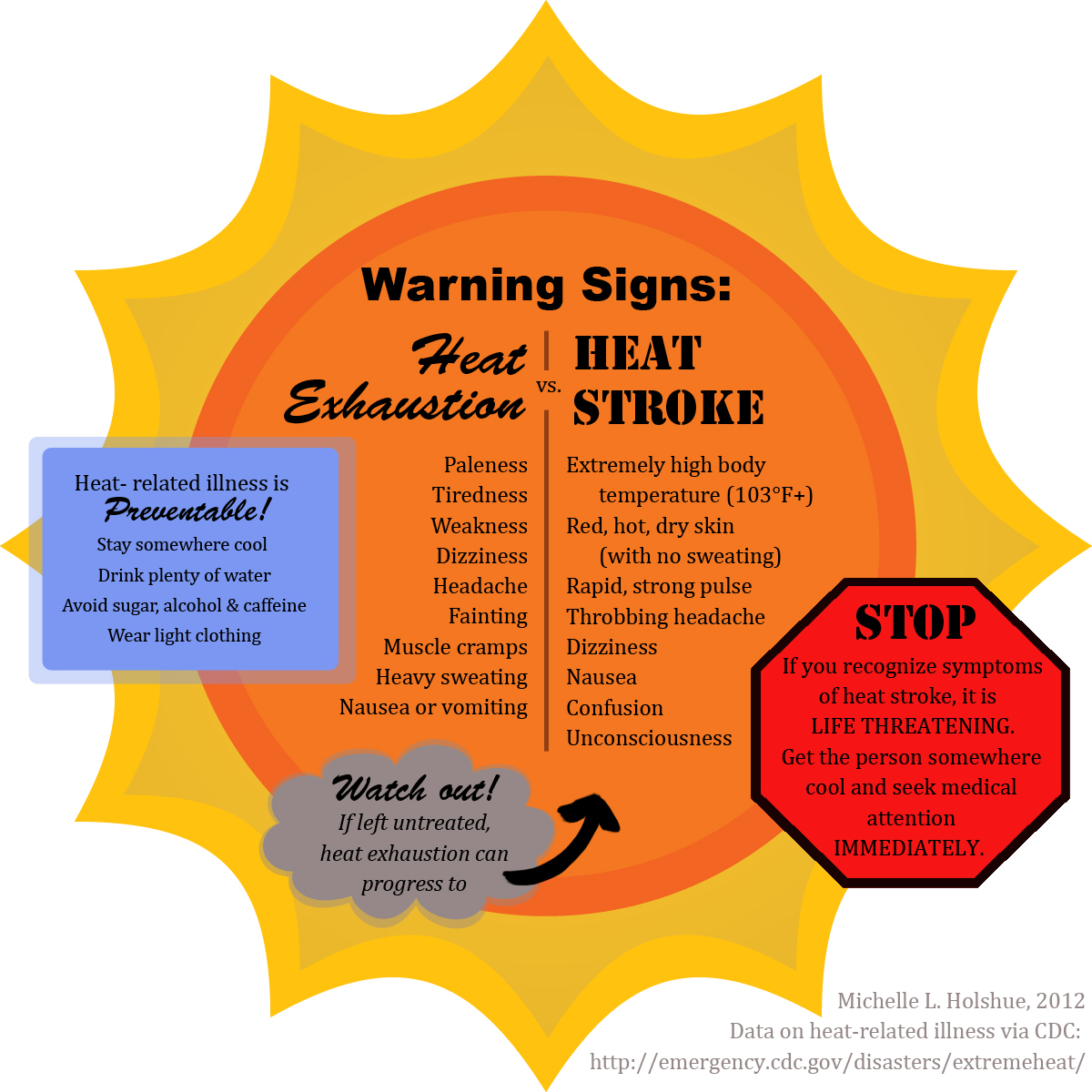
What are the warning signs of a heat stroke?
Warning signs of heat stroke vary but may include the following:

  • An extremely high body temperature (above 103°F)
  • Red, hot, and dry skin (no sweating)
  • Rapid, strong pulse
  • Throbbing headache
  • Dizziness
  • Nausea
  • Confusion
  • Unconsciousness

What is heat exhaustion? 
Heat exhaustion is a milder form of heat-related illness that can develop after several days of exposure to high temperatures and inadequate or unbalanced replacement of fluids. Those most prone to heat exhaustion are elderly people, those with high blood pressure, and those working or exercising in a hot environment.

What are the warning signs of heat exhaustion? 
The warning signs of heat exhaustion include the following:

  • Heavy sweating
  • Paleness
  • Muscle cramps
  • Tiredness
  • Weakness
  • Dizziness
  • Headache
  • Nausea or vomiting
  • Fainting
  • The skin may be cool and moist. The pulse rate will be fast and weak, and breathing will be fast and shallow. If heat exhaustion is untreated, it may progress to heat stroke. See medical attention if symptoms worsen or last longer than one hour.

What steps can be taken to cool the body during heat exhaustion? 

  • Drink cool, nonalcoholic beverages.
  • Rest.
  • Take a cool shower, bath, or sponge bath.
  • Seek an air-conditioned environment.
  • Wear lightweight clothing.

What are heat cramps and who is affected?
Heat cramps are muscle pains or spasms – usually in the abdomen, arms, or legs – that may occur in association with strenuous activity. People who sweat a lot during strenuous activity are prone to heat cramps. This sweating depletes the body’s salt and moisture. The low salt level in the muscles causes painful cramps. Heat cramps may also be a symptom of heat exhaustion. If you have heart problems or are on a low-sodium diet, seek medical attention for heat cramps.

What should I do if I have heat cramps? 
If medical attention is not necessary, take the following steps:

  • Stop all activity and sit quietly in a cool place.
  • Drink clear juice or a sports beverage.
  • Do not return to strenuous activity for a few hours after the cramps subside because further exertion may lead to heat exhaustion or heat stroke.
  • Seek medical attention for heat cramps if they do not subside in 1 hour.

What is heat rash? 
Heat rash is a skin irritation caused by excessive sweating during hot, humid weather. It can occur at any age but is most common in young children. Heat rash looks like a red cluster of pimples or small blisters. It is more likely to occur on the neck and upper chest, in the groin, under the breasts, and in elbow creases.

What is the best treatment for heat rash?
The best treatment for heat rash is to provide a cooler, less humid environment. Keep the affected area dry. Dusting powder may be used to increase comfort, but avoid using ointments or creams — they keep the skin warm and moist and may make the condition worse.

How effective are electric fans in preventing heat-related illness? 
Fans will not prevent heat-related illness. Taking a cool shower or bath or moving to an air-conditioned place is a much better way to cool off. Air conditioning is the strongest protective factor against heat-related illness. Exposure to air conditioning for even a few hours a day will reduce the risk for heat-related illness. Consider visiting a shopping mall or public library for a few hours.

How can people protect their health when temperatures are extremely high?
Remember to keep cool and use common sense. Drink plenty of fluid, replace salts and minerals, wear appropriate clothing and sunscreen, pace yourself, stay cool indoors, schedule outdoor activities carefully, use a buddy system, monitor those at risk, and adjust to the environment.

How much should I drink during hot weather?
During hot weather you will need to drink more liquid than your thirst indicates. Increase your fluid intake, regardless of your activity level. During heavy exercise in a hot environment, drink two to four glasses (16-32 ounces) of cool fluids each hour. Avoid drinks containing alcohol because they will actually cause you to lose more fluid.

What is the best clothing for hot weather or a heat wave? 
Wear as little clothing as possible when you are at home. Choose lightweight, light-colored, loose-fitting clothing. In the hot sun, a wide-brimmed hat will provide shade and keep the head cool. If you must go outdoors, be sure to apply sunscreen 30 minutes prior to going out and continue to reapply according to the package directions. Sunburn affects your body’s ability to cool itself and causes a loss of body fluids. It also causes pain and damages the skin.

What should I do if I work in a hot environment? 
Pace yourself. If you are not accustomed to working or exercising in a hot environment, start slowly and pick up the pace gradually. If exertion in the heat makes your heart pound and leaves you gasping for breath, STOP all activity. Get into a cool area or at least in the shade, and rest, especially if you become lightheaded, confused, weak, or faint.


heat-illness

[JPG, 680.44 KB] Click on image for full size view.

Health District Officials Encourage Mosquito Precautions

Summer is under way and as more people make their way outside for summertime activities, Coastal Health District officials want to remind residents to take precautions to avoid mosquitoes. Mosquito bites are annoying but can also cause diseases such as West Nile Virus (WNV), Eastern Equine Encephalitis (EEE), and Chikungunya.

WNV is transmitted by the bite of infected mosquitoes. About 80 percent of people infected with WNV will not show any symptoms at all; however, cases can range from mild to severe. Mosquitoes that carry the West Nile Virus are more likely to bite during the evening, night, and early morning. EEE is a mosquito-borne virus that causes swelling of the brain. In horses, it is fatal 70 to 90 percent of the time. Horse and large animal owners are encouraged to vaccinate their animals against the virus and to clean out watering sources, such as buckets and troughs, every three-to-four days to prevent mosquitoes from breeding there. The most common symptoms of Chikungunya are fever and joint pain and symptoms usually begin 3–7 days after being bitten by an infected mosquito. According to the Centers for Disease Control and Prevention (CDC), reported cases of Chikungunya thus far in 2015 have occurred in travelers returning from affected areas including Puerto Rico and the U.S. Virgin Islands.

“The common thread among these illnesses is that they are transmitted through mosquito bites,” said Diane Weems, M.D., Coastal Health District Health Director. “The more precautions we take against getting bitten by mosquitoes the better our chances are of avoiding any mosquito-borne diseases.”

Mosquito Prevention

The best way to prevent mosquito-related diseases is to avoid mosquito bites. Mosquitoes breed in standing water which is why it is important to remove water-holding containers (buckets, barrels, flower pots, tarps, etc.; drill holes in tire swings so water drains out; keep children’s wading pools empty and on their sides when they’re not being used; change water frequently in pet dishes; change bird bath water at least twice a week; and avoid using saucers under outdoor potted plants.

The following tips can help lessen the risk of getting bitten by mosquitoes:

  • DRAIN all standing water.
  • Avoid DAWN and DUSK when mosquitoes are most active.
  • DRESS appropriately in long sleeves and pants.
  • DEFEND or DEET yourself against mosquitoes with an effective repellent. Repellents containing DEET, picaridin, IR3535, and oil of lemon eucalyptus and para-menthane-diol products provide long lasting protection.
  • DOORS and windows should be in good condition.

Protect Your Septic System

It’s important to maintain your septic system. Don’t wait until there are problems! Check out this helpful video put together by the University of Georgia Marine Extension Service, Georgia Sea Grant College Program, Water Quality Program. The UGA Marine Extension Service is a combination of programs, research, and education, geared toward improved sustainability and environmental consciousness of marine industries and coastal ecosystems. This public service announcement is an effort to make the public more conscious of maintaining their septic tank systems.

Family Dog Tests Positive for Rabies: Glynn Co. Health Department Reminds Residents to Vaccinate Pets

A family dog that fought with a raccoon and later began showing signs of rabies infection had to be euthanized and has since tested positive for rabies. The dog was not up-to-date on his rabies vaccinations. The incident happened in West Point Plantation on St. Simons Island. As a precautionary measure, two people who were exposed to the dog are now undergoing post-exposure prophylaxis for rabies.

“A lot of wild animals that are native to our area – like raccoons and foxes – are known carriers of rabies,” said Glynn County Assistant Environmental Health Manager, Erin Doane. “That’s why it is so important to make sure that pets are vaccinated against the virus.”

Rabies is a potentially deadly virus that is primarily spread by infected animals. Symptoms of rabies in animals include a change in behavior, biting, aggression, showing no fear of natural enemies (such as humans), foaming at the mouth, and paralysis.

The Glynn County Health Department Environmental Health Division offers these tips to protect you and your family from rabies:

  • Avoid contact with animals you don’t know.
  • Make sure your pets receive the proper immunizations. Dogs and cats should get rabies vaccines by four months of age, followed by a booster shot one year later, and another one every one to three years as prescribed by your veterinarian.
  • Do not handle, feed, or unintentionally attract wild animals with open garbage cans or by leaving pet food out at night.
  • Never adopt wild animals or bring them into your home. Do not try to nurse sick animals to health. Call animal control or a properly licensed animal rescue agency for assistance.
  • Teach children to never handle unfamiliar animals, wild or domestic, even if they appear friendly. “Love your own, leave other animals alone” is a good principle for children to learn.

If an animal ever bites you, seek medical care immediately and contact Glynn County Animal Control at 912-554-7500 and the Glynn County Health Department Environmental Health Division at 279-2940.

McIntosh County Health Department to Hold Child Car Seat Safety Check on June 19

The McIntosh County Health Department, with help from Georgia State Patrol Post 11 in Hinesville, will hold a child car seat safety check from 9 a.m. to 1 p.m. on Friday, June 19, at the health department located at 1335 Hwy. 57 in Townsend. Certified Child Passenger Safety Technicians will be available to examine child safety seats for recalls and to ensure correct installation in vehicles.

Motor vehicle crashes are the leading cause of death among children ages 2-14 and the leading cause of injury-related death for children under two. Each year an estimated 2,446 children die in motor vehicle crashes. When installed and used correctly, child car seats and seat belts can prevent injuries and save lives.

The McIntosh County Health Department child car seat safety check event is an opportunity for parents, parents-to-be, and child caregivers to have their car seats checked by Certified Child Passenger Safety Technicians for proper installation. The event is made possible through a grant from the Miller Family Fund, a component fund of the Communities of Coastal Georgia Foundation. The Health Department received funding earlier this year to educate families on the proper installation of car seats and general seatbelt safety.

The event is free and open to the public and no appointment is necessary.

Glynn Co. Health Department Schedules Wacky WIC Wednesdays

The Glynn County Health Department will hold Wacky WIC Wednesdays from 8 a.m. to 3 p.m. on June 24, July 29, and August 26 for WIC clients who may have missed previous appointments. On designated Wednesdays, WIC clients can walk in and receive services. No appointment is necessary. There will also be fun activities scheduled and prize giveaways on those days.

Women, Infants, and Children’s (WIC) is a supplemental nutrition program that provides nutritious foods, education, and improved healthcare access for low and moderate-income women and children who are at risk of developing nutrition related health problems. The federally-funded health and nutrition program is for infants and children age 1 to 5 years (including foster children); pregnant women; breastfeeding mothers (up to one year); and postpartum women (up to six months).

For more information about WIC services, call 912-289-1810 or click HERE.


Microsoft Word - Wacky Wednesday Flyer [JPG, 386.94 KB]


Free HIV Testing Events Scheduled in Chatham and Glynn Counties

The U.S. Center for Disease Control and Prevention (CDC) estimates that one out of five people living with HIV/AIDS in the U.S. is unaware of their HIV status. National Testing Day is an opportunity for people to learn of their HIV status and to gain knowledge to take control of their lives. The Chatham and Glynn CARE Centers, Coastal Health District centers for expanded HIV services, are pleased to offer free HIV testing as part of this global effort.

The Coastal Health District HIV program will offer free HIV testing at several locations in June in observance of National HIV Testing Day. Testing will be done without the use of a needle and those tested will get results in 20 minutes. A follow-up visit will be scheduled for anyone who tests positive and counseling will be made available to those individuals.

Volunteers are also needed to help with the HIV testing events. Volunteer positions include greeters, client intake specialists, data entry specialists, client flow staff, and form couriers.

For more information, please call Diane DeVore at (912) 353-3276 or e-mail Diane.DeVore@dph.ga.gov


HIV Free Testing Locations Flyer 6.15_Layout 1.qxd [JPG, 1.47 MB]