The Coastal Health District of Georgia serves the counties of Bryan, Camden, Chatham, Effingham, Glynn, Liberty, Long & McIntosh

Posts by District_PIO


Georgia Department of Public Health’s Babies Can’t Wait Program Seeks Public Comment

ATLANTA – The Georgia Department of Public Health’s (DPH) Babies Can’t Wait (BCW) program invites interested persons to participate in a 60-day public comment period for the Federal Fiscal Year (FFY) 2015 Annual State Application under Part C of the Individuals with Disabilities Education Act (IDEA) and Fiscal Policies. Stakeholders, early intervention providers, parents and members of the public are encouraged to comment and may review the grant application and revised policy online or at locations throughout the state.

Comments will be accepted in four ways:

1.    Written comments will be received by mail until Apr. 18, 2015:

Babies Can’t Wait
Attn: Cynthia Bryant, Part C Coordinator
2 Peachtree Street NW, Suite 11-204
Atlanta, GA 30303-13422

2.    Email comments will be received until Apr. 18, 2015:
DPH-MCHDO@dph.ga.gov  (Subject line: Part C or Public Comment)

3.    Facsimile comments will be received until April 18, 2015:
State BCW Office Fax: (404-657-2763)

4.    In Person comments at a Public Hearing:
DPH invites interested persons to attend Public Hearings and present public comments. To allow an opportunity for all to be heard, comments will be limited to five minutes. (See locations listed below.)

Gainesville (2)
March 10, 2015, 4:30 PM – 6:30 PM
Gainesville Health District
440 Prior Street, SE
Gainesville, GA 30501
(770) 531-4053
Contact: Patricia (Dru) Thomas, Early Intervention Coordinator
(770) 531-4053
Dru.Thomas@dph.ga.gov

Clayton (3-3)
March 10, 2015, 4:30 PM – 6:30 PM
Clayton County Library
865 Battle Creek Road
Jonesboro, GA 30236
770-473-3850
Contact: Nicole Wilson
Early Intervention Coordinator
(678) 610-7252
Nicole.Wilson@dph.ga.gov

Columbus (7)
March 12, 2015, 4:30 PM – 6:30 PM
The Health and Human Services Building
2100 Comer Avenue
Columbus, GA 31902
(706) 327-0645
(800) 527-7344
Contact: Tori Endres, Early Intervention Coordinator
(706) 321-6136
Tori.Endres@dph.ga.gov

Waycross   (9-2)
March 10, 2015, 4:00 PM – 6:00 PM
Waycross Health District
C.N.N. Building
1057 Grove Avenue
Waycross, GA 31501
(912) 284-2552
Contact: Tracy Weeden
Early Intervention Coordinator
(912) 284-2552
Tracy.Weeden@dph.gov


The Babies Can’t Wait (BCW) Program is Georgia’s statewide early intervention system for infants and toddlers with special needs, age birth to three, and their families. This program enhances the capacity of families to meet the special needs of their child in order to ensure that each young child with significant developmental delays achieves his or her maximum developmental potential.

To learn more about DPH’s Babies Can’t Wait program, please call 404-657-2762 or 888-651-8224 or visit http://dph.georgia.gov/Babies-Cant-Wait.


Parents of Preteens: Make a date to vaccinate

Let’s face it – nobody likes getting shots. But a shot lasts a second; diseases last much longer.

In an effort to protect every adult and child, the Georgia Department of Public Health established Georgia Preteen Vaccine Awareness Week, observed February 22-28, 2015, to serve as a reminder for parents to talk with their preteens and teens about getting immunized against vaccine-preventable diseases.

“Our Preteens teens are branching out. They go to overnight camps, attend parties and play team sports – they are becoming increasingly social. While these are all fun parts of being a teenager, they can also increase their risk for contracting potentially life-threatening diseases,” said Sheila Lovett, acting director for the Georgia Department of Public Health Immunization Office. “Let’s help our children grow and protect them every way we can – including their future health and those around them with immunization against vaccine-preventable diseases.”

According to the Georgia  Department of Public Health Rule (511-2-2), all students born on or after January 1, 2002, entering or transferring into seventh grade and any “new entrant” into eighth -12th grades in Georgia need proof of an adolescent pertussis (whooping cough) booster vaccination (called “Tdap”) AND an adolescent meningococcal vaccination (MCV4). This law affects all public and private schools including, but not limited to charter schools, community schools, juvenile court schools and other alternative school settings (excluding homeschool).

Vaccines are the best defense we have against serious, preventable and sometimes deadly contagious diseases. They help avoid expensive therapies and hospitalization needed to treat infectious diseases like influenza and meningitis. Immunizations also reduce absences both at school and after school activities and decrease the spread of illness at home, school and the community.

The CDC currently recommends the following vaccines for preteens and teens:

·         Tetanus, Diphtheria and Pertussis (Tdap)

·         Influenza (flu)

·         Human Papillomavirus (HPV) – three doses

·         Meningococcal Disease (MCV4)

Georgia Preteen Vaccine Awareness Week is an opportunity to raise awareness through schools, health care providers and the media regarding preteen immunizations, particularly Georgia’s new pertussis and meningococcal requirements for incoming seventh-grade students. Speak with your physician today to find out if your preteen is up-to-date and if not, make a date to vaccinate.

Free HIV Testing Event Scheduled for Feb. 27 in Chatham County

The Chatham CARE Center, a Coastal Health District program center for expanded HIV services, will hold a free and confidential HIV testing  event from 9 a.m. to 3 p.m. on Friday, February 27, at the Chatham County Health Department at 1395 Eisenhower Drive, to commemorate National Black HIV/AIDS Awareness Day.

National-Black-HIV-AIDS-Awareness-Day-Logo-3_Retina [JPG]

Testing will be done without the use of a needle and those tested will get results in 20 minutes. A follow-up visit will be scheduled for anyone who tests positive and counseling will be made available to those individuals. All testing is completely confidential. Free educational materials and giveaways will also be available and no appointment is necessary.

National Black HIV/AIDS Awareness Day is held annually in February to increase HIV awareness and testing among black communities around the country. According to the Centers for Disease Control and Prevention (CDC), blacks account for more new HIV infections (44%), people living with HIV (43%), and deaths of persons with diagnosed HIV (48%) than any other racial/ethnic group in the nation.

For more information on the event, call (912) 353-3276 or email Diane.DeVore@dph.ga.gov.

Glynn County Health Department, Jekyll Island Authority, and DNR Announce Water Monitoring Changes on Jekyll Island

The Glynn County Health Department, in conjunction with the Jekyll Island Authority and the Georgia Department of Natural Resources (DNR), announced today that St. Andrews Beach (from Macy Lane to the St. Andrews Beach picnic area) and Clam Creek Beach (from Clam Creek to beach kilometer marker 1) on Jekyll Island will be placed under permanent advisory due to continually elevated bacteria levels. No other beaches on the island are affected by the advisory.

The DNR will also begin monitoring the water at Driftwood Beach on Jekyll Island once a week year-round. Driftwood Beach is located on the north end of the island. The three agencies agree that implementing the changes is in the best interest of all who use the St. Andrews, Clam Creek, and Driftwood Beach areas for recreation.

A permanent advisory indicates that there is a continual potential human health risk and therefore swimming and wading are advised against. In addition, fish and other seafood caught from this area should be thoroughly washed with fresh water and thoroughly cooked before eating as should fish or seafood caught from any waters.

In accordance with U.S. Environmental Protection Agency guidance, a permanent advisory can be issued “under conditions such as naturally occurring organisms that are present in the water or human influences that cause a continuous or reoccurring water quality standard exceedance.”

Georgia’s beach water monitoring program is part of the United States Environmental Protection Agency’s (EPA) federal Clean Water Act. As part of the program, water along the Georgia coast is tested regularly for the presence of enterococci bacteria. If bacteria levels are elevated in any particular area, an advisory is issued by the local health department and the public is notified of possible risks associated with the bacteria. Elevated levels of bacteria can come from any number of sources including animal waste, storm water runoff, or boating waste.

For more information on beach water advisories, go click HERE or go to coastalgadnr.org.

Glynn Co. Health Department Receives Donations for Reach Out and Read Program

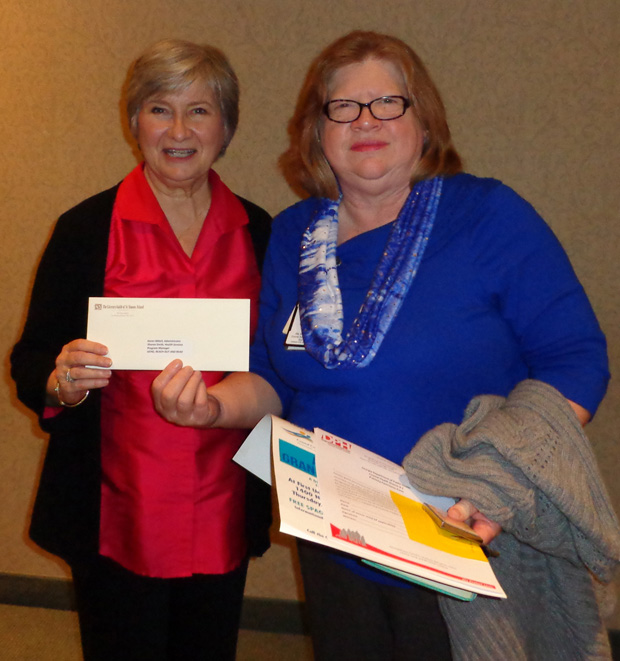
The Glynn County Health Department recently received two generous donations from The Literary Guild of St. Simons Island and Walmart to support the Reach Out and Read program. Reach Out and Read is an initiative aimed at promoting literacy by educating parents about the importance of reading to young children and giving books to children to inspire them to take an active interest in reading.

The Literary Guild of St. Simons Island donated $2,000 and the Walmart Neighborhood Market in Brunswick donated $1,000 which will help purchase books for Reach Out and Read. Glynn County Health Department Administrator, Karen Mikell, R.N., said the donations will prove invaluable.

“These unexpected gifts will help us buy books for the children who come into our health department for other services,” said Mikell. “The Reach Out and Read program is a wonderful way to try to instill a love of reading at an early age and show parents how important it is to encourage their children to read.”

The Literary Guild of St. Simons regularly supports the local library and also funds other projects, such as Reach Out and Read, in an effort to support literacy.

“We believe that the entire community benefits when individuals’ literacy skills are strengthened,” said President of the Literary Guild of St. Simons, Paul Pieschel.

Reach Out and Read Glynn

[JPG, 148.25 KB] Vicki Skywark, Vice President of The Literary Guild of St. Simons Island, (left) presents a check for $2,000 to Glynn County Health Department Administrator, Karen Mikell, R.N., to support the Reach Out and Read program.


National Black HIV/AIDS Awareness Day

National Black HIV/AIDS Awareness Day is held every year in early February to promote HIV education and testing in black communities. To commemorate National Black HIV/AIDS Awareness Day 2015, this A free HIV testing event will be held from 9 a.m. to 3 p.m. on Friday, February 27, at the Chatham County Health Department located at 1395 Eisenhower Drive in Savannah. All testing is completely confidential and no appointment is necessary.

Did you know? …

When we look at HIV/AIDS by race and ethnicity, Blacks have more illness (Blacks represent only 12% of the U.S. population, yet account for 44% of new HIV infections and 44% of people living with HIV disease in 2006); and more deaths (Blacks accounted for 57% of deaths due to HIV in 2007 and the survival time after an AIDS diagnosis is lower on average than it is for most other racial/ethnic groups).  In 2009, Blacks accounted for 44% of all new HIV infections.

The AIDS diagnosis rate per 100,000 among Black adults/adolescents was 8 times that of whites in 2008.  The AIDS diagnosis rate for Black men (103.6) was the highest of any group, followed by Latino men (45.5), and Black women (38.1).  By comparison, the rate among white men was 8.7.  The rate of new infections is also highest among Blacks and was 7 times greater than the rate among whites in 2006.

Among the U.S. population overall, Blacks are more likely than Latinos or whites to report having been tested for HIV in the last 12 months (45% compared to 30% and 14% respectively).  Among those who are HIV positive, CDC data indicate that 33% of Blacks were tested for HIV late in their illness—that is, diagnosed with AIDS within one year of testing positive for HIV (in those states/areas with HIV name reporting); by comparison, 30% of whites and 36% of Latinos were tested late.

In 2009, an estimated 16,741 Blacks were diagnosed with AIDS diagnosis in the US, a number that has slowly decreased since 2006.  By the end of 2008, an estimated 260,800 Blacks with an AIDS diagnosis had died in the US. In 2009, HIV was the ninth leading cause of death for all Blacks and the fourth leading cause of death for both Black men and Black women aged 25–44.

The number of new HIV infections per year among Blacks is down from its peak in the late 1980s, but has exceeded the number of infections among whites since that time; new infections have remained stable in recent years.

A recent analysis of 1999–2006 data from a national household survey found that 2% of Blacks in the U.S. (among those ages 18–49) were HIV positive, significantly higher than whites (0.23%). Also, the prevalence of HIV was higher among Black men (2.64%) than Black women (1.49%).

At some point in their lifetimes, 1 in 16 Black men will be diagnosed with HIV infection, as will 1 in 32 Black women.

From 2005–2008, the rate of HIV diagnoses among Blacks increased from 68 per 100,000 persons to 74 per 100,000. This increase reflects the largest increase in rates of HIV diagnoses by race or ethnicity.
Of all Black men living with HIV/AIDS, the primary transmission category was sexual contact with other men, followed by injection drug use and high risk heterosexual contact.
Of all Black women living with HIV/AIDS, the primary transmission category was high risk heterosexual contact, followed by injection drug use.
Of the estimated 141 infants prenatally infected with HIV, 91 (65%) were Black (CDC, HIV/AIDS Reporting System, unpublished data, December 2006).

There are approximately 1.1 million people living with HIV/AIDS in the U.S, including more than 500,000 who are Black.


If you didn’t know, now you do!

Measles Information


Measles [JPG, 48.58 KB]

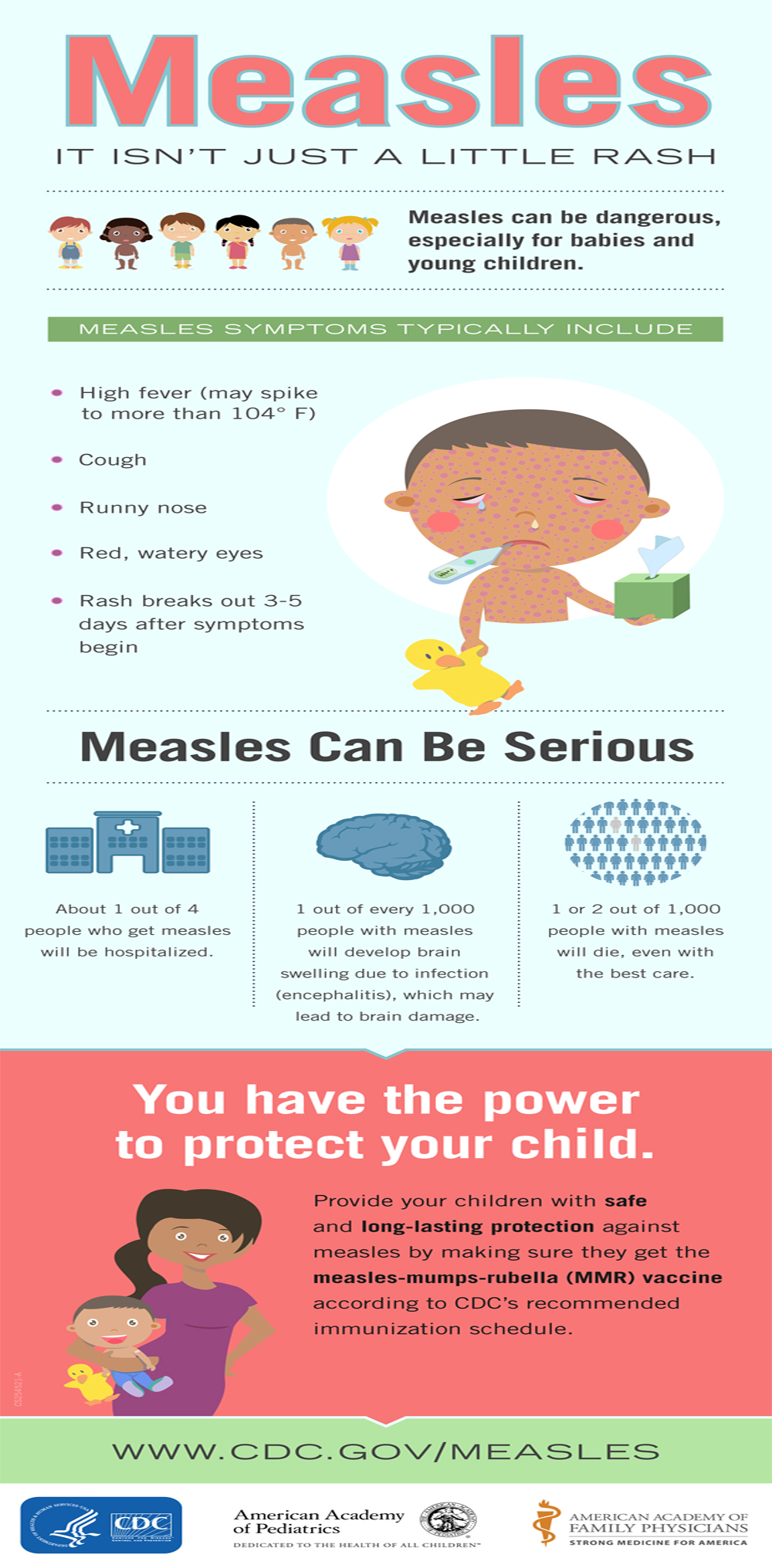
Measles, also called rubeola, is a highly contagious respiratory disease caused by a virus. Measles starts with a fever, runny nose, cough, red eyes, and sore throat, and is followed by a rash that spreads all over the body. Measles spreads through the air by breathing, coughing or sneezing. Measles is highly contagious and can be spread to others from four days before to four days after the rash appears. Infected people are usually contagious from about four days before their rash starts to four days afterwards.

Measles: It Isn't Just a Little Rash

[JPG, 860.37 KB] Click on image for larger view.


     The Top Four Things Parents Need to Know about Measles

According to the Centers for Disease Control and Prevention (CDC), there were 102 cases of measles reported from January 1-30, 2015        and:
– The majority of the people who got measles were unvaccinated.
– Measles is still common in many parts of the world including some countries in Europe, Asia, the Pacific, and Africa.
– Travelers with measles continue to bring the disease into the U.S.
– Measles can spread when it reaches a community in the U.S. where groups of people are unvaccinated.

To find out more about measles, check out great Q&A for parents and caregivers: Measles Fact Sheet [PDF].

For more information on the measles vaccine, click HERE.

For additional information on measles, go the the Georgia Department of Public Health website.


Be Heart Smart

One in four deaths are caused by heart disease every year and heart disease is the leading cause of death for both women and men in the United States. The way you live your life and some health conditions can determine whether or not you get heart disease. Heart disease is also known as coronary artery disease which, according to the Centers for Disease Control and Prevention (CDC), can cause heart attack, angina, heart failure, and arrhythmias.

So what are some steps you can take to get and stay heart healthy? The CDC offers the following:

Eat a healthy diet. Choosing healthful meal and snack options can help you avoid heart disease and its complications. Be sure to eat plenty of fresh fruits and vegetables—adults should have at least 5 servings each day. Eating foods low in saturated fat, trans fat, and cholesterol and high in fiber can help prevent high cholesterol. Limiting salt or sodium in your diet also can lower your blood pressure. For more information on healthy diet and nutrition, visit the CDC’s Nutrition and Physical Activity Program website.

Maintain a healthy weight. Being overweight or obese can increase your risk for heart disease. To determine whether your weight is in a healthy range, doctors often calculate a number called the body mass index (BMI). Doctors sometimes also use waist and hip measurements to measure a person’s body fat. If you know your weight and height, you can calculate your BMI at CDC’s Assessing Your Weight website.

Exercise regularly.
 Physical activity can help you maintain a healthy weight and lower cholesterol and blood pressure. The Surgeon General recommends that adults should engage in moderate-intensity exercise for at least 30 minutes on most days of the week. For more information, see CDC’s Nutrition and Physical Activity Program website.

Monitor your blood pressure. High blood pressure often has no symptoms, so be sure to have it checked on a regular basis. You can check your blood pressure at home, at a pharmacy, or at a doctor’s office. Find more information at CDC’s High Blood Pressure website.

Don’t smoke. Cigarette smoking greatly increases your risk for heart disease. If you don’t smoke, don’t start. If you do smoke, quit as soon as possible. Your doctor can suggest ways to help you quit. For more information about tobacco use and quitting, see CDC’s Smoking & Tobacco Use website.

Limit alcohol use. Avoid drinking too much alcohol, which can increase your blood pressure. Men should stick to no more than two drinks per day, and women to no more than one. For more information, visit CDC’s Alcohol and Public Health website.

Have your cholesterol checked. Your health care provider should test your cholesterol levels at least once every 5 years. Talk with your doctor about this simple blood test. You can find out more from CDC’s High Cholesterol website.

Manage your diabetes. If you have diabetes, monitor your blood sugar levels closely, and talk with your doctor about treatment options. Visit CDC’s Diabetes Public Health Resource for more information.

Take your medicine. If you’re taking medication to treat high blood pressure, high cholesterol, or diabetes, follow your doctor’s instructions carefully. Always ask questions if you don’t understand something.

What are the five major symptoms of a heart attack?

  • Pain or discomfort in the jaw, neck, or back.
  • Feeling weak, light-headed, or faint.
  • Chest pain or discomfort.
  • Pain or discomfort in the arms or shoulder.
  • Shortness of breath.

If you think that you or someone you know is having a heart attack, call 9-1-1 immediately.

Bryan County Awarded Car Seat Mini Grant

GOHS Logo 2 [JPG, 36.83 KB]The Georgia Department of Public Health’s (DPH), Injury Prevention Program is pleased to announce that Bryan County has been named a 2015 recipient of the Child Passenger Safety Mini-Grant. The Child Passenger Safety Mini-Grant program helps county health departments and their community partners reduce the number of injuries and deaths among children in Georgia. This year’s $161,000 award will be used to support the purchase of car seats to be distributed in 137 Georgia counties.  Funding for these efforts is provided by the Governor’s Office of Highway Safety (GOHS).

Since 2007, at least 283 children in Georgia who were involved in crashes were saved from serious injury or death by car seats, booster seats, and education provided through the Mini-Grant.

“It’s up to all of us to keep our children safe and buckling up our children is the best way to save lives and reduce injuries,” said Bryan County Health Department Nurse Manager, Joanne Burnsed, R.N. “The Car Seat Mini-Grant is a great opportunity to help our community and help protect our kids from serious injuries or death in motor vehicle crashes.”

Throughout Georgia, DPH and county health departments work with community partners to educate parents and caregivers on how to properly install and use car seats, offer car seat inspections and provide car seats and booster seats to financially eligible families. Through the Car Seat Mini-Grant, agencies supporting more than 135 counties are working to keep Georgia’s children safe.  These programs help families get their children buckled up right, every trip, every time.

For more information about the Bryan County car seat program, contact Laurie R. Mehlhorn, R.N. at the Bryan County Health Department at 756-2611.

Health Officials Encourage Rabies Precautions

A Glynn County resident was exposed to a fox that showed signs associated with rabies. Although the fox could not be tested for rabies because of damage to the its body after being hit by a car, the fox is presumed to have had the disease. As a result, Glynn County Health Department environmental health officials are encouraging residents to be aware of unusual behavior in wildlife and avoid contact with wildlife.

Symptoms of rabies in animals include a change in behavior, biting, aggression, showing no fear of natural enemies (such as humans), foaming at the mouth, and paralysis. Rabies is a potentially deadly virus that is primarily spread by infected animals. Residents should always avoid contact with wild or stray animals, watch for unusual behavior in pets and wildlife, and get pets vaccinated against rabies. Leaving food outdoors for family pets or undomesticated animals can attract potentially rabid wildlife.

The Glynn County Health Department offers these tips to protect you and your family from rabies:

Avoid contact with animals you don’t know.
Make sure your pets receive the proper immunizations. Dogs and cats should get rabies vaccines by four months of age, followed by a booster shot one year later, and another one every one or three years depending on the type of vaccine used.
Do not handle, feed, or unintentionally attract wild animals with open garbage cans or by leaving pet food out at night.
Never adopt wild animals or bring them into your home. Do not try to nurse sick animals to health. Call animal control or a properly licensed animal rescue agency for assistance.
Teach children to never handle unfamiliar animals, wild or domestic, even if they appear friendly. “Love your own, leave other animals alone” is a good principle for children to learn.
If an animal ever bites you, seek medical care immediately and contact Glynn County Animal Control at 912-554-7500 and the Glynn County Health Department Environmental Health Division at 912-279-2940.