Air Quality Monitoring Resources and Health Information
READ MORE »

×

The Coastal Health District of Georgia serves the counties of Bryan, Camden, Chatham, Effingham, Glynn, Liberty, Long & McIntosh

Glynn News


Free HIV Testing Events in February

The Coastal Health District HIV Prevention Program will hold free HIV testing events at  several locations throughout the month of February in observance of National Black HIV/AIDS Awareness Day (NBHAAD). Although the events are being held to bring awareness to HIV/AIDS education, testing, and treatment among black communities, these testing events – and all HIV testing events offered in the Coastal Health District – are open to the public.

The following events have been scheduled:

Thursday, February 6
12:30 p.m. – 4:30 p.m.
Georgia Southern University, Armstrong Campus, Savannah

*Friday, February 7
11 a.m. – 7 p.m.
Walgreens, 2270 U.S. Hwy. 17, Richmond Hill
* (The first 25 people to be tested at the event in Richmond Hill will receive gift cards).

Saturday, February 8
12 p.m. – 7 p.m.
Savannah Civic Center (Black Heritage Festival)

Monday, February 10
12:30 p.m. – 4:30 p.m.
Georgia Southern University, Liberty Campus, Hinesville

Wednesday, February 12 and February 19
Time TBD
Savannah State University

Thursday, February 13
11 a.m. – 3 p.m.
College of Coastal Georgia, Brunswick

According to the Centers for Disease Control and Prevention (CDC), blacks/African Americans accounted for 43 percent of all HIV diagnoses in the United States in 2017. Currently, there are around 1.2 million people in the United States are living with HIV, and one in eight people don’t know they have it. Getting tested and getting those who are HIV positive into treatment right away is vital in stopping the HIV epidemic.

As a reminder, HIV testing is always free at all health departments in Bryan, Camden, Chatham, Effingham, Glynn, Liberty, Long, and McIntosh counties and available Monday through Friday during regular health department hours of operation.

Georgia Counties Share Car Seat Mini Grant

ATLANTA – The Georgia Department of Public Health’s (DPH), Injury Prevention Program, Child Occupant Safety Project, is pleased to announce the 2019 recipients of the Child Passenger Safety MiniGrant. The Child Passenger Safety MiniGrant program helps county health departments and their community partners reduce the number of injuries and deaths among children in Georgia. This year’s $166,000 award will be used to support the purchase of car seats to be distributed in over 107 Georgia counties.  Funding for these efforts is provided by the Governor’s Office of Highway Safety (GOHS).

And it works! Since 2007, the education, car seats and booster seats provided through the Mini Grant prevented serious injury or death and has saved over 375 of Georgia’s children who were involved in crashes.

“Motor vehicle crashes are a leading cause of death for children and it’s up to all of us to do everything we can to protect our children on the road,” said Kathleen E. Toomey, Commissioner of the Georgia Department of Public Health. “Buckling up our children is the best way to save lives and reduce injuries.”

Throughout Georgia, DPH and county health departments work with community partners to educate parents and caregivers on how to properly install and use car seats, offer car seat inspections and provide car seats and booster seats to financially eligible families. Through the Car Seat Mini-Grant, agencies supporting more than 143 counties are working to keep Georgia’s children safe.  These programs help families get their children buckled up right, every trip, every time.

DPH takes great pride in providing opportunities to enhance community outreach programs in Georgia. Through our collective efforts, we can make considerable strides in achieving our goals. For more information on the child Occupant Safety Project, please email injury@dph.ga.gov or call the office at 404-463-1487.

2020 County Mini Grant Awardees:

Appling, Atkinson, Bacon, Banks, Barrow, Ben Hill, Berrien, Bibb, Brooks, Bryan, Bulloch, Burke, Butts, Camden, Carroll, Charlton, Chatham, Chattahoochee, Cherokee, Clarke, Clay, Clayton, Cobb, Coffee, Colquitt, Columbia, Cook, Crawford, Crisp, Dade, Dawson, DeKalb, Dougherty, Douglas, Early, Echols, Elbert, Fannin, Fayette, Forsyth, Franklin, Fulton, Gilmer, Glynn, Gordon, Greene, Habersham, Haralson, Harris, Hart, Henry, Houston, Irvin, Jasper, Jeff Davis, Jones, Lamar, Lanier, Laurens, Lee, Liberty, Lincoln, Long, Lowndes, Macon, Marion, McDuffie, McIntosh, Meriwether, Morgan, Murray, Muscogee, Newton, Oconee, Paulding, Pickens, Pike, Polk, Quitman, Randolph, Richmond, Rockdale, Schley, Spalding, Stephens, Stewart, Sumter, Taliaferro, Tattnall, Telfair, Terrell, Thomas, Tift, Troup, Twiggs, Union, Upson, Walton, Ware, Warren, Washington, Webster, White, Whitfield, Wilcox, Wilkinson, Worth.

Beach Advisories Lifted in Chatham & Glynn Counties

Updated January 16, 2020:

The beach water advisories in Chatham & Glynn Counties have been lifted.

Recent water samples show that bacteria levels have dropped below EPA limits, and therefore the advisories have been lifted on Tybee, St. Simons Island & Jekyll Island.


January 14, 2020:

The health departments in Chatham and Glynn Counties have issued water quality advisories for beach locations on Tybee, St. Simons, and Jekyll Islands.

The advisory locations are:

  • Tybee Island: Polk Street Beach (from the end of the beach on the north side of the island to the jetty)
  • St. Simons Island: Fifth Street Crossover Beach (from Cedar Street to 9th Street)
  • Jekyll Island: Driftwood Beach (Beach KM Marker 1 to Tallu Fish Lane)

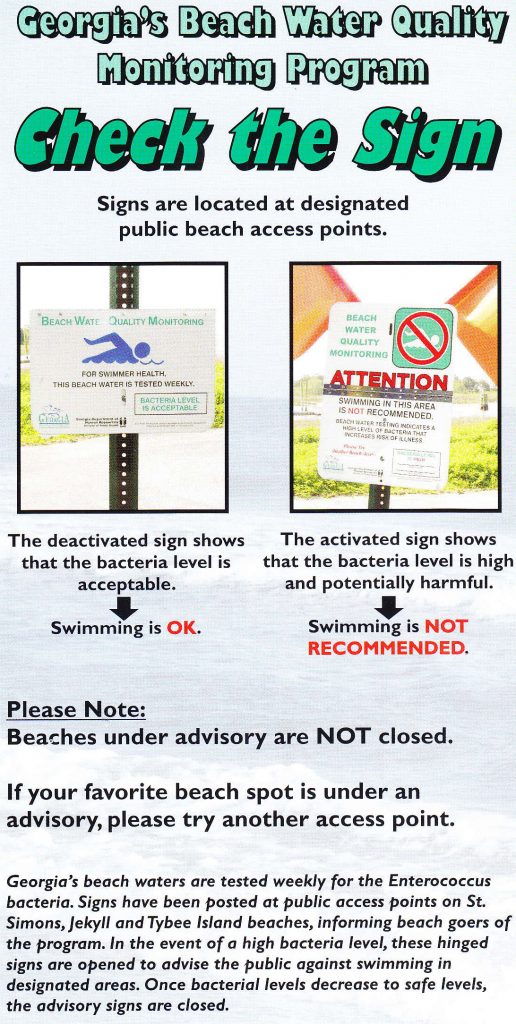
graphic showing the beach water advisory signs [JPG, 2.57 MB]These advisories are only for the areas specified above and do not impact the other beach areas on these islands. There is no way of knowing if going into water that is under advisory will result in illness. However, these beach water advisories are to alert the public of a possible risk of illness associated with water contact. An area under advisory does not mean the beach is closed.

Water samples are collected weekly on these islands except in winter, when samples are collected every two weeks. The samples are tested for enterococcus (pronounced: en·ter·o·coc·cus) bacteria which is found in warm blooded animals including humans but also birds, raccoons, deer, dolphins and other wildlife. It is difficult to determine exactly where the bacteria come from, but some sources could include animal waste, storm water runoff, or boating waste. When a beach is under advisory, it means that the level of bacteria found in the water is above the Environmental Protection Agency’s recommended standards.

The Health Department recommends you do not swim or wade in the water in the area under advisory. Fish and other seafood caught from this area should be thoroughly washed with fresh water and thoroughly cooked before eating, as should fish or seafood caught from any waters.

The areas will be re-tested, and the advisories will be lifted when tests show the bacteria levels meet the Environmental Protection Agency’s recommended standards.

For more information, visit our Beach Water Testing Program page.

Beach Advisories Lifted in Chatham & Glynn Counties

Updated Friday, January 3, 2020:

The beach water advisories in Chatham & Glynn Counties have been lifted.

Recent water samples show that bacteria levels have dropped below EPA limits, and therefore the advisories have been lifted.


Tuesday, December 31, 2019:

The health departments in Chatham and Glynn Counties have issued water quality advisories for beach locations on Tybee, St. Simons, and Jekyll Islands.

The advisory locations are:

Tybee Island

From Lovell Street to Inlet Avenue, which includes:

  • Middle Beach at Center Terrace
  • Strand Beach at the Pier
  • South Beach at Chatham Street

St. Simons Island

  • North Beach at Goulds Inlet (Fifteenth Street to Tenth Street)
  • South Beach at the Lighthouse (Ninth Street to the Pier)

Jekyll Island

  • Driftwood Beach (Beach KM Marker 1 to Tallu Fish Lane)
  • South Dunes Picnic Area Beach (Corsair Beach Park to South Water Tower)

graphic showing the beach water advisory signs [JPG, 2.57 MB]These advisories are only for the areas specified above and do not impact the other beach areas on these islands. There is no way of knowing if going into water that is under advisory will result in illness. However, these beach water advisories are to alert the public of a possible risk of illness associated with water contact. An area under advisory does not mean the beach is closed.

Water samples are collected weekly on these islands, and tested for enterococcus (pronounced: en·ter·o·coc·cus) bacteria which is found in warm blooded animals including humans but also birds, raccoons, deer, dolphins and other wildlife. It is difficult to determine exactly where the bacteria come from, but some sources could include animal waste, storm water runoff, or boating waste. When a beach is under advisory, it means that the level of bacteria found in the water is above the Environmental Protection Agency’s recommended standards.

The Health Department recommends you do not swim or wade in the water in the area under advisory. Fish and other seafood caught from this area should be thoroughly washed with fresh water and thoroughly cooked before eating, as should fish or seafood caught from any waters.

The areas will be re-tested, and the advisories will be lifted when tests show the bacteria levels meet the Environmental Protection Agency’s recommended standards.

For more information, visit our Beach Water Testing Program page.

Beach Advisories Lifted on St. Simons Island

Updated November 13, 2019:

The Glynn County Health Department has lifted the bacteria-related beach water advisories for St. Simons Island beaches.

Advisories have been lifted for:

  • East Beach at Old Coast Guard Station (Tenth St. to Driftwood Dr.)
  • Massengale Park Beach (Driftwood Dr. to Cedar St.)
  • Fifth Street Crossover Beach (Cedar St. to Ninth St.)
  • South Beach at the Lighthouse (Ninth St. to the Pier)

Recent water samples show that bacteria levels have dropped below EPA limits, and therefore the advisories have been lifted.


Updated November 6, 2019:

The Glynn County Health Department has lifted the bacteria-related beach water advisories for Jekyll Island at the South Dunes Picnic Area (Corsair Beach Park to South Water Tower) and Middle Beach at the Convention Center (Beach Pavilion to Corsair Beach Park).

The advisories were issued on November 5, 2019 after routine water quality tests showed a high level of enterococci bacteria which increase the risk of gastrointestinal illness in swimmers.

Subsequent water samples showed that the bacteria levels had dropped below Environmental Protection Agency’s recommended limits. Therefore, the advisories have been lifted.

The following Glynn County beaches remain under advisory:

St. Simons Island

  • East Beach at Old Coast Guard Station (Tenth St. to Driftwood Dr.)
  • Massengale Park Beach (Driftwood Dr. to Cedar St.)
  • Fifth Street Crossover Beach (Cedar St. to Ninth St.)
  • South Beach at the Lighthouse (Ninth St. to the Pier)

Meanwhile, a previous beach water advisory for Jekyll Island’s North Beach at Dexter Lane (Tallu Fish Ln. to Brice Ln.) was lifted on Nov. 5 based on results from recent water tests.

graphic showing the beach water advisory signsThe Department of Natural Resources – Coastal Resources Division tests water samples on St. Simons and Jekyll Islands every week throughout the year. The tests screen for enterococcus (pronounced: en·ter·o·coc·cus) bacteria, which are found in humans and some wildlife. The testing program is not related to the capsized motor vehicle carrier in St. Simons Sound.
When a beach is under advisory, it means the level of bacteria found in the water is above the Environmental Protection Agency’s (EPA) recommended standards. This does NOT mean the beach is closed.

These beach water advisories alert the public of a possible risk of illness associated with water contact in the advisory areas. The Health Department recommends you do not swim or wade in the water in the areas under advisory. Fish and other seafood caught from these areas should be thoroughly washed with fresh water and thoroughly cooked before eating, as should fish or seafood caught from any waters.

The areas are being re-tested this week, and the advisories will be lifted when the bacteria levels meet the EPA’s recommended standards.

For more information, including Frequently Asked Questions and Answers, visit our beach water testing page.

Bacteria-Related Beach Water Advisory Lifted for North Beach on Jekyll

Updated November 5, 2019:

The Glynn County Health Department has lifted the advisory for North Beach at Dexter Lane on Jekyll Island (Tallu Fish Lane to Brice Lane).

The advisory was issued on October 29, 2019 after routine water quality tests showed a high level of enterococci bacteria which increase the risk of gastrointestinal illness in swimmers.

Subsequent water samples taken showed that the bacteria levels had dropped below Environmental Protection Agency’s recommended limits. Therefore, the advisory has been lifted.


October 29, 2019

The Glynn County Health Department has issued a swimming advisory for North Beach at Dexter Lane, which is from Tallu Fish Lane to Brice Lane on Jekyll Island.

This advisory is based on results from routine, weekly water sample tests for bacteria found in humans and some wildlife, and this testing program is not related to the capsized cargo carrier in St. Simons Sound. The Department of Natural Resources Coastal Resources Division tests water on St. Simons and Jekyll Islands every week of the year, screening for enterococcus (pronounced: en·ter·o·coc·cus) bacteria. When a beach is under advisory, it means that the level of bacteria found in the water is above the Environmental Protection Agency’s (EPA) recommended standards. This does NOT mean the beach is closed.

Periodic advisories are not unusual, particularly during warmer months when bacteria thrive. It is difficult to determine exactly where the bacteria come from, but some sources could include animal waste, storm water runoff, or boating waste.

This beach water advisory is to alert the public of a possible risk of illness associated with water contact in the advisory area. The Health Department recommends you do not swim or wade in the water in the area under advisory. No other beach areas are affected. Fish and other seafood caught from this area should be thoroughly washed with fresh water and thoroughly cooked before eating, as should fish or seafood caught from any waters.

The area will be re-tested this week, and the advisory will be lifted when the bacteria levels meet the EPA’s recommended standards. For more information about beach water testing, click here.

Bacteria-related Beach Water Advisory Lifted for Driftwood Beach on Jekyll Island

The Glynn County Health Department has lifted the advisory for Driftwood Beach, which is from Beach KM marker 1 to Tallu Fish Lane on Jekyll Island.

The advisory was issued on October 22, 2019 after routine water quality tests showed a high level of enterococci bacteria which increase the risk of gastrointestinal illness in swimmers.

Subsequent water samples taken showed that the bacteria levels had dropped below Environmental Protection Agency’s recommended limits. Therefore, the advisory has been lifted.

The testing is part of an ongoing water monitoring program through the Department of Natural Resources Coastal Resources Division. Water samples are screened every week for bacteria found in humans and some wildlife. This testing program is not related to the capsized cargo carrier in St. Simons Sound.

For more information about beach water advisories, click here.

Bacteria-related Beach Water Advisory Lifted for Driftwood Beach on Jekyll Island

Updated October 2, 2019

The Glynn County Health Department has lifted the advisory for Driftwood Beach, which is from Beach KM marker 1 to Tallu Fish Lane on Jekyll Island.

The advisory was issued on October 1, 2019 after routine water quality tests showed a high level of enterococci bacteria which increase the risk of gastrointestinal illness in swimmers.

Subsequent water samples taken showed that the bacteria levels had dropped below Environmental Protection Agency’s recommended limits. Therefore, the advisory has been lifted.

The testing is part of an ongoing water monitoring program through the Department of Natural Resources Coastal Resources Division. Water samples are screened every week for bacteria found in humans and some wildlife. This testing program is not related to the capsized cargo carrier in St. Simons Sound.

For more information about beach water advisories, go to our beach water advisory page.


October 1, 2019

The Glynn County Health Department has issued a swimming advisory for Driftwood Beach on Jekyll Island, which is from Beach KM marker 1 to Tallu Fish Lane on Jekyll Island. This advisory is based on results from routine, weekly water sample tests for bacteria found in humans and some wildlife, and this testing program is not related to the capsized cargo carrier in St. Simons Sound.

The Department of Natural Resources Coastal Resources Division tests water on St. Simons and Jekyll Islands every week of the year, screening for enterococcus (pronounced: en·ter·o·coc·cus) bacteria. When a beach is under advisory, it means that the level of bacteria found in the water is above the Environmental Protection Agency’s (EPA) recommended standards. This does NOT mean the beach is closed.

Periodic advisories are not unusual, particularly during warmer months when bacteria thrive. It is difficult to determine exactly where the bacteria come from, but some sources could include animal waste, storm water runoff, or boating waste.

This beach water advisory is to alert the public of a possible risk of illness associated with water contact in the advisory area. The Health Department recommends you do not swim or wade in the water in the area under advisory. No other beach areas are affected. Fish and other seafood caught from this area should be thoroughly washed with fresh water and thoroughly cooked before eating, as should fish or seafood caught from any waters.

The area will be re-tested this week, and the advisory will be lifted when the bacteria levels meet the EPA’s recommended standards. For more information about beach water testing, click here.

Swimmers & Fishers Advised of Oil Impacts on Jekyll Island Coastline

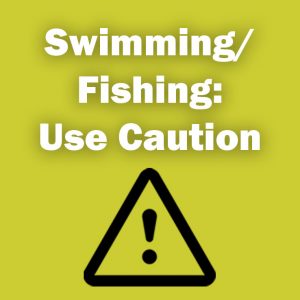
Yellow graphic text swimming fishing use caution

The Coastal Health District is alerting swimmers and recreational fishers to the presence of oil on the beaches of Jekyll Island. According to the St. Simons Sound Incident Unified Command, responders are finding bits of weathered oil including tarballs smaller than the size of a quarter washing up onto the sand at Jekyll Island.

The public advisory status for swimming and fishing remains cautionary. Beaches are not closed but beachgoers should stay alert. Swim and fish with caution and avoid contact with oil on the beach. If you step on a tar ball or get oil on your skin, wash off the oil with soap and clean water. There is no need to use harsh detergents, solvents or other chemicals to wash oil from skin or clothing – these could be harmful to you.

If you see a sheen of oil on the surface of the water, get out of the water and report the sheen to the U.S. Coast Guard National Response Center at 1-800-424-8802. Do not swim or fish in an area with a visible oil sheen.

On September 30th, there was a discharge of pollutants from the capsized motor vehicle carrier Golden Ray. For additional information on the incident response, monitor the response website at www.ssiresponse.com.

The public advisory status for swimming and fishing may be lowered or elevated based on new information from responders and results of ongoing water quality tests. Monitor the Coastal Health District web page at coastalhealthdistrict.org/ssiresponse/ for the latest advisory status, as this page will be updated as the situation changes.

Coastal Health District Advises Extra Caution when Swimming, Fishing at Area Beaches

Active release of pollutants from cargo carrier could impact shoreline

The Coastal Health District urges anyone swimming or fishing on Jekyll Island and St. Simons Island to be aware of an active release of pollutants from the cargo carrier Golden Ray. The public advisory status for area beaches has changed from “green” to “yellow” – swimming and fishing are still allowed, but beachgoers should remain especially alert until more is known about the impact of this current discharge.

[metaslider id=”15354″]

According to the St. Simons Sound Incident Unified Command, a pollution discharge began Monday afternoon September 30th from the Golden Ray and could have shoreline impacts. For additional information on the incident response, monitor the response website at www.ssiresponse.com.

Before you swim, check the water for any sign of oil, such as a sheen on the water’s surface. If you see oil in the water, do not swim. Contact the U.S. Coast Guard National Response Center at 1-800-424-8802 to report visible oil on the beach.

If no oil is visible, swim with caution, but remain alert for changing conditions. The same advice applies to recreational fishing: fish with caution, but don’t fish in areas with visible oil on the water.

The public advisory status may be lowered or elevated based on information from responders and results of ongoing water quality tests. Monitor the Coastal Health District web page at coastalhealthdistrict.org/ssiresponse/ for the latest advisory status, as this webpage will be updated as the situation changes.