Air Quality Monitoring Resources and Health Information
READ MORE »

×

The Coastal Health District of Georgia serves the counties of Bryan, Camden, Chatham, Effingham, Glynn, Liberty, Long & McIntosh

Glynn News


Family Dog Tests Positive for Rabies: Glynn Co. Health Department Reminds Residents to Vaccinate Pets

A family dog that fought with a raccoon and later began showing signs of rabies infection had to be euthanized and has since tested positive for rabies. The dog was not up-to-date on his rabies vaccinations. The incident happened in West Point Plantation on St. Simons Island. As a precautionary measure, two people who were exposed to the dog are now undergoing post-exposure prophylaxis for rabies.

“A lot of wild animals that are native to our area – like raccoons and foxes – are known carriers of rabies,” said Glynn County Assistant Environmental Health Manager, Erin Doane. “That’s why it is so important to make sure that pets are vaccinated against the virus.”

Rabies is a potentially deadly virus that is primarily spread by infected animals. Symptoms of rabies in animals include a change in behavior, biting, aggression, showing no fear of natural enemies (such as humans), foaming at the mouth, and paralysis.

The Glynn County Health Department Environmental Health Division offers these tips to protect you and your family from rabies:

  • Avoid contact with animals you don’t know.
  • Make sure your pets receive the proper immunizations. Dogs and cats should get rabies vaccines by four months of age, followed by a booster shot one year later, and another one every one to three years as prescribed by your veterinarian.
  • Do not handle, feed, or unintentionally attract wild animals with open garbage cans or by leaving pet food out at night.
  • Never adopt wild animals or bring them into your home. Do not try to nurse sick animals to health. Call animal control or a properly licensed animal rescue agency for assistance.
  • Teach children to never handle unfamiliar animals, wild or domestic, even if they appear friendly. “Love your own, leave other animals alone” is a good principle for children to learn.

If an animal ever bites you, seek medical care immediately and contact Glynn County Animal Control at 912-554-7500 and the Glynn County Health Department Environmental Health Division at 279-2940.

Glynn Co. Health Department Schedules Wacky WIC Wednesdays

The Glynn County Health Department will hold Wacky WIC Wednesdays from 8 a.m. to 3 p.m. on June 24, July 29, and August 26 for WIC clients who may have missed previous appointments. On designated Wednesdays, WIC clients can walk in and receive services. No appointment is necessary. There will also be fun activities scheduled and prize giveaways on those days.

Women, Infants, and Children’s (WIC) is a supplemental nutrition program that provides nutritious foods, education, and improved healthcare access for low and moderate-income women and children who are at risk of developing nutrition related health problems. The federally-funded health and nutrition program is for infants and children age 1 to 5 years (including foster children); pregnant women; breastfeeding mothers (up to one year); and postpartum women (up to six months).

For more information about WIC services, call 912-289-1810 or click HERE.


Microsoft Word - Wacky Wednesday Flyer [JPG, 386.94 KB]


Free HIV Testing Events Scheduled in Chatham and Glynn Counties

The U.S. Center for Disease Control and Prevention (CDC) estimates that one out of five people living with HIV/AIDS in the U.S. is unaware of their HIV status. National Testing Day is an opportunity for people to learn of their HIV status and to gain knowledge to take control of their lives. The Chatham and Glynn CARE Centers, Coastal Health District centers for expanded HIV services, are pleased to offer free HIV testing as part of this global effort.

The Coastal Health District HIV program will offer free HIV testing at several locations in June in observance of National HIV Testing Day. Testing will be done without the use of a needle and those tested will get results in 20 minutes. A follow-up visit will be scheduled for anyone who tests positive and counseling will be made available to those individuals.

Volunteers are also needed to help with the HIV testing events. Volunteer positions include greeters, client intake specialists, data entry specialists, client flow staff, and form couriers.

For more information, please call Diane DeVore at (912) 353-3276 or e-mail Diane.DeVore@dph.ga.gov


HIV Free Testing Locations Flyer 6.15_Layout 1.qxd [JPG, 1.47 MB]

Public Health and College Officials Work Together to Prevent Spread of Chickenpox

Chickenpox, a highly contagious disease caused by the varicella virus, has been confirmed in two students attending the Savannah College of Art and Design’s (SCAD) Savannah campus. Additional probable cases are under investigation. Chatham County Health Department and SCAD officials are working together to prevent the spread of the disease by educating students and staff and promoting immunization against varicella.

The most recognized symptom of chickenpox is an itchy rash. Other symptoms include fever, tiredness, loss of appetite, and headache. The virus is spread through the air when an infected person coughs or sneezes and can also be spread by touching or breathing in the virus particles that come from the chickenpox blisters. It takes from 10 to 21 days after exposure to a person with chickenpox for someone to develop chickenpox. A person with chickenpox can spread the disease from one to two days before they get the rash until all their chickenpox blisters have formed scabs.

“We are working closely with Savannah College of Art and Design administration to ensure that we provide appropriate information to all students and faculty,” said Diane Weems, M.D., Health Director for the Coastal Health District. “We want to make sure that people are aware of the symptoms and know that the best way to keep from getting the virus is to get vaccinated and the best way to keep from spreading the virus is to stay away from others until their lesions have turned into scabs.”

Most healthy people recover from chickenpox in five to 10 days; however, infants, adults, pregnant women, and those with weakened immune systems who have not been vaccinated and get the chickenpox can suffer from mild to serious complications.

For more information on chickenpox go to www.cdc.gov/chickenpox.

101 Georgia School Districts Tobacco-Free

More than half – 101 out of 181 – Georgia school districts are now tobacco-free. Emanuel County Schools, Lowndes County Schools and Jenkins County Schools all recently implemented Georgia’s 100% Tobacco-Free School policy leading to this milestone in the Georgia Department of Public Health’s (DPH) work to protect the state’s children from the harmful effects of tobacco use and second-hand smoke.

Under the 100% Tobacco-Free School policy no student, staff member or school visitor is permitted to use any tobacco product or E-cigarette, at any time on school property. Eighty Georgia school districts have not signed the policy.

“Tobacco-free schools save lives,” said Jean O’Connor, JD, DrPH, director of Chronic Disease Prevention for DPH. “Ninety percent of Georgia’s smokers started using tobacco before the age of 18, and by eliminating tobacco use—including e-cigarettes—in schools, we can reduce the likelihood children in Georgia will start to use tobacco as well as protect children and adults from the effects of secondhand smoke.”

Tobacco use causes heart disease, cancer, diabetes and premature death. In a young person, smoking can damage the heart and lungs right away and in some cases, the damage never goes away. Studies show that eliminating tobacco smoke in an environment can reduce the incidence of heart attack related hospital admissions by between 10 and 40 percent.

“Young people are extremely sensitive to nicotine and the younger they are when they start using tobacco, the more likely they are to develop addiction to nicotine, and begin a lifetime of chronic disease,” said Brenda Fitzgerald, M.D., commissioner of the Georgia Department of Public Health. “That makes prevention in Georgia schools right now so critical.”

School districts can get help from local health departments to implement the 100% Tobacco-Free School policy. Each Health District in Georgia has a health promotion coordinator who can present the policy to the local school board and work with school administrators to implement it. In addition, youth empowerment teams will disseminate anti-smoking messages through media and social media.

All Georgians, including students, 13 to 17 years old, can call the Georgia Tobacco Quit Line at 1-877-270-STOP (7867) or 1-877-2NO-FUME (877-266-3863) and receive confidential counseling on how to quit smoking.

For more information about the harmful effects of smoking and tobacco use in young people, click here. To learn more about DPH’s efforts to help schools become tobacco-free, visit the Chronic Disease Prevention section’s Tobacco-Free and Smoke-Free environments website.


Georgia Department of Public Health’s Babies Can’t Wait Program Seeks Public Comment

ATLANTA – The Georgia Department of Public Health’s (DPH) Babies Can’t Wait (BCW) program invites interested persons to participate in a 60-day public comment period for the Federal Fiscal Year (FFY) 2015 Annual State Application under Part C of the Individuals with Disabilities Education Act (IDEA) and Fiscal Policies. Stakeholders, early intervention providers, parents and members of the public are encouraged to comment and may review the grant application and revised policy online or at locations throughout the state.

Comments will be accepted in four ways:

1.    Written comments will be received by mail until Apr. 18, 2015:

Babies Can’t Wait
Attn: Cynthia Bryant, Part C Coordinator
2 Peachtree Street NW, Suite 11-204
Atlanta, GA 30303-13422

2.    Email comments will be received until Apr. 18, 2015:
DPH-MCHDO@dph.ga.gov  (Subject line: Part C or Public Comment)

3.    Facsimile comments will be received until April 18, 2015:
State BCW Office Fax: (404-657-2763)

4.    In Person comments at a Public Hearing:
DPH invites interested persons to attend Public Hearings and present public comments. To allow an opportunity for all to be heard, comments will be limited to five minutes. (See locations listed below.)

Gainesville (2)
March 10, 2015, 4:30 PM – 6:30 PM
Gainesville Health District
440 Prior Street, SE
Gainesville, GA 30501
(770) 531-4053
Contact: Patricia (Dru) Thomas, Early Intervention Coordinator
(770) 531-4053
Dru.Thomas@dph.ga.gov

Clayton (3-3)
March 10, 2015, 4:30 PM – 6:30 PM
Clayton County Library
865 Battle Creek Road
Jonesboro, GA 30236
770-473-3850
Contact: Nicole Wilson
Early Intervention Coordinator
(678) 610-7252
Nicole.Wilson@dph.ga.gov

Columbus (7)
March 12, 2015, 4:30 PM – 6:30 PM
The Health and Human Services Building
2100 Comer Avenue
Columbus, GA 31902
(706) 327-0645
(800) 527-7344
Contact: Tori Endres, Early Intervention Coordinator
(706) 321-6136
Tori.Endres@dph.ga.gov

Waycross   (9-2)
March 10, 2015, 4:00 PM – 6:00 PM
Waycross Health District
C.N.N. Building
1057 Grove Avenue
Waycross, GA 31501
(912) 284-2552
Contact: Tracy Weeden
Early Intervention Coordinator
(912) 284-2552
Tracy.Weeden@dph.gov


The Babies Can’t Wait (BCW) Program is Georgia’s statewide early intervention system for infants and toddlers with special needs, age birth to three, and their families. This program enhances the capacity of families to meet the special needs of their child in order to ensure that each young child with significant developmental delays achieves his or her maximum developmental potential.

To learn more about DPH’s Babies Can’t Wait program, please call 404-657-2762 or 888-651-8224 or visit http://dph.georgia.gov/Babies-Cant-Wait.


Glynn County Health Department, Jekyll Island Authority, and DNR Announce Water Monitoring Changes on Jekyll Island

The Glynn County Health Department, in conjunction with the Jekyll Island Authority and the Georgia Department of Natural Resources (DNR), announced today that St. Andrews Beach (from Macy Lane to the St. Andrews Beach picnic area) and Clam Creek Beach (from Clam Creek to beach kilometer marker 1) on Jekyll Island will be placed under permanent advisory due to continually elevated bacteria levels. No other beaches on the island are affected by the advisory.

The DNR will also begin monitoring the water at Driftwood Beach on Jekyll Island once a week year-round. Driftwood Beach is located on the north end of the island. The three agencies agree that implementing the changes is in the best interest of all who use the St. Andrews, Clam Creek, and Driftwood Beach areas for recreation.

A permanent advisory indicates that there is a continual potential human health risk and therefore swimming and wading are advised against. In addition, fish and other seafood caught from this area should be thoroughly washed with fresh water and thoroughly cooked before eating as should fish or seafood caught from any waters.

In accordance with U.S. Environmental Protection Agency guidance, a permanent advisory can be issued “under conditions such as naturally occurring organisms that are present in the water or human influences that cause a continuous or reoccurring water quality standard exceedance.”

Georgia’s beach water monitoring program is part of the United States Environmental Protection Agency’s (EPA) federal Clean Water Act. As part of the program, water along the Georgia coast is tested regularly for the presence of enterococci bacteria. If bacteria levels are elevated in any particular area, an advisory is issued by the local health department and the public is notified of possible risks associated with the bacteria. Elevated levels of bacteria can come from any number of sources including animal waste, storm water runoff, or boating waste.

For more information on beach water advisories, go click HERE or go to coastalgadnr.org.

Glynn Co. Health Department Receives Donations for Reach Out and Read Program

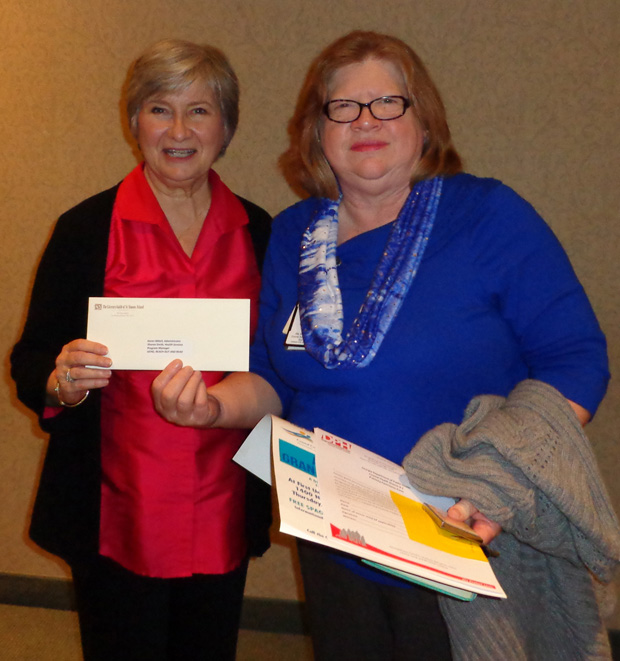
The Glynn County Health Department recently received two generous donations from The Literary Guild of St. Simons Island and Walmart to support the Reach Out and Read program. Reach Out and Read is an initiative aimed at promoting literacy by educating parents about the importance of reading to young children and giving books to children to inspire them to take an active interest in reading.

The Literary Guild of St. Simons Island donated $2,000 and the Walmart Neighborhood Market in Brunswick donated $1,000 which will help purchase books for Reach Out and Read. Glynn County Health Department Administrator, Karen Mikell, R.N., said the donations will prove invaluable.

“These unexpected gifts will help us buy books for the children who come into our health department for other services,” said Mikell. “The Reach Out and Read program is a wonderful way to try to instill a love of reading at an early age and show parents how important it is to encourage their children to read.”

The Literary Guild of St. Simons regularly supports the local library and also funds other projects, such as Reach Out and Read, in an effort to support literacy.

“We believe that the entire community benefits when individuals’ literacy skills are strengthened,” said President of the Literary Guild of St. Simons, Paul Pieschel.

Reach Out and Read Glynn

[JPG, 148.25 KB] Vicki Skywark, Vice President of The Literary Guild of St. Simons Island, (left) presents a check for $2,000 to Glynn County Health Department Administrator, Karen Mikell, R.N., to support the Reach Out and Read program.


Health Officials Encourage Rabies Precautions

A Glynn County resident was exposed to a fox that showed signs associated with rabies. Although the fox could not be tested for rabies because of damage to the its body after being hit by a car, the fox is presumed to have had the disease. As a result, Glynn County Health Department environmental health officials are encouraging residents to be aware of unusual behavior in wildlife and avoid contact with wildlife.

Symptoms of rabies in animals include a change in behavior, biting, aggression, showing no fear of natural enemies (such as humans), foaming at the mouth, and paralysis. Rabies is a potentially deadly virus that is primarily spread by infected animals. Residents should always avoid contact with wild or stray animals, watch for unusual behavior in pets and wildlife, and get pets vaccinated against rabies. Leaving food outdoors for family pets or undomesticated animals can attract potentially rabid wildlife.

The Glynn County Health Department offers these tips to protect you and your family from rabies:

Avoid contact with animals you don’t know.
Make sure your pets receive the proper immunizations. Dogs and cats should get rabies vaccines by four months of age, followed by a booster shot one year later, and another one every one or three years depending on the type of vaccine used.
Do not handle, feed, or unintentionally attract wild animals with open garbage cans or by leaving pet food out at night.
Never adopt wild animals or bring them into your home. Do not try to nurse sick animals to health. Call animal control or a properly licensed animal rescue agency for assistance.
Teach children to never handle unfamiliar animals, wild or domestic, even if they appear friendly. “Love your own, leave other animals alone” is a good principle for children to learn.
If an animal ever bites you, seek medical care immediately and contact Glynn County Animal Control at 912-554-7500 and the Glynn County Health Department Environmental Health Division at 912-279-2940.

Two Flu-Related Deaths Confirmed in Coastal Health District

December 8, 2014 – The Georgia Department of Public Health (DPH) has confirmed the flu-related deaths of two elderly females in the Coastal Health District – one from Chatham County and one from Effingham County. These are the first confirmed flu-related deaths in the Coastal Health District; however, there have been five additional confirmed flu-related deaths statewide. The Coastal Health District is made up of Bryan, Camden, Chatham, Effingham, Glynn, Liberty, Long, and McIntosh counties.
The Centers for Disease Control and Prevention (CDC) recommends everyone six months and older get vaccinated against the flu. The influenza virus is very contagious and is spread mainly by droplets from infected people when they cough, sneeze, or talk. While the flu vaccine may not protect against every strain of flu it is still the best protection against the flu. Antiviral medications such as Tamiflu® or Relenza® are an important second line of defense against the flu. Treatment with antiviral drugs is especially important for people at high risk of serious flu complications or people who are very sick with flu. Antiviral drugs work best when started within two days of coming down with the flu, so it is important to call your doctor as soon as the first symptoms appear.
There are also several simple, everyday precautions people can take to avoid getting and spreading the flu including:
• Cover your cough (try to cough into the crook of your elbow, not your hand).
• Wash your hands frequently with soap and water. If soap and water is not available use an alcohol-based hand sanitizer.
• Clean common surfaces like countertops and desks.
• Avoid touching your eyes, nose or mouth because germs spread this way.
• Stay home from work or school and away from others when you’re sick.
Flu symptoms include fever, cough, sore throat, runny or stuffy nose, body aches, headache, chills, and fatigue. According to the CDC, symptoms start one to four days after the virus enters the body which means that you may be able to pass on the flu to someone else before you know you are sick, as well as while you are sick.