The Coastal Health District of Georgia serves the counties of Bryan, Camden, Chatham, Effingham, Glynn, Liberty, Long & McIntosh

News


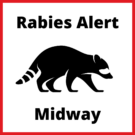
Raccoon Tests Positive for Rabies after Attacking Family Dog in Chatham County

November 20, 2014 – A raccoon that attacked a family dog in the Quarterman Drive area of Wilmington Island in Savannah has tested positive for rabies. The dog is up-to-date on rabies vaccinations but will receive a rabies booster as a precaution.
Rabies is a potentially deadly virus that is primarily spread by infected animals. Symptoms of rabies in animals include a change in behavior, biting, aggression, showing no fear of natural enemies (such as humans), foaming at the mouth, and paralysis.
The Chatham County Health Department Environmental Health Division offers these tips to protect you and your family from rabies:
• Avoid contact with animals you don’t know.
• Make sure your pets receive the proper immunizations. Dogs and cats should get rabies vaccines by four months of age, followed by a booster shot one year later, and another one every one to three years as prescribed by your veterinarian.
• Do not handle, feed, or unintentionally attract wild animals with open garbage cans or by leaving pet food out at night.
• Never adopt wild animals or bring them into your home. Do not try to nurse sick animals to health. Call animal control or a properly licensed animal rescue agency for assistance.
• Teach children to never handle unfamiliar animals, wild or domestic, even if they appear friendly. “Love your own, leave other animals alone” is a good principle for children to learn.
If an animal ever bites you, seek medical care immediately and contact Chatham County Animal Control at 525-2408 and the Chatham County Health Department Environmental Health Division at 356-2160.

Tobacco Use Among Youth In Georgia Declines Significantly; Help to Quit Smoking Available Statewide

November 19, 2014 – New information from the Georgia Department of Public Health (DPH) shows fewer young people are using tobacco in the state. In fact, the rates are falling steadily and significantly.

Over the past decade, rates of youth who have used any form of tobacco have dropped from 26.1 percent in 2003 to 19.4 percent in 2013. The percentage of high school students who smoked cigarettes on at least one day during the 30 days before the survey, declined from 20.9 percent to 12.8 percent.

Adult smoking rates are also falling, down from 21.2 percent in 2011 to 18.8 percent in 2013. That’s a prevalence rate slightly lower than the U.S. average of 19.0 percent.

More than 1.5 million Georgians aged 18 and older smoke cigarettes. Another 315,000 adults in Georgia use some form of smokeless tobacco like chewing tobacco, snuff, or snus.

“Each year, 11,000 Georgians die from tobacco-related diseases – that’s more than alcohol, cocaine and heroin, AIDS, murders, suicides, auto accidents and fires combined,” said Jean O’Connor, JD, DrPH, chronic disease prevention director, Georgia Department of Public Health. “Tobacco users die on average 10 years earlier than non-tobacco users, so keeping youth from starting to use tobacco is one of the best ways to protect them from tobacco-related illness.”

Tobacco use is the number one preventable cause of death in Georgia. Annually, tobacco-related illness costs more than $5 billion dollars in direct healthcare costs and indirect costs, such as lost wages.

More than half of Georgians who use tobacco want to quit. Quitting is the most important step current tobacco users can take to protect their health and the health of their families. Tobacco use and secondhand smoke cause heart disease, lung disease, cancer, stroke, and diabetes. The benefits of quitting start immediately. Within 20 minutes of quitting, a tobacco user’s heart rate decreases.

The Georgia Department of Public Health and its partners have set goals to decrease youth smoking to less than 10 percent and adult smoking to less than 15 percent of the population by 2020. To achieve these goals, DPH and its partners are encouraging businesses, schools, and government agencies to create tobacco-free environments and to support tobacco users who want to quit.

Tobacco users across Georgia can work toward meeting those goals with a quit attempt during the Great American Smokeout, Thursday, Nov. 20. The day encourages smokers to quit or to use the day to make a quit plan. Help is available. Talk with your doctor, pharmacist, or call the Georgia Tobacco Quit Line. The Quitline is currently offering free nicotine replacement therapy to Medicaid participants, the uninsured, and certain other groups that qualify.

English: 1-877-270-STOP (877-270-7867)
Spanish: 1-877-2NO-FUME (877-266-3863)
Hearing Impaired: 1-877-777-6534

The Georgia Tobacco Quitline is a free, confidential and effective service available 24 hours a day, 7 days a week (including holidays) to help Georgians quit smoking or using any forms of tobacco, including electronic cigarettes or other electronic nicotine delivery devices.

Coastal Health District Ebola Update, October 28

The following statement is from Diane Z. Weems, M.D.
District Health Director, Coastal Health District
Today, public health was contacted regarding an individual complaining of flu-like symptoms who had recently returned from Nigeria. In an overabundance of caution, the individual was transported to a local hospital. After further investigation of the individual’s travel history, it was determined that this person does not meet the criteria for being at risk from Ebola based on the travel dates to that country. The World Health Organization declared Nigeria Ebola-free on October 20.*
*According to WHO recommendations, the end of an Ebola virus disease outbreak in a country can be declared once 42 days have passed and no new cases have been detected. The 42 days represents twice the maximum incubation period for Ebola (21 days). This 42-day period starts from the last day that any person in the country had contact with a confirmed or probable Ebola case.
For credible information on Ebola:
www.cdc.gov/ebola
www.dph.ga.gov/ebola

Glynn Health Department to Host HPV Educational Event Oct. 28

October 22, 2014 – If there were a vaccine against cancer for kids, wouldn’t you get it? Human Papillomavirus (HPV) vaccine is cancer prevention. That’s the message the Glynn County Health Department hopes to get across to parents and pre-teens at an HPV informational event scheduled to be held at 4 p.m. on Tuesday, October 28, at the Brunswick Housing Authority located at 1126 Albany Street. The event is free and open to the public and will include information on HPV and the HPV vaccine, light refreshments, and door prizes.
“We want to encourage the parents of pre-teen girls and boys to consider getting their children vaccinated against HPV to prevent several cancers that can occur as a result of the virus,” said Glynn County Health Department Administrator Karen Mikell, R.N., MSN.
HPV vaccines are given in a series of three shots over six months at ages 11 or 12. For the best protection against the most dangerous types of HPV, it is very important to get all of the recommended doses long before being exposed to HPV. Also, HPV vaccine produces a higher immune response in preteens than in older teens and young adults.
For more information about HPV and HPV vaccine, go to www.coastalhealthdistrict.org/hpv. To find out more about the event, please contact LeKara Simmons at 912-223-9590.
The event is being sponsored by the health department in conjunction with the Coastal Health District Adolescent Health and Youth Development Program and the Brunswick Housing Authority.

Drive-through Flu Vaccination Clinic Scheduled for October 9 at McIntosh County Health Department

September 25, 2014 – The McIntosh County Health Department will hold a drive-through vaccination clinic from 9 a.m. to 4p.m. on Thursday, October 9, at the health department located on Highway 57 in Townsend. No appointment is necessary. For anyone who can’t get to the drive-through clinic, flu vaccine will be available Monday through Friday at the health department. Cost for both the injectable (shot) and nasal spray form is $28. A high dose flu vaccine is also being offered for people ages 65 and older, and it is designed to provide the best protection for that age group. The high dose vaccine will be $45 per dose. Cost of the flu vaccine is covered under both Medicare and Medicaid.
Getting vaccinated against the flu is recommended for everyone six months of age and older. Neither the flu shot nor the nasal spray can cause the flu. The shot is approved for use in healthy people 6 months of age and older, people with chronic medical conditions, and pregnant women. The nasal spray is approved for use in healthy people 2 to 49 years of age who are not pregnant.
The flu virus is easily spread through coughs and sneezes and by touching something with the virus on it and then touching your eyes, nose or mouth. That’s why good health habits are also important including staying home when you’re sick; avoiding close contact with people who are sick; coughing or sneezing into your elbow and not your hand; washing your hands often with soap and water; and avoid touching your eyes, nose and mouth.
For more information please call the McIntosh County Health Department at 832-5473 or click HERE.

Liberty County Health Department Employee Honored at State Conference

September 25, 2014 – Liberty County Health Department employee and Women, Infants, and Children (WIC) clerk, Jonell Bacon-Seward, was recently named the 2014 WIC Customer Service Award Winner for the Coastal Health District. Bacon-Seward was recognized at the Georgia WIC Customer Service Conference in Atlanta where more than 400 county, district, state, and federal WIC staff members were in attendance.
“Receiving this award was a great and unexpected surprise,” said Bacon-Seward. “It was a great honor to be nominated and chosen for employee of the year for WIC customer service. This lets me know that I am recognized and appreciated for the work that I do.”
Bacon-Seward has worked for the health department in the WIC program for close to 16 years and her responsibilities include issuing individuals enrolled in the WIC program supplemental food vouchers when applicable and making sure that processing standards are met according to WIC guidelines. WIC is a federally funded nutrition education program that provides supplemental food, nutrition education, social service and health referrals to income eligible pregnant or postpartum women, infants, and children up to age five, to improve their health outcomes.
Brenda Fitzgerald, M.D., commissioner of the Georgia Department of Public Health (DPH), presented special awards honoring district WIC staff members from each of Georgia’s 18 public health districts. Each of the WIC employees were chosen for special notice because they evidenced one or more of the following criteria: years of service, Georgia WIC outreach, customer service, leadership in WIC service delivery.
“The employees who were lauded as District Georgia WIC Employees of the Year provided exemplary service to the Georgia WIC Program over the past years,” said Barbara Stahnke, MEd, RD, Ld, Nutrition Program Specialist for the Georgia Department of Public Health Division of Health Promotion, Nutrition and WIC Section. “Georgia WIC wants to thank all of our WIC providers, and most especially the providers recognized for their exemplary service.”
Jonell Bacon Seward.jpg

Raccoon in Chatham County Tests Positive for Rabies after Attacking Stray Cat

September 19, 2014 – A raccoon that attacked a stray cat on 59th Street in Savannah has tested positive for rabies. The cat, described as solid white with fluffy fur, got away from the raccoon and has not yet been found. Residents in the area are asked to contact Chatham County Animal Control at 525-2408 and the Chatham County Health Department Environmental Health Division at 356-2160 if they see the cat.
Rabies is a potentially deadly virus that is primarily spread by infected animals. Symptoms of rabies in animals include a change in behavior, biting, aggression, showing no fear of natural enemies (such as humans), foaming at the mouth, and paralysis.
The Chatham County Health Department Environmental Health Division offers these tips to protect you and your family from rabies:
• Avoid contact with animals you don’t know.
• Make sure your pets receive the proper immunizations. Dogs and cats should get rabies vaccines by four months of age, followed by a booster shot one year later, and another one every one to three years as prescribed by your veterinarian.
• Do not handle, feed, or unintentionally attract wild animals with open garbage cans or by leaving pet food out at night.
• Never adopt wild animals or bring them into your home. Do not try to nurse sick animals to health. Call animal control or a properly licensed animal rescue agency for assistance.
• Teach children to never handle unfamiliar animals, wild or domestic, even if they appear friendly. “Love your own, leave other animals alone” is a good principle for children to learn.
If an animal ever bites you, seek medical care immediately and contact Chatham County Animal Control at 525-2408 and the Chatham County Health Department Environmental Health Division at 356-2160.

Glynn County Health Department Officials Encourage Rabies Precautions Following Fox Bite

July 29, 2014 – A Glynn County resident was bitten by a fox that has tested positive for rabies and as a result, Glynn County Health Department environmental health officials are encouraging residents to be aware of unusual behavior in wildlife. The incident took place near the intersection of Old Jesup Road and Community Road. Health officials are asking residents that live in and around that region and the Ballard Park area to pay particular attention to wild animals acting strangely. Anyone that has come into physical contact with a fox in the Old Jesup Road/Community Road/Ballard Park areas is asked to contact the Glynn County Environmental Health Division at 912-279-2940.
Symptoms of rabies in animals include a change in behavior, biting, aggression, showing no fear of natural enemies (such as humans), foaming at the mouth, and paralysis. Rabies is a potentially deadly virus that is primarily spread by infected animals. Residents should always avoid contact with wild or stray animals, watch for unusual behavior in pets and wildlife, and get pets vaccinated against rabies. Leaving food outdoors for family pets or undomesticated animals can attract potentially rabid wildlife.
The Glynn County Health Department offers these tips to protect you and your family from rabies:
• Avoid contact with animals you don’t know.
• Make sure your pets receive the proper immunizations. Dogs and cats should get rabies vaccines by four months of age, followed by a booster shot one year later, and another one every one or three years depending on the type of vaccine used.
• Do not handle, feed, or unintentionally attract wild animals with open garbage cans or by leaving pet food out at night.
• Never adopt wild animals or bring them into your home. Do not try to nurse sick animals to health. Call animal control or a properly licensed animal rescue agency for assistance.
• Teach children to never handle unfamiliar animals, wild or domestic, even if they appear friendly. “Love your own, leave other animals alone” is a good principle for children to learn.
If an animal ever bites you, seek medical care immediately and contact Glynn County Animal Control at 912-554-7500 and the Glynn County Health Department Environmental Health Division at 912-279-2940.

Camden County Public Health Officials Encourage Rabies Precautions

July 23, 2014 – Reports of recent dog bites in the area of W. Dawson Ave and W. Johnson Ave in Kingsland have prompted Camden County Environmental Health officials to remind residents to avoid wild or stray animals and make sure pets are vaccinated against rabies. Rabies is a potentially deadly virus that is primarily spread by infected animals. Symptoms of rabies in animals include a change in behavior, biting, aggression, showing no fear of natural enemies (such as humans), foaming at the mouth, and paralysis.
The Camden County Health Department Environmental Health Division offers these tips to protect you and your family from rabies:
• Avoid contact with animals you don’t know.
• Make sure your pets receive the proper immunizations. Dogs and cats should get rabies vaccines by four months of age, followed by a booster shot one year later, and another one every one to three years as prescribed by your veterinarian.
• Do not handle, feed, or unintentionally attract wild animals with open garbage cans or by leaving pet food out at night.
• Never adopt wild animals or bring them into your home. Do not try to nurse sick animals to health. Call animal control or a properly licensed animal rescue agency for assistance.
• Teach children to never handle unfamiliar animals, wild or domestic, even if they appear friendly. “Love your own, leave other animals alone” is a good principle for children to learn.
If an animal ever bites you, seek medical care immediately and contact Camden County Animal Control at 912-576-7395 (Woodbine and St. Marys) or 912-729-1442 (Kingsland) and the Camden County Health Department Environmental Health Division at 912-729-6012.

Health District Officials Encourage Continued Precautions against Mosquitoes

July 21, 2014 – Coastal Health District officials want to remind residents to take precautions to avoid mosquitoes which are not only a nuisance but can carry disease such as West Nile Virus (WNV), Eastern Equine Encephalitis (EEE), and chikungunya.
WNV is transmitted by the bite of infected mosquitoes. About 80 percent of people infected with WNV will not show any symptoms at all; however, cases can range from mild to severe. Mosquitoes that carry the West Nile Virus are more likely to bite during the evening, night, and early morning. EEE is a mosquito-borne virus that causes swelling of the brain. In horses, it is fatal 70 to 90 percent of the time. Horse and large animal owners are encouraged to vaccinate their animals against the virus and to clean out watering sources, such as buckets and troughs, every three-to-four days to prevent mosquitoes from breeding there. According to the Centers for Disease Control and Prevention (CDC), most people with chikungunya will develop some symptoms which could include fever, joint and muscle pain, headache, and a rash. There is no specific treatment and most who get it feel better within a week. Unlike the mosquitoes that carry WNV, the mosquitoes that spread the chikungunya virus bite mostly during the daytime.
Mosquito Prevention
The best way to prevent mosquito-related diseases is to avoid mosquito bites. Mosquitoes breed in standing water which is why it is important to remove water-holding containers (buckets, barrels, flower pots, tarps, etc.; drill holes in tire swings so water drains out; keep children’s wading pools empty and on their sides when they’re not being used; change water frequently in pet dishes; change bird bath water at least twice a week; and avoid using saucers under outdoor potted plants.
In addition, following these tips can help lessen the risk of getting bitten by mosquitoes:
• DRAIN all standing water.
• Avoid DAWN and DUSK when mosquitoes are most active.
• DRESS appropriately in long sleeves and pants.
• DEFEND or DEET yourself against mosquitoes with an effective repellent. Repellents containing DEET, picaridin, IR3535, and oil of lemon eucalyptus and para-menthane-diol products provide long lasting protection.
• DOORS and windows should be in good condition.