The Coastal Health District of Georgia serves the counties of Bryan, Camden, Chatham, Effingham, Glynn, Liberty, Long & McIntosh

News


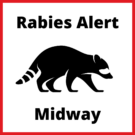
Health Department Officials Encourage Precautions after Fox Spotted Acting Strangely

February 10, 2014 – Glynn County Health Department officials are encouraging residents to be aware of unusual behavior in wildlife after a Glynn County resident spotted a fox acting strangely in the Scranton Connector area of Brunswick. The fox has not been located so it is not known whether or not the animal is rabid; however, unusual behavior is one of the symptoms of rabies.
“This is a good time to remind people to stay away from wild animals because they could be harmful,” said Glynn County Environmental Health Manager, Bill Jenkins. “It is especially important that parents and caregivers explain this to children.”
Rabies is a potentially deadly virus that is primarily spread by infected animals. Many animals commonly found in southeast Georgia, including foxes and raccoons, may carry the rabies virus. Residents should avoid contact with wild or stray animals, watch for unusual behavior in pets and wildlife, and get pets vaccinated against rabies. Symptoms of rabies in animals include a change in behavior, biting, aggression, showing no fear of natural enemies (such as humans), foaming at the mouth, and paralysis.
The Glynn County Health Department offers these tips to protect you and your family from rabies:
• Avoid contact with animals you don’t know.
• Make sure your pets receive the proper immunizations. Dogs and cats should get rabies vaccines by four months of age, followed by a booster shot one year later, and another one every one or three years depending on the type of vaccine used.
• Do not handle, feed, or unintentionally attract wild animals with open garbage cans or by leaving pet food out at night.
• Never adopt wild animals or bring them into your home. Do not try to nurse sick animals to health. Call animal control or a properly licensed animal rescue agency for assistance.
• Teach children to never handle unfamiliar animals, wild or domestic, even if they appear friendly. “Love your own, leave other animals alone” is a good principle for children to learn.
If an animal ever bites you, seek medical care immediately. In addition, if you ever spot an animal acting suspiciously, please contact Glynn County Animal Control at 912-554-7500 and the Glynn County Health Department Environmental Health Division at 912-279-2940.

Babies Can’t Wait Early Intervention Public Hearing Announcement

February 6, 2014 – The Babies Can’t Wait program invites interested persons to participate in a 60-day public comment period for the Federal Fiscal Year (FFY) 2013 Annual State Application under Part C of the Individuals with Disabilities Education Act (IDEA), and Child Find, Personnel Management, and Procedural Safeguards Policies, from February 18, 2013 to April 18, 2013. For more information, please click HERE [PDF].

Three Coastal Health District Counties Receive Funding to Prepare for National Accreditation

February 4, 2014 – Health departments in Camden, Glynn, and McIntosh counties have been awarded $39,300 to support progress in meeting requirements of the Public Health Accreditation Board (PHAB), the first and only voluntary national accreditation program for public health departments. The District will use the funding to create community health improvement plans in those three counties where community health assessments were recently conducted.
\A total of 29 local health departments from 19 states received this funding through the Accreditation Support Initiative (ASI). The ASI was created in 2011 to promote national accreditation readiness among a greater number of local health departments and support their varying needs to reach accreditation. Funding for the ASI is provided by the Centers for Disease Control and Prevention Office for State, Tribal, Local, and Territorial Support (CDC) and administered by the National Association of County and City Health Officials (NACCHO).
Community health assessments in Camden, Glynn, and McIntosh counties were completed in November 2013 to help identify what kinds of health-related problems are prevalent in those communities and issues that may contribute to those problems. Assessment findings were based on public data along with results from local surveys and focus groups.
“The purpose of the assessments was to identify health-related vulnerabilities in the population so that we can figure out how make some positive changes in those areas,” said Diane Weems, M.D., District Health Director for the Coastal Health District. “It’s going to take a collaborative effort to find and implement solutions and thanks to the ASI funding, we can now take the next steps to do just that.”
The assessments, commissioned by the Coastal Health District and compiled by students in the College of Coastal Georgia Public Affairs and Health Informatics Programs, can now be accessed on line and at public libraries in the respective counties.*
The Coastal Health District is made up of public health facilities in eight counties: Bryan, Camden, Chatham, Effingham, Glynn, Liberty, Long, and McIntosh. Coastal Health District officials plan to conduct similar community health assessments and look for funding to create community health improvement plans in additional counties as opportunities become available.
The full community health assessments can be reviewed at the following locations:
Camden County
Bound copies can be accessed at the Camden County public libraries in Kingsland and St. Marys. An electronic version can be accessed by clicking here:
Final2Camden County Community Health Needs Assessment copy final [PDF]
Glynn County
Bound copies are located at the Marshes of Glynn Public Library locations in Brunswick and St. Simons. An electronic version can be accessed by clicking here:
FinalGlynn County Community Health Needs Assessment [PDF]
McIntosh County
A bound copy is located at the Ida Hilton Library in Darien. An electronic version can be accessed by going clicking here:
FinalMcIntosh County Community Health Needs Assessment [PDF]
More information on the Accreditation Support Initiative, including a full list of selected local health departments and descriptions of the work they have been funded to complete, can be found at www.naccho.org/asi. *Disclaimer: Awards are pending execution of a contract with NACCHO and successful completion of project deliverables.

Health Departments to Re-Open at 1 p.m., Jan. 30

January 29, 2014 – All health departments and public health facilities in Bryan, Camden, Chatham, Effingham, Glynn, Liberty, Long, and McIntosh counties will delay opening until 1 p.m. on Thursday, January 30. Any clients who had appointments prior to 1 p.m. on Thursday, January 30, are asked to call the appropriate facility to reschedule.

Winter Storm and Public Health Closures

January 28, 2014 – Due to the possibility of dangerous winter weather, all public health facilities in Bryan and Effingham counties will close at 3 p.m. today, January 28, and all public health facilities in Camden, Chatham, Glynn, Liberty, Long, and McIntosh counties will close at 4 p.m. today, January 28. Public health facilities, including Environmental Health offices and CARE Centers, will be closed on Wednesday, January 29.

Bryan County Health Department Awarded Car Seat Mini-Grant

January 23, 2014 – The Bryan County Health Department was awarded the 2014 Car Seat Mini-Grant by the Georgia Department of Public Health, Injury Prevention Program. Through the Mini-Grant, the health department and other community partners will work together to provide car seats and education to financially eligible families in Bryan County. This program is funded by the Governor’s Office of Highway Safety to help ensure Georgia’s children are safe while riding in motor vehicles.
Since 2007, at least 262 children in Georgia who were involved in crashes were saved from serious injury or death by car seats, booster seats, and education provided through the Mini-Grant. According to the National Highway Traffic Safety Administration, car seats reduce fatal injuries by 71 percent among infants and by 54 percent among children ages 1 to 4 years in passenger cars. Car seats offer the best protection for children in the event of a crash, and they are most effective when installed and used correctly. Nearly three out of every four car seats are not used properly, placing children at unnecessary risk.
“It’s our responsibility to keep our children safe,” said Bryan County Health Department Nurse Manager, Joanne Burnsed, R.N. “The Car Seat Mini-Grant is a great opportunity to help our community and help protect our kids from serious injuries or death in motor vehicle crashes.”
Through the Car Seat Mini-Grant, agencies supporting more than 130 counties are working to keep Georgia’s children safe. These programs help families get their children buckled up right, every trip, every time.
For more information about the Bryan County car seat program, contact Laurie R. Mehlhorn, R.N. at the Bryan County Health Department at 756-2611.

Flu-Related Death Confirmed in Coastal Health District

January 21, 2014 – The Georgia Department of Public Health (DPH) has confirmed the flu-related death of an adult female in Chatham County. This is the first confirmed flu-related death in the Coastal Health District; however, there have been 31 flu-related deaths statewide. The Coastal Health District is made up of Bryan, Camden, Chatham, Effingham, Glynn, Liberty, Long, and McIntosh counties.
“Although we are getting into peak flu season it is not too late to get vaccinated,” said Health Director for the Coastal Health District, Diane Weems, M.D. “Getting vaccinated is truly the best way to protect against getting the virus.”
The Centers for Disease Control and Prevention (CDC) recommends everyone six months and older get vaccinated against the flu. There are also several simple, everyday precautions people can take to avoid getting and spreading the flu including:
• Cover your cough (try to cough into the crook of your elbow, not your hand).
• Wash your hands frequently with soap and water. If soap and water is not available use an alcohol-based hand sanitizer.
•\ Clean common surfaces like countertops and desks.
• Avoid touching your eyes, nose, or mouth because germs spread this way.
• Stay home and away from others when you’re sick.
Flu symptoms include fever, cough, sore throat, runny or stuffy nose, body aches, headache, chills, and fatigue.

Family Dog Tests Positive for Rabies; Health Department Reminds Residents to Vaccinate Pets

January 10, 2014 – At least eight Chatham County residents, including three civilians and several Savannah Chatham Animal Control officers, are undergoing preventive treatment for rabies after being exposed to a family dog that tested positive for the disease. The 70 to 80 pound gray and white bull mix was not up-to-date on rabies vaccinations and was at large between Causton Bluff Road and Utah Street on the Eastside of Chatham County on Wednesday, January 1. Chatham County Environmental Health officials remind residents to get all pets vaccinated. It’s the law and not only protects pets but also family members and others who might be around the pets.
Rabies is a potentially deadly virus that is primarily spread by infected animals. Residents should avoid contact with wild or stray animals, watch for unusual behavior in pets and wildlife, and get pets vaccinated against rabies. Symptoms of rabies in animals include a change in behavior, biting, aggression, showing no fear of natural enemies (such as humans), foaming at the mouth, and paralysis.
The Chatham County Health Department Environmental Health Division offers these tips to protect you and your family from rabies:
• Avoid contact with animals you don’t know.
• Make sure your pets receive the proper immunizations. Dogs and cats should get rabies vaccines by four months of age, followed by a booster shot one year later, and another one every one or three years depending on the type of vaccine used.
• Do not handle, feed, or unintentionally attract wild animals with open garbage cans or by leaving pet food out at night.
• Never adopt wild animals or bring them into your home. Do not try to nurse sick animals to help. Call animal control or a properly licensed animal rescue agency for assistance.
• Teach children to never handle unfamiliar animals, wild or domestic, even if they appear friendly. “Love your own, leave other animals alone” is a good principle for children to learn.
If an animal ever bites you, seek medical care immediately and contact Chatham County Animal Control at 525-2408 and the Chatham County Health Department Environmental Health Division at 356-2160.