–> Haga clic aquí para obtener información en español.
Wildfire smoke can be harmful to your health, particularly if you have asthma or other lung diseases. As wildfires continue to burn in our region, here are two federal resources for air quality information.
U.S. Interagency Wildland Fire Air Quality Response Program
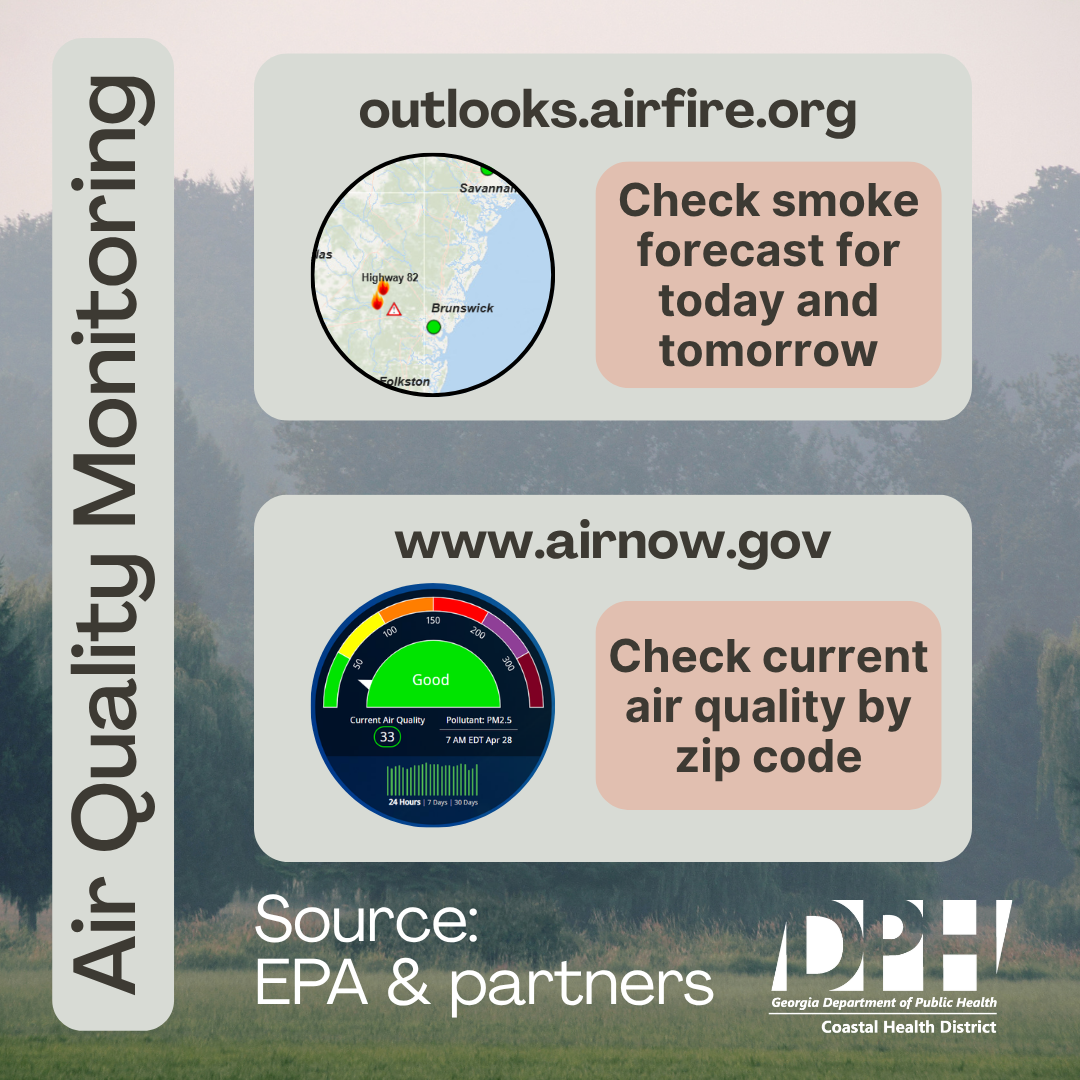
- At outlooks.airfire.org, you can click on a specific fire and see the regional smoke outlook for that day and the next.
Environmental Protection Agency & Partners
- At www.airnow.gov, you can type in your zip code to see the current air quality index.
 [PNG, 1,018.79 KB]
Protecting Your Health from Wildfire Smoke
The Coastal Health District is encouraging residents to take precautions when wildfire smoke is impacting air quality across the Coastal Health District.
Wildfire smoke can make anyone sick, but some people have a higher risk of health problems associated with wildfire smoke. People at increased risk include individuals with chronic conditions like asthma, Chronic Obstructive Pulmonary Disease (COPD), diabetes, chronic kidney disease, or heart disease. Pregnant women, children, and first responders are also at higher risk.
If wildfire smoke is impacting your area, you’re encouraged to:
- Stay inside and away from the smoke.
- Keep indoor air as clean as possible. Keep windows and doors closed. Run an air conditioner if you have one but keep the fresh air intake closed and the filter clean to prevent outdoor smoke from getting inside. You can also use fans inside the home to help stay cool.
- Avoid activities that increase indoor pollution such as smoking or vaping, spraying aerosol products, burning candles or incense, or vacuuming unless your vacuum has a HEPA filter.
- Keep airways moist by drinking plenty of water.
- Follow the advice of your health care provider about medicines and your respiratory management plan if you have asthma, COPD, or any other lung or heart disease. Seek medical attention if you are having difficulty breathing or if your symptoms worsen.
Get more information about protecting your health from wildfire smoke at the website of the CDC.