The Coastal Health District of Georgia serves the counties of Bryan, Camden, Chatham, Effingham, Glynn, Liberty, Long & McIntosh

Posts by District_PIO


Free Mammograms

The Chatham County Health Department’s Breast and Cervical Cancer Program (BCCP) is partnering with the St. Joseph’s/Candler Mobile Mammography Program to offer free mammograms from 8:30 a.m. to 3 p.m. on Tuesday, June 25, at the Chatham County Health Department located at 1395 Eisenhower Drive in Savannah. Women who meet certain annual income guidelines and are 40-64 years of age without insurance will be eligible to receive a screening mammogram at no cost.

Appointments are preferred but walk-ins will be accepted. To make an appointment, please call 356-2946.

Georgia WIC Comment Survey

Let us know what you think about WIC! We want to make the program better but we need your help. Please go to wic.ga.gov to give us your feedback. The survey will be open through June 30.

Measles: What You Need to Know

Measles has been in the news a lot lately. As of April 29, 2019, six residents in Georgia (none in Coastal Health District) have been reported as having measles. Measles have also been reported in nine other states. Measles is highly contagious and can be very dangerous, especially for young children.
The best way to prevent measles is for all children to be fully vaccinated on time. The measles-mumps-rubella (MMR) vaccine is safe and effective and prevents measles and two other viral diseases – mumps and rubella. More than 95% of the people who receive a single dose of MMR will develop immunity to all three viruses. A second dose boosts immunity, typically enhancing protection to 98%.

Measles is spread by air-borne droplets when an infected person coughs or sneezes and can live in the air and on surfaces for 2-3 hours. Measles typically begins with a fever, followed by cough, runny nose, and/or red, watery eyes. After two to three days, the fever peaks and a rash appears at the hairline and spreads progressively downward covering the face, neck, trunk and extremities. Symptoms from measles usually appear within 10 – 14 days after exposure. Measles patients are considered to be contagious anywhere from 4 days before to 4 days after the rash appears.

Measles is endemic in many parts of the world and transmission in the U.S. is most often associated with unvaccinated travelers (Americans or foreign visitors) who get measles while they are in other countries.

Who is at increased risk of becoming infected with measles?

  • Infants who are too young to have been vaccinated (less than 1 year of age)
  • Persons who have never been vaccinated
  • Pregnant women
  • Immunocompromised persons (these include persons undergoing cancer chemotherapy or other immune-suppressive treatments, transplant recipients or those with diseases that affect the immune system such as acquired immune deficiency syndrome (AIDS) or systemic lupus erythematosis (SLE).
  • Anyone who becomes sick or thinks they may have been exposed to measles should contact your health care provider immediately and let him or her know that you may have been exposed to measles.

Anyone who becomes sick or thinks they may have been exposed to measles should contact their health care provider immediately. DO NOT go to the doctor’s office, the hospital, or a public health clinic without FIRST calling to let them know about your possible contact with measles. Health care providers who suspect measles in a patient should notify public health immediately. For more information about measles, log on to https://www.cdc.gov/measles/index.html

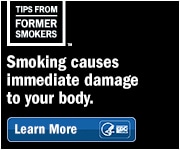
CDC’s Tips From Former Smokers® Campaign To Air Hard-Hitting Commercials Beginning April 2019

The Centers for Disease Control and Prevention (CDC) is continuing its national tobacco education campaign—Tips From Former Smokers® (Tips®)—with hard-hitting TV commercials that feature real people who have experienced the harms caused by smoking. The campaign ads, which air beginning April 2019, will again highlight the immediate and long-term damage caused by smoking, and encourage smokers to quit.

CDC launched the first Tips campaign in 2012 to lower smoking rates and save lives, and the campaign has been very successful since then. Results of a CDC study published in the journal, Preventing Chronic Disease, show that during 2012-2015, CDC’s Tips campaign was associated with over half a million sustained quits among U.S. adult smokers, and over 9 million quit attempts.

Americans pay a high price in illnesses and deaths due to tobacco use. Unfortunately, even though smoking rates among adults have declined over the years—from 20.9% in 2005 to 14% in 2017—tobacco use still results in far too many deaths, disabilities, and smoking-related illnesses in the United States. For every person who dies because of smoking, at least 30 people live with a serious smoking-related illness.

“Most smokers want to quit. They don’t want to suffer or be a burden on their families,” said Corinne Graffunder, DrPH, MPH, director of CDC’s Office on Smoking and Health. “By showing how real people and their families are affected by smoking-related diseases, the Tips campaign can help motivate people to quit for good.”

For more information about the Tips campaign and resources for quitting smoking, visit CDC.gov/tips. For help quitting, call 1-800-QUIT-NOW (1-800-784-8669).

Tips From Former Smokers. Smoking Causes Immediate Damage to Your Body. Learn More.

STD Awareness

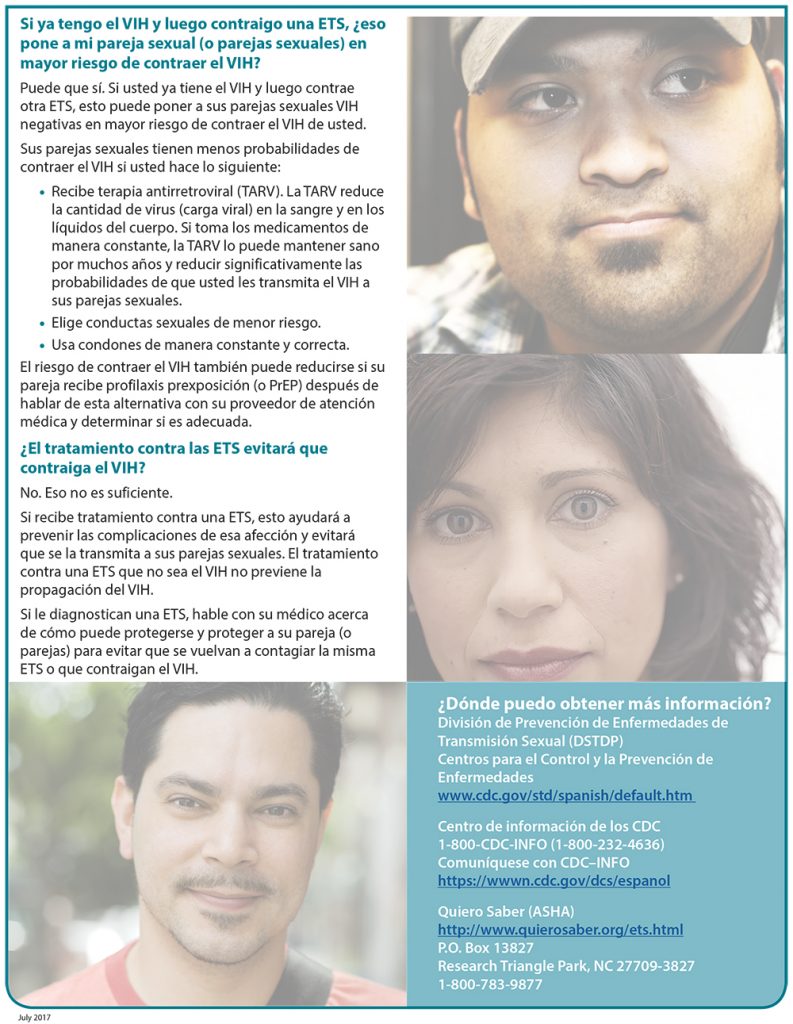
STDs are making a comeback across the nation. The surge of STDs endangers the health of too many in the United States (U.S.). According to the CDC, from 2013-2017, syphilis cases nearly doubled, gonorrhea cases increased by 67 percent, and chlamydia cases remained at record highs.

STDs are preventable and treatable. The best way to prevent STDs is to understand how to protect yourself. Anyone who is sexually active can get an STD. According to the CDC, there are 20 million new STD infections in the United States every year.

Did you know that the most common STD – human papillomavirus (HPV) – can be prevented by a vaccine? Get the lowdown on how to prevent STDs here. STD testing and treatment is available at all Coastal Health District health departments.

National Nutrition Month


March is National Nutrition Month and a time to focus on the importance of making informed food choices and developing sound eating and physical activity habits.

Below is some information we hope you will find helpful.

Dietary Guidelines
MyPlate, the Dietary Guidelines for Americans and food labels can help you create a healthy eating plan that includes a variety of foods from all food groups. Learn more at https://sm.eatright.org/aboutDGA.

Food Safety
Reduce your risk of food poisoning by following these four easy steps: https://sm.eatright.org/4HFSsteps

[JPG]

Dining Out
Restaurant food is meant to look, smell and taste great, and that means nutrition can sometimes fall by the wayside! Try these tips to dine out while sticking to a healthy eating plan: https://sm.eatright.org/diningout

Benefits of Healthy Eating Style
A healthy eating plan can help prevent illnesses and keep you feeling great! Learn about some of the benefits of a healthful diet: https://sm.eatright.org/preventillness

Eating Right Isn’t Complicated
Eating right doesn’t have to be complicated! Start building a smarter plate by choosing fruits and vegetables, whole grains, lean protein and low-fat dairy — foods that are packed with the nutrients you need.
Get more tips at https://sm.eatright.org/ERnotcomplicated.

[JPG]

Portion Sizes
A key part of healthful eating is choosing appropriate amounts of different foods. Learn the important differences between the terms “serving size” and “portion size”: https://sm.eatright.org/srvprtnsizes


Free Mammograms in Chatham Co. for Women Who Meet Eligibility Criteria

The Chatham County Health Department’s Breast and Cervical Cancer Program (BCCP) is partnering with St. Joseph’s/Candler Mobile Mammography Program to offer free mammogram screenings for women who meet eligibility guidelines from 8:30 a.m. – 3 p.m., on Tuesday, March 26, at the health department’s midtown location, 1602 Drayton Street.

Women who meet certain annual income guidelines and are 40-64 years of age without insurance will be eligible to receive a screening mammogram at no cost. More information on eligibility requirements can be found at coastalhealthdistrict.org/bccp.

Appointments are preferred but walk-ins will be accepted. To make an appointment, please call 356-2946.

Protect Your Preteen’s Future: Vaccinate Today

Vaccinate your preteen today so they can have healthy tomorrow.

In an effort to protect every adult and child, the Coastal Health District is joining the Georgia Department of Public Health in recognizing March 11-15, 2019 as Georgia Preteen Vaccine Awareness Week. This week serves as a reminder for parents to talk with their preteens and teens about getting immunized against vaccine-preventable diseases.

“Every parent wants to protect their child from danger, yet many times parents don’t see vaccination as a priority,” said Sheila Lovett, Immunization Program director for the Georgia Department of Public Health. “Vaccinating your child is the single best way to protect them from these preventable diseases, so we urge parents to make this a priority.”

According to the Georgia Department of Public Health Rule (511-2-2), all students born on or after January 1, 2002, entering or transferring into seventh grade and any “new entrant” into eighth -12th grades in Georgia need proof of an adolescent pertussis (whooping cough) booster vaccination (called “Tdap”) AND an adolescent meningococcal vaccination (MenACWY). This law affects all public and private schools including, but not limited to, charter schools, community schools, juvenile court schools and other alternative school settings (excluding homeschool).

Vaccines are the best defense we have against serious, preventable and sometimes deadly contagious diseases. They help avoid expensive therapies and hospitalization needed to treat infectious diseases like influenza and meningitis. Immunizations also reduce absences both at school and after school activities and decrease the spread of illness at home, school and the community.

The CDC currently recommends the following vaccines for preteens and teens:

  • Tetanus, Diphtheria and Pertussis (Tdap)
    • Influenza (flu)
    • Human Papillomavirus (HPV)
    • Meningococcal Disease (MenACWY)

Georgia Preteen Vaccine Awareness Week is an opportunity to raise awareness through schools, health care providers and the media regarding preteen immunizations, particularly Georgia’s pertussis and meningococcal requirements for incoming seventh-grade students. Speak with your physician today to find out if your preteen is up-to-date.

For more information, click here.

School Requirements

  • All students born on or after January 1,2002, and entering or transferring into seventh grade and any new entrant into eighth through 12th grades, in Georgia must provide proof of an adolescent pertussis (whooping cough) booster vaccination (called “Tdap”) and an adolescent meningococcal vaccination (MenACWY).
  • Proof of both vaccinations must be documented on the Georgia Immunization Certificate (Form 3231).
  • If your preteen has not yet received the whooping cough booster shot or meningococcal vaccine, please contact your doctor or local health department.

Raccoon in Midway Tests Positive for Rabies

A raccoon in the Billy Harris Point area of Midway has tested positive for rabies. A family dog that came into contact with the raccoon was not up to date on his rabies vaccination but has since received the vaccine.  The dog will remain under quarantine for 45 days as a precaution.

Several species of wild animals that are native to coastal Georgia – including raccoons, foxes, and bats – can carry rabies. Rabies is a potentially deadly virus that is primarily spread by infected animals. The Liberty County Environmental Health office offers these tips to protect you and your family from rabies:

  • Avoid contact with animals you don’t know.
  • Make sure your pets receive the proper immunizations. Dogs and cats should get rabies vaccines after 12 weeks of age, followed by a booster shot within one year and vaccination every 1-3 years depending on veterinary recommendation and vaccine used.
  • Do not handle, feed, or unintentionally attract wild animals with open garbage cans or by leaving pet food out at night.
  • Never adopt wild animals or bring them into your home. Do not try to nurse sick animals to health. Call animal control or a properly licensed animal rescue agency for assistance.
  • Teach children to never handle unfamiliar animals, wild or domestic, even if they appear friendly. “Love your own, leave other animals alone” is a good principle for children to learn.

Symptoms of rabies in animals include a change in behavior, biting, aggression, showing no fear of natural enemies (such as humans), foaming at the mouth, and paralysis.

If an animal ever bites you, seek medical care immediately and contact Liberty County Animal Control at 912-876-9191 and the Liberty County Environmental Health office at 912-368-5520.

Raccoon on Wilmington Island Tests Positive for Rabies

A raccoon in the Oemler Loop area of Wilmington Island has tested positive for rabies. A family dog that came into contact with the raccoon does not have a history of receiving the rabies vaccine and will be under quarantine for four months to make sure he does not exhibit any symptoms.

Several species of wild animals that are native to coastal Georgia – including raccoons, foxes, and bats – can carry rabies. Rabies is a potentially deadly virus that is primarily spread by infected animals. The Chatham County Health Department Environmental Health office offers these tips to protect you and your family from rabies:

  • Avoid contact with animals you don’t know.
  • Make sure your pets receive the proper immunizations. Dogs and cats should get rabies vaccines after 12 weeks of age, followed by a booster shot within one year and vaccination every 1-3 years depending on veterinary recommendation and vaccine used.
  • Do not handle, feed, or unintentionally attract wild animals with open garbage cans or by leaving pet food out at night.
  • Never adopt wild animals or bring them into your home. Do not try to nurse sick animals to health. Call animal control or a properly licensed animal rescue agency for assistance.
  • Teach children to never handle unfamiliar animals, wild or domestic, even if they appear friendly. “Love your own, leave other animals alone” is a good principle for children to learn.


Symptoms of rabies in animals include a change in behavior, biting, aggression, showing no fear of natural enemies (such as humans), foaming at the mouth, and paralysis.

If an animal ever bites you, seek medical care immediately and contact Chatham County Animal Services at 912-652-6575 and the Chatham County Environmental Health office at 912-356-2160.