The Coastal Health District of Georgia serves the counties of Bryan, Camden, Chatham, Effingham, Glynn, Liberty, Long & McIntosh

Posts by District_PIO


Give Kids A Smile Event to be Held February 3

Local dentists in Chatham County along with the Georgia Dental Association will offer free dental cleanings and treatment for children ages 3-18 during a Give Kids A Smile event scheduled from 9 a.m. to 3 p.m. on Friday, February 3, at Savannah Technical College located at 5717 White Bluff Road in Savannah. Entrance and registration will be located at Eckburg Auditorium at the College.

Treatment will be provided free of charge on a first come, first served basis. Children must be accompanied by a parent or guardian.

For more information, visit www.facebook.com/savGKAS or call 912-355-7022.

Microsoft Word - GKAS-2017 [JPG, 461.06 KB]

E-Cigarette Use Among Youth: A Public Health Threat Know the Risks and How to Get Help to Quit Tobacco and Nicotine

ATLANTA – The Georgia Department of Public Health (DPH) is urging caution about the use and exposure of children and youth to electronic nicotine delivery systems, including electronic cigarettes. The U.S. Surgeon General issued a report this week on the dangers of electronic nicotine delivery systems saying “nicotine-containing products are unsafe for youth.”

Electronic nicotine delivery systems are known by a variety of names, including “vapes,” “e-cigarettes,” “pens” and “e-hookahs.” They come in thousands of flavors and colors. Parents, teachers, coaches, counselors and other youth leaders should be aware of the dangers of these products and that they can be made to look like pens and other small objects that can be hidden in plain sight.

It is against the law in Georgia to sell or distribute any electronic cigarette to a person who is under the age of 18. As of October 2014, it is against state policy to use these products on any University System of Georgia property. Federal law also prohibits sales of e-cigarettes to minors, restricts sales in vending machines, and requires these products to have a nicotine warning label.

Nicotine is a neurotoxin that can damage the developing adolescent brain by causing permanent changes and contributing to mental health problems and mood disorders as well as other health problems. In addition to nicotine, the aerosol from electronic nicotine delivery products may include formaldehyde, propylene glycol, lead and other toxic chemicals.

Use of electronic nicotine delivery systems or devices, particularly by youth, is associated with other tobacco use.

“We know youth and young adults are trying these unsafe products in increasing numbers. This is an emerging public health crisis that threatens the health of our youth and our progress in reducing dependence on tobacco statewide” said Jean O’Connor, JD, DrPH, director of Chronic Disease Prevention for DPH.

The emissions from e-cigarettes have not been proven to be safe for anyone. Along with the dangers to the developing youth brain, nicotine is a highly addictive chemical for people of all ages that causes hardening of the arteries, which is associated with heart attack and stroke. Pregnant women or women who may become pregnant should especially avoid using or being exposed to nicotine. It can impact fetal development, affecting the brain, nerves and circulatory systems.

Electronic cigarettes and similar electronic nicotine delivery devices have not been approved by the U.S. Food and Drug Administration as tobacco cessation devices. The only current safe and effective tools to quit nicotine and tobacco products are approved nicotine replacement therapy products, which contain controlled doses of nicotine.

Most people who want to quit tobacco or nicotine need help to end their addiction. Anyone, including teenagers, who needs help quitting tobacco or nicotine, should talk with their doctor. Help quitting tobacco is covered by Georgia Medicaid and other health plans. Or, they can contact the Georgia Tobacco Quitline for free, confidential support:

English: 1-877-270-STOP (877-270-7867)
Spanish: 1-877-2NO-FUME (877-266-3863)
Hearing Impaired: 1-877-777-6534

The Quitline is available 24/7. It is never too late to quit.

For more information visit dph.ga.gov/tobacco or email chronic.disease@dph.ga.gov

World AIDS Day 2016

World AIDS Day is observed on December 1 each year and is an opportunity for people worldwide to unite in the fight against HIV, show their support for people living with HIV, and commemorate people who have died. More than 1.2 million people in United States are living with HIV and nearly one in eight of them does not know it. The only way to know for sure whether you have HIV is to get tested. World AIDS Day is a global initiative to raise awareness, fight prejudice, and improve education about HIV and AIDS. The 2016 theme is “Leadership, Commitment, Impact.”

The Coastal Health District Prevention Program will offer free and confidential rapid HIV testing from 8 a.m. to 3 p.m. on Thursday, December 1, at the  Chatham County Health Department located at 1395 Eisenhower Drive in Savannah.

Whether you are actively dating or in a committed relationship, you can take these simple, effective steps to help prevent HIV infection for you and your partner:
• Use condoms every time you have sex.
• Get an HIV test, which is free and confidential.
• Be monogamous.
• Do not abuse alcohol or drugs.
• Talk to your doctor about pre-exposure prophylaxis (PrEP) or post-exposure prophylaxis (PEP) if you think you are at risk for HIV.

For more information, please call Diane DeVore at (912) 353-3276 or email Diane.Devore@dph.ga.gov.

For more information on the Coastal Health Districts HIV/AIDS program, click HERE.

world-aids-day-2016-slider

Free Mammograms for Women Who Meet Eligibility Guidelines

The Chatham County Health Department’s Breast and Cervical Cancer Program (BCCP) and St. Joseph’s/Candler Mobile Mammography Program are partnering to offer free mammogram screenings for women who meet eligibility guidelines. Mammograms will be offered from 8 a.m. – 12 p.m. on Monday, November 28, at the Chatham County Health Department located at 1395 Eisenhower Drive.

Women who meet certain annual income guidelines and are 40-64 years of age without insurance will be eligible to receive a screening mammogram at no cost. Appointments are encouraged but walk-ins will be accepted. To make an appointment, please call 356-2946.

Smoke From Wildfires Spreads In Georgia; DPH Urges Precautions to Protect Health

Shifting winds are pushing smoke from several fires burning in North Georgia and parts of Tennessee into the state, including the metro Atlanta area. The Georgia Department of Public Health is urging people, especially individuals with chronic heart and lung diseases, to protect themselves from smoke from wildfires.

For healthy people, smoke from wildfires that contains particles from burning trees and shrubs can irritate your eyes and respiratory system. However, smoke can worsen chronic health problems such as lung disease, asthma, allergies and increased risk of heart attacks and stroke. People with existing respiratory conditions, young children and elderly people are especially susceptible to health effects from this smoke.

“We especially urge parents and caregivers to pay careful attention to children and older adults and seek medical care if needed,” said Jean O’Connor, director of Chronic Disease Prevention at the Georgia Department of Public Health. “Older adults are more susceptible to smoke because of their increased risk of heart and lung problems. Children’s airways are still developing and they breathe more air per pound of body weight than adults.”

Smoke can irritate the eyes and airways, causing coughing, a scratchy throat, irritated sinuses, headaches, stinging eyes or a runny nose. People with heart disease might experience chest pain, palpitations, shortness of breath or fatigue. People with lung disease may not be able to breathe as deeply or as vigorously as usual, and they may experience symptoms such as coughing, phlegm, chest discomfort, wheezing and shortness of breath.

It’s important to limit your exposure to smoke and there are precautions you can take:

  • Use common sense. If it looks and smells smoky outside limit outdoor activities; yard work, exercise, children playing.
  • Pay attention to local air quality reports and news coverage related to smoke.
  • Keep indoor air as clean as possible if you are advised to stay indoors. Keep windows and doors closed. Run an air conditioner if you have one, but keep the fresh-air intake closed and the filter clean to prevent outdoor smoke from getting inside.
  • Avoid activities that increase indoor pollution. Burning candles, fireplaces, or gas stoves can increase indoor pollution. Vacuuming stirs up particles already inside your home, contributing to indoor pollution. Smoking also puts even more pollution into the air. 
  • Do not rely on dust masks for protection. Paper “comfort” or “dust” masks commonly found at hardware stores are designed to trap large particles, such as sawdust. These masks will not protect your lungs from the small particles found in wildfire smoke. 
  • Follow the advice of your doctor or other health care provider about medicines and about your respiratory management plan if you have asthma or another lung disease.

For more information about smoke and health go to www.cdc.gov/features/wildfires/.

Free Mammograms Offered in Chatham & McIntosh Counties

The Chatham and McIntosh County Health Departments will offer free mammogram screenings in October for women who meet certain criteria.

Chatham County Information

WHO:  Chatham County Health Department’s Breast and Cervical Cancer Program (BCCP) and
St. Joseph’s/Candler Mobile Mammography Program

WHAT:  Free mammogram screenings for women who meet eligibility guidelines

WHEN:  8:30 a.m. – 3:30 p.m., Friday, October 21

WHERE:   Chatham County Health Department, 1395 Eisenhower Drive

WHY:  The Chatham County Health Department’s Breast and Cervical Cancer Program (BCCP) is partnering with the St. Joseph’s/Candler Mobile Mammography Program to offer free mammograms from 8:30 a.m. to 3:30 p.m. on Friday, October 21, at the Chatham County Health Department located at 1395 Eisenhower Drive. Women who meet certain annual income guidelines and are 40-64 years of age without insurance will be eligible to receive a screening mammogram at no cost.

Appointments are encouraged but walk-ins will be accepted. To make an appointment, please call 356-2946.


McIntosh County Information

WHO:  McIntosh County Health Department in conjunction with Susan G. Komen and Coastal Georgia Affiliate and Southeast Georgia Health System (SGHS).

WHAT:  Free breast exams and mammograms for women who meet eligibility criteria.

WHEN:  9 a.m. to 3 p.m., Thursday, October 27 (No appointment necessary).

WHERE:  Bi-Lo parking lot, 1338 North Way, Darien

WHY: The McIntosh County Health Department, in conjunction with Susan G. Komen Coastal Georgia Affiliate and the Southeast Georgia Health System (SGHS) will offer free breast exams and mammograms to women over the age of 40 who have not had a mammogram in the last year and who meet certain criteria, including those with no insurance or limited insurance coverage. Mammogram screenings will be provided by the SGHS Wellness on Wheels (WOW) mobile health vehicle in the parking lot of the Bi-Lo located at 1338 North Way in Darien on Thursday, October 27, from 9 a.m. to 3 p.m.

For more information, please call the Health Department at 912-832-5473.

Smoke from Burning Debris Can Trigger Respiratory Issues

Smoke created from residents burning debris generally does not pose a health hazard but it may worsen symptoms for people who have pre-existing respiratory conditions such as respiratory allergies, asthma and chronic obstructive pulmonary disease (COPD).

The best protection for these individuals is to avoid areas where burning is taking place or stay indoors. If that is not possible, parents or caregivers of persons with respiratory conditions should monitor the individual carefully; ensure all medication is taken as directed; and, seek medical attention immediately if the In addition:

  • Make sure to keep windows and doors shut.
  • Use the recycle or re-circulate mode on the air conditioner in your home or car.
  • Asthmatics should follow their asthma management plan.
  • Contact your doctor if you have symptoms such as chest pain, chest tightness, shortness of breath, or severe fatigue. This is important not only for people with chronic lung or heart disease, but also for individuals who have not been previously diagnosed with such illnesses. Smoke can “unmask” or produce symptoms of such diseases.

Important Post-Hurricane Public Health Information

Now that the storm has passed and cleanup has begun, there are a lot of important things to remember for the health and safety of you and your family. Here is some information that can help:

If I’m on a private well and it flooded, what should I do?
Disinfecting Private Wells [DOC, 214.00 KB]


Mold
Mold is caused by moisture and after the flooding brought about by Hurricane Matthew, mold is likely to be an ongoing issue. The Federal Emergency Management Agency along with the Centers for Disease Control and Prevention, the Environmental Protection Agency, the U.S. Department of Housing and Urban Development, and the National Institutes of Health have developed guidance and information regarding mold management and cleanup after disasters. We encourage residents to refer to this guidance while cleaning up personal property in the wake of the recent flooding.

Information and guidance for homeowners and renters on how to clean up residential mold:
Homeowners and Renters Guide to Mold Clean-up After Disasters [PDF, 2.99 MB]

Additional Resource:
EPA Brief Guide to Mold, Moisture, and Your Home [PDF, 1.39 MB]

https://dph.georgia.gov/indoor-air-quality


Information on Debris Removal

(Click on Image for Larger View)
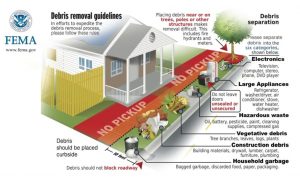
debris3 [JPG, 95.99 KB]


What does is mean if my area has been placed  under a “Boil Water Advisory?”
It means that residents are advised to either use bottled water or “boil” all tap water prior to use for drinking, cooking, making ice, brushing teeth, or preparing baby food.
To boil water:

  • Fill a pot with water
  • Heat the water until bubbles come from the bottom of the pot to the top.
  • Once the water reaches a rolling boil, let it boil for at least 1 minute.
  • Turn off the heat source and let the water cool.
  • Pour the water into a clean container with a cover for storage.

For information on the boil water advisory for Water Utility Management customers please click here: http://www.waterga.com/

Residents with private wells that have flooded are also advised to boil water for consumption. Your well should be considered “flooded” if your well casing has been submerged in water anytime throughout the past week.
Residents should continue to boil their water until they are notified by public health or their drinking water utility that the water system has been restored to full operation and the water is safe to drink.


General Information on food safety:
If you are wondering whether high water or power outages have ruined their food can follow a simple rule: When in doubt, throw it out. Once power is off, the refrigerator keeps food at safely cold temperatures for 4 hours, while food in a freezer remains safe for approximately 8 hours. If your power is off longer, your food is not safe to eat and should be discarded.
Do not consume anything that flood water may have touched. Flood water carries disease-causing organisms.

  • Do not eat any food that may have come into contact with flood water. If in doubt, throw it out.
  • Do not eat food packed in plastic, paper, cardboard, cloth, and similar containers that have been water damaged.
  • Discard food and beverage containers with screw-caps, snap lids, crimped caps (soda bottles), twist caps, flip tops, and home canned foods, if they have come in contact with flood water. These containers cannot be disinfected.
  • Undamaged, commercially-prepared foods in all-metal cans or retort pouches can be saved if you remove the labels, thoroughly wash the cans, rinse them, and then disinfect them with a sanitizing solution consisting of 1 tablespoon of bleach per gallon of potable water. Finally, re-label containers that had the labels removed, including the expiration date, with a marker. Discard any canned foods that are dented as this can increase the risk of contracting botulism, a rare but very serious illness.

For more information, please go to www.fda.gov.


Smoke from Burning Debris Can Trigger Respiratory Issues

Smoke created from residents burning debris generally does not pose a health hazard but it may worsen symptoms for people who have pre-existing respiratory conditions such as respiratory allergies, asthma and chronic obstructive pulmonary disease (COPD).

The best protection for these individuals is to avoid areas where burning is taking place or stay indoors. If that is not possible, parents or caregivers of persons with respiratory conditions should monitor the individual carefully; ensure all medication is taken as directed; and, seek medical attention immediately if the individual shows any signs of distress.

In addition:

  • Make sure to keep windows and doors shut.
  • Use the recycle or re-circulate mode on the air conditioner in your home or car.
  • Asthmatics should follow their asthma management plan.
  • Contact your doctor if you have symptoms such as chest pain, chest tightness, shortness of breath, or severe fatigue. This is important not only for people with chronic lung or heart disease, but also for individuals who have not been previously diagnosed with such illnesses. Smoke can “unmask” or produce symptoms of such diseases.

I own a restaurant. What do I need to do to get ready to reopen?

Restaurants and Grocers Reopening After Hurricanes and Flooding

Food Service Establishment Checklist [DOCX, 73.16 KB]

For more information, contact your county’s Environmental Health Office.


Floodwater and Food: When in Doubt, Throw It Out

Residents facing the daunting task of cleaning up flooded homes and wondering whether high water or power outages have ruined their food can follow a simple rule: When in doubt, throw it out.

Once power is off, the refrigerator keeps food at safely cold temperatures for 4 hours, while food in a freezer remains safe for approximately 8 hours. If your power is off longer, your food is not safe to eat and should be discarded.

  • Do not consume anything that flood water may have touched. Flood water carries disease-causing organisms.
  • Do not eat any food that may have come into contact with flood water. If in doubt, throw it out.
  • Do not eat food packed in plastic, paper, cardboard, cloth, and similar containers that have been water damaged.
  • Discard food and beverage containers with screw-caps, snap lids, crimped caps (soda bottles), twist caps, flip tops, and home canned foods, if they have come in contact with flood water. These containers cannot be disinfected.
  • Undamaged, commercially-prepared foods in all-metal cans or retort pouches can be saved if you remove the labels, thoroughly wash the cans, rinse them, and then disinfect them with a sanitizing solution consisting of 1 tablespoon of bleach per gallon of potable water. Finally, re-label containers that had the labels removed, including the expiration date, with a marker. Discard any canned foods that are dented as this can increase the risk of contracting botulism, a rare but very serious illness.
    For more information, please go to www.fda.gov.

It’s Not Too Late to Get the Flu Shot

With flu activity increasing and family and friends planning gatherings for the holidays, now is a great time to get a flu vaccine if you have not gotten vaccinated cdc-flu-qa-nivw [PNG, 264.65 KB]yet. A flu vaccine can protect you and your loved ones. Everyone 6 months of age and older should get a flu vaccine every season. This season, CDC recommends only flu shots (not the nasal spray vaccine).

While seasonal flu activity varies, flu activity usually peaks between December and February, though activity can last as late as May. As long as flu activity is ongoing, it’s not too late to get vaccinated, even in January or later. An annual flu vaccine is the best way to protect against this potentially serious disease. Even if you have already gotten sick with flu this season, it is still a good idea to get a flu vaccine. Flu vaccines protects against three or four different flu viruses (depending on which flu vaccine you get).

December 4-10, 2016 is this year’s National Influenza Vaccination Week (or NIVW). CDC Established NIVW in 2005 to highlight the importance of continuing flu vaccination through the holiday season and beyond. A goal of NIVW is to remind people that even though the holiday season has arrived, it’s not too late to get their flu vaccine.

As long as flu viruses are spreading and causing illness, vaccination should continue throughout the flu season in order to protect as many people as possible against the flu. Everyone 6 months of age and older should get a flu vaccine every season. CDC recommends only flu shots this season. If you haven’t already, it’s not too late to get a flu shot!

Health departments in Bryan, Camden, Chatham, Effingham, Glynn, Liberty, Long, and McIntosh counties offer the regular flu shot for $29 and a high dose flu shot – made especially for those 65 and older – for $50. No appointment is needed for flu shots at health departments. 

Save time when going to get your flu shot by filling out the consent form ahead of time and bringing it with you to the health department:
General Vaccine Consent Form [PDF, 100.96 KB]
General Flu Vaccine Consent Form (Spanish) [PDF, 49.56 KB]

Read the Vaccine Information Statement here:
Flu Vaccine Information Statement (English)
Flu Vaccine Information Statement (Spanish) [PDF, 343.81 KB]

Getting the flu vaccine is the best way to protect yourself, your family, and your community from the flu. Every flu season is different and we never know how bad a flu season is going to be or how long it’s going to last which is why it is so important to get the flu vaccine every year. Some things to know about this year’s flu season:

  • The vaccine has been updated for the 2016-2017 flu season so it should be a better match for flu viruses.flu-shot-pic [JPG, 159.27 KB]
  • Only the flu shot is recommended this year because there are questions about the effectiveness of the nasal spray form of the vaccine.
  • Getting vaccinated not only protects you, it also protects people around you – like babies, older people, and people with chronic health conditions – who may be at risk from getting seriously ill from the flu.
  • The Centers for Disease Control and Prevention (CDC) recommends everyone 6 months of age and older receive a yearly flu vaccine.
  • People at high risk of serious flu complications include young children, pregnant women, people with chronic health conditions like asthma, heart disease, diabetes and lung disease and people 65 years of age and older.

It takes about two weeks after vaccination for the immune system to fully respond to the vaccine and provide the body protection. While getting the flu vaccine is the best way to prevent the flu, there are other things we can all do every day to prevent getting or spreading the flu viruses and other viruses:

  • Avoid close contact with sick people.
  • If you get sick with flu-like illness, stay home for at least 24 hours after the fever is gone except to get medical care or for other necessities. The fever should be gone without the use of a fever-reducing medicine.
  • While sick, limit contact with others as much as possible to keep from infecting them.
  • Try to cough or sneeze into the corner of your elbow and not your hand or cover your nose and mouth with a tissue when you cough or sneeze. Throw the tissue in the trash after you use it.
  • Wash your hands with soap and water. If soap and water are not available, use an alcohol-based hand rub.
  • Avoid touching your eyes, nose, and mouth. Germs spread this way.
  • Clean and disinfect surfaces and objects that may be contaminated with germs like the flu.

Don’t let the flu get the best of you. Protect yourself and your loved ones from flu by getting vaccinated early.