The Coastal Health District of Georgia serves the counties of Bryan, Camden, Chatham, Effingham, Glynn, Liberty, Long & McIntosh

News


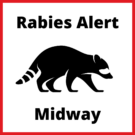
Fox Tests Positive for Rabies after Attacking Family Dog in Chatham County

A fox that got into a fight with a family dog in the Dean Forest Road area of Savannah has tested positive for rabies. The dog is up-to-date on rabies vaccinations and received a rabies booster as a precaution. Several species of wild animals that are native to coastal Georgia – including raccoons, foxes, and bats – can carry rabies.

Rabies is a potentially deadly virus that is primarily spread by infected animals. Symptoms of rabies in animals include a change in behavior, biting, aggression, showing no fear of natural enemies (such as humans), foaming at the mouth, and paralysis.

The Chatham County Health Department Environmental Health Division offers these tips to protect you and your family from rabies:

  • Avoid contact with animals you don’t know.
  • Make sure your pets receive the proper immunizations. Dogs and cats should get rabies vaccines by four months of age, followed by a booster shot one year later, and another one every year as prescribed by your veterinarian.
  • Do not handle, feed, or unintentionally attract wild animals with open garbage cans or by leaving pet food out at night.
  • Never adopt wild animals or bring them into your home. Do not try to nurse sick animals to health. Call animal control or a properly licensed animal rescue agency for assistance.
  • Teach children to never handle unfamiliar animals, wild or domestic, even if they appear friendly. “Love your own, leave other animals alone” is a good principle for children to learn.

If an animal ever bites you, seek medical care immediately and contact Chatham County Animal Control at 525-2408 and the Chatham County Health Department Environmental Health Division at 356-2160.

Health District Officials Encourage Mosquito Precautions

Summer is under way and as more people make their way outside for summertime activities, Coastal Health District officials want to remind residents to take precautions to avoid mosquitoes. Mosquito bites are annoying but can also cause diseases such as West Nile Virus (WNV), Eastern Equine Encephalitis (EEE), and Chikungunya.

WNV is transmitted by the bite of infected mosquitoes. About 80 percent of people infected with WNV will not show any symptoms at all; however, cases can range from mild to severe. Mosquitoes that carry the West Nile Virus are more likely to bite during the evening, night, and early morning. EEE is a mosquito-borne virus that causes swelling of the brain. In horses, it is fatal 70 to 90 percent of the time. Horse and large animal owners are encouraged to vaccinate their animals against the virus and to clean out watering sources, such as buckets and troughs, every three-to-four days to prevent mosquitoes from breeding there. The most common symptoms of Chikungunya are fever and joint pain and symptoms usually begin 3–7 days after being bitten by an infected mosquito. According to the Centers for Disease Control and Prevention (CDC), reported cases of Chikungunya thus far in 2015 have occurred in travelers returning from affected areas including Puerto Rico and the U.S. Virgin Islands.

“The common thread among these illnesses is that they are transmitted through mosquito bites,” said Diane Weems, M.D., Coastal Health District Health Director. “The more precautions we take against getting bitten by mosquitoes the better our chances are of avoiding any mosquito-borne diseases.”

Mosquito Prevention

The best way to prevent mosquito-related diseases is to avoid mosquito bites. Mosquitoes breed in standing water which is why it is important to remove water-holding containers (buckets, barrels, flower pots, tarps, etc.; drill holes in tire swings so water drains out; keep children’s wading pools empty and on their sides when they’re not being used; change water frequently in pet dishes; change bird bath water at least twice a week; and avoid using saucers under outdoor potted plants.

The following tips can help lessen the risk of getting bitten by mosquitoes:

  • DRAIN all standing water.
  • Avoid DAWN and DUSK when mosquitoes are most active.
  • DRESS appropriately in long sleeves and pants.
  • DEFEND or DEET yourself against mosquitoes with an effective repellent. Repellents containing DEET, picaridin, IR3535, and oil of lemon eucalyptus and para-menthane-diol products provide long lasting protection.
  • DOORS and windows should be in good condition.

Family Dog Tests Positive for Rabies: Glynn Co. Health Department Reminds Residents to Vaccinate Pets

A family dog that fought with a raccoon and later began showing signs of rabies infection had to be euthanized and has since tested positive for rabies. The dog was not up-to-date on his rabies vaccinations. The incident happened in West Point Plantation on St. Simons Island. As a precautionary measure, two people who were exposed to the dog are now undergoing post-exposure prophylaxis for rabies.

“A lot of wild animals that are native to our area – like raccoons and foxes – are known carriers of rabies,” said Glynn County Assistant Environmental Health Manager, Erin Doane. “That’s why it is so important to make sure that pets are vaccinated against the virus.”

Rabies is a potentially deadly virus that is primarily spread by infected animals. Symptoms of rabies in animals include a change in behavior, biting, aggression, showing no fear of natural enemies (such as humans), foaming at the mouth, and paralysis.

The Glynn County Health Department Environmental Health Division offers these tips to protect you and your family from rabies:

  • Avoid contact with animals you don’t know.
  • Make sure your pets receive the proper immunizations. Dogs and cats should get rabies vaccines by four months of age, followed by a booster shot one year later, and another one every one to three years as prescribed by your veterinarian.
  • Do not handle, feed, or unintentionally attract wild animals with open garbage cans or by leaving pet food out at night.
  • Never adopt wild animals or bring them into your home. Do not try to nurse sick animals to health. Call animal control or a properly licensed animal rescue agency for assistance.
  • Teach children to never handle unfamiliar animals, wild or domestic, even if they appear friendly. “Love your own, leave other animals alone” is a good principle for children to learn.

If an animal ever bites you, seek medical care immediately and contact Glynn County Animal Control at 912-554-7500 and the Glynn County Health Department Environmental Health Division at 279-2940.

McIntosh County Health Department to Hold Child Car Seat Safety Check on June 19

The McIntosh County Health Department, with help from Georgia State Patrol Post 11 in Hinesville, will hold a child car seat safety check from 9 a.m. to 1 p.m. on Friday, June 19, at the health department located at 1335 Hwy. 57 in Townsend. Certified Child Passenger Safety Technicians will be available to examine child safety seats for recalls and to ensure correct installation in vehicles.

Motor vehicle crashes are the leading cause of death among children ages 2-14 and the leading cause of injury-related death for children under two. Each year an estimated 2,446 children die in motor vehicle crashes. When installed and used correctly, child car seats and seat belts can prevent injuries and save lives.

The McIntosh County Health Department child car seat safety check event is an opportunity for parents, parents-to-be, and child caregivers to have their car seats checked by Certified Child Passenger Safety Technicians for proper installation. The event is made possible through a grant from the Miller Family Fund, a component fund of the Communities of Coastal Georgia Foundation. The Health Department received funding earlier this year to educate families on the proper installation of car seats and general seatbelt safety.

The event is free and open to the public and no appointment is necessary.

Glynn Co. Health Department Schedules Wacky WIC Wednesdays

The Glynn County Health Department will hold Wacky WIC Wednesdays from 8 a.m. to 3 p.m. on June 24, July 29, and August 26 for WIC clients who may have missed previous appointments. On designated Wednesdays, WIC clients can walk in and receive services. No appointment is necessary. There will also be fun activities scheduled and prize giveaways on those days.

Women, Infants, and Children’s (WIC) is a supplemental nutrition program that provides nutritious foods, education, and improved healthcare access for low and moderate-income women and children who are at risk of developing nutrition related health problems. The federally-funded health and nutrition program is for infants and children age 1 to 5 years (including foster children); pregnant women; breastfeeding mothers (up to one year); and postpartum women (up to six months).

For more information about WIC services, call 912-289-1810 or click HERE.


Microsoft Word - Wacky Wednesday Flyer [JPG, 386.94 KB]


Free HIV Testing Events Scheduled in Chatham and Glynn Counties

The U.S. Center for Disease Control and Prevention (CDC) estimates that one out of five people living with HIV/AIDS in the U.S. is unaware of their HIV status. National Testing Day is an opportunity for people to learn of their HIV status and to gain knowledge to take control of their lives. The Chatham and Glynn CARE Centers, Coastal Health District centers for expanded HIV services, are pleased to offer free HIV testing as part of this global effort.

The Coastal Health District HIV program will offer free HIV testing at several locations in June in observance of National HIV Testing Day. Testing will be done without the use of a needle and those tested will get results in 20 minutes. A follow-up visit will be scheduled for anyone who tests positive and counseling will be made available to those individuals.

Volunteers are also needed to help with the HIV testing events. Volunteer positions include greeters, client intake specialists, data entry specialists, client flow staff, and form couriers.

For more information, please call Diane DeVore at (912) 353-3276 or e-mail Diane.DeVore@dph.ga.gov


HIV Free Testing Locations Flyer 6.15_Layout 1.qxd [JPG, 1.47 MB]

Public Health and College Officials Work Together to Prevent Spread of Chickenpox

Chickenpox, a highly contagious disease caused by the varicella virus, has been confirmed in two students attending the Savannah College of Art and Design’s (SCAD) Savannah campus. Additional probable cases are under investigation. Chatham County Health Department and SCAD officials are working together to prevent the spread of the disease by educating students and staff and promoting immunization against varicella.

The most recognized symptom of chickenpox is an itchy rash. Other symptoms include fever, tiredness, loss of appetite, and headache. The virus is spread through the air when an infected person coughs or sneezes and can also be spread by touching or breathing in the virus particles that come from the chickenpox blisters. It takes from 10 to 21 days after exposure to a person with chickenpox for someone to develop chickenpox. A person with chickenpox can spread the disease from one to two days before they get the rash until all their chickenpox blisters have formed scabs.

“We are working closely with Savannah College of Art and Design administration to ensure that we provide appropriate information to all students and faculty,” said Diane Weems, M.D., Health Director for the Coastal Health District. “We want to make sure that people are aware of the symptoms and know that the best way to keep from getting the virus is to get vaccinated and the best way to keep from spreading the virus is to stay away from others until their lesions have turned into scabs.”

Most healthy people recover from chickenpox in five to 10 days; however, infants, adults, pregnant women, and those with weakened immune systems who have not been vaccinated and get the chickenpox can suffer from mild to serious complications.

For more information on chickenpox go to www.cdc.gov/chickenpox.

Raccoon Tests Positive for Rabies after Fight with Family Dog in Chatham County

A raccoon that got into a fight with a family dog in the Penn Waller Road area of Wilmington Island has tested positive for rabies. The dog is up-to-date on rabies vaccinations and received a rabies booster as a precaution.

Rabies is a potentially deadly virus that is primarily spread by infected animals. Symptoms of rabies in animals include a change in behavior, biting, aggression, showing no fear of natural enemies (such as humans), foaming at the mouth, and paralysis.

The Chatham County Health Department Environmental Health Division offers these tips to protect you and your family from rabies:

  • Avoid contact with animals you don’t know.
  • Make sure your pets receive the proper immunizations. Dogs and cats should get rabies vaccines by four months of age, followed by a booster shot one year later, and another one every one to three years as prescribed by your veterinarian.
  • Do not handle, feed, or unintentionally attract wild animals with open garbage cans or by leaving pet food out at night.
  • Never adopt wild animals or bring them into your home. Do not try to nurse sick animals to health. Call animal control or a properly licensed animal rescue agency for assistance.
  • Teach children to never handle unfamiliar animals, wild or domestic, even if they appear friendly. “Love your own, leave other animals alone” is a good principle for children to learn.

If an animal ever bites you, seek medical care immediately and contact Chatham County Animal Control at 525-2408 and the Chatham County Health Department Environmental Health Division at 356-2160.

101 Georgia School Districts Tobacco-Free

More than half – 101 out of 181 – Georgia school districts are now tobacco-free. Emanuel County Schools, Lowndes County Schools and Jenkins County Schools all recently implemented Georgia’s 100% Tobacco-Free School policy leading to this milestone in the Georgia Department of Public Health’s (DPH) work to protect the state’s children from the harmful effects of tobacco use and second-hand smoke.

Under the 100% Tobacco-Free School policy no student, staff member or school visitor is permitted to use any tobacco product or E-cigarette, at any time on school property. Eighty Georgia school districts have not signed the policy.

“Tobacco-free schools save lives,” said Jean O’Connor, JD, DrPH, director of Chronic Disease Prevention for DPH. “Ninety percent of Georgia’s smokers started using tobacco before the age of 18, and by eliminating tobacco use—including e-cigarettes—in schools, we can reduce the likelihood children in Georgia will start to use tobacco as well as protect children and adults from the effects of secondhand smoke.”

Tobacco use causes heart disease, cancer, diabetes and premature death. In a young person, smoking can damage the heart and lungs right away and in some cases, the damage never goes away. Studies show that eliminating tobacco smoke in an environment can reduce the incidence of heart attack related hospital admissions by between 10 and 40 percent.

“Young people are extremely sensitive to nicotine and the younger they are when they start using tobacco, the more likely they are to develop addiction to nicotine, and begin a lifetime of chronic disease,” said Brenda Fitzgerald, M.D., commissioner of the Georgia Department of Public Health. “That makes prevention in Georgia schools right now so critical.”

School districts can get help from local health departments to implement the 100% Tobacco-Free School policy. Each Health District in Georgia has a health promotion coordinator who can present the policy to the local school board and work with school administrators to implement it. In addition, youth empowerment teams will disseminate anti-smoking messages through media and social media.

All Georgians, including students, 13 to 17 years old, can call the Georgia Tobacco Quit Line at 1-877-270-STOP (7867) or 1-877-2NO-FUME (877-266-3863) and receive confidential counseling on how to quit smoking.

For more information about the harmful effects of smoking and tobacco use in young people, click here. To learn more about DPH’s efforts to help schools become tobacco-free, visit the Chronic Disease Prevention section’s Tobacco-Free and Smoke-Free environments website.


Ready to Quit Tobacco?

Tobacco use is the leading preventable cause of death in the United States and in Georgia. The Coastal Health District is committed to preventing initiation of tobacco use and helping our smokers to quit. We are also dedicated to ensuring smoke-free air in schools, public parks and indoor places of employment, particularly for infants, children, pregnant women and citizens with asthma and/or other chronic respiratory diseases (those who are at highest risk for illnesses resultant from exposure to second-hand smoke).

At the Coastal Health District we understand that tobacco is addictive and that quitting is difficult. Our goals are to help those who want to quit, quit for good; discourage tobacco usage among those who don’t currently use tobacco; and to help all of our citizens lead healthy, tobacco-free lives.

We offer smoking cessation classes using Freshstart, the American Cancer Society’s smoking cessation program. It is designed to equip tobacco users with the tools they will need to quit for good. Freshstart classes cover topics including stress managment, the benefits of quitting smoking, methods of quitting smoking, and avoiding a return to smoking.

Click HERE [PDF] for more information on Freshstart.

Freshstart classes in Chatham County

2-day Session: Tuesday & Thursday, April 21 & 23
2-4 p.m.
Curtis V. Cooper Primary Health Care
106 E. Broad Street

3-day Session: Tuesday, Wednesday, Thursday, April 21-23
12:30-1:30 p.m.
Chatham County Health Department
(1395 Eisenhower Drive), General Clinic Training Room

For more information, please call 912.644.5818 or email chdstopsmoking@gmail.com

Freshstart classes in McIntosh County

April 7, 8, and 9, 12 – 1 p.m. (light lunch provided)
Darien Telephone Company (conference room 7, 8, 9)
1011 North Way, Darien
Pre-registration required and registration is limited. To register, call Paige at 912-832-5473 or email Paige.Lightsey@dph.ga.gov.