The Coastal Health District of Georgia serves the counties of Bryan, Camden, Chatham, Effingham, Glynn, Liberty, Long & McIntosh

News


Health Departments Host Breast Cancer Screening Events in October

Several health departments in the Coastal Health District are hosting breast cancer screening events in October as part of Breast Cancer Awareness Month.

Breast cancer is the second most commonly diagnosed cancer and the second-leading cause of cancer death in women. However, many cancer deaths can be avoided through regular screening. When breast cancer is detected and treated early, the chance of survival is greatly increased.

Read below for information about a screening event near you.


Bryan County Health Department – Pembroke Clinic

  • October 24th, 8 a.m. – 4 p.m.
  • At the health department, 430 Ledford Street in Pembroke
  • Clinical breast exams, cervical cancer screenings, referral for mammogram at a later date
  • Appointments are encouraged but not required and can be scheduled by calling the health department at 912-653-4331.
  • All breast health services, including mammograms, are free for women aged 40 and older without health insurance. Cervical cancer screenings are free to women aged 21-64 without health insurance.

Camden County Health Department

  • October 17th, 8:30 a.m. – 2 p.m.
  • At the health department, 905 Dilworth Street in St. Marys
  • Clinical breast exams, cervical cancer screenings, mobile mammogram unit
  • Appointments are limited and can be scheduled by calling the health department at 912-882-8515.
  • All breast health services, including mammograms, are free for women aged 40 and older without health insurance. Cervical cancer screenings are free to women aged 21-64 without health insurance.
  • Women with health insurance are also welcome to schedule an appointment, and health insurance will be billed for the services.

Chatham County Health Department

  • October 29th
  • At the health department’s Midtown clinic, 1602 Drayton Street in Savannah
  • Mobile mammogram unit
  • By appointment only – schedule by calling 912-356-2946
  • Mammograms are free for women aged 40 and older without health insurance.

Effingham County Health Department

  • October 22nd, 8 a.m. – 4 p.m.
  • At the health department, 802 Hwy 119 South in Springfield
  • Clinical breast exams, cervical cancer screenings, referral for mammogram at a later date
  • Appointments are encouraged but not required and can be scheduled by calling the health department at 912-754-6484.
  • All breast health services, including mammograms, are free for women aged 40 and older without health insurance. Cervical cancer screenings are free to women aged 21-64 without health insurance.
  • Free blood pressure and blood glucose screenings will also be available, and all participants will receive goody bags and light refreshments.

Glynn County Health Department

  • October 21st, 8 a.m. – 3 p.m.
  • At the health department, 2747 Fourth Street in Brunswick
  • Mobile mammogram unit
  • No appointment needed – walk-ins are welcome
  • Mammograms are free for women aged 40 and older without health insurance. Women with health insurance are also welcome, and health insurance will be billed for the services.
Liberty County Health Department

  • October 22nd, 8 a.m. – 4 p.m.
  • At the health department, 1113 E. Oglethorpe Hwy. in Hinesville
  • Clinical breast exams, cervical cancer screenings, referral for a same-day mammogram at Diversity Healthcare
  • Appointments are strongly recommended and can be scheduled by calling the health department at 912-876-2173.
  • All breast health services, including mammograms, are free for women aged 40 and older without health insurance. Cervical cancer screenings are free to women aged 21-64 without health insurance.
  • No-cost COVID and flu vaccines will also be available, and all participants will receive giveaways.

Long County Health Department

  • October 15th, 11 a.m. – 2 p.m.
  • In the IGA parking lot on Hwy 84 in Ludowici
  • Mobile mammogram unit
  • No appointment needed – walk-ins are welcome
  • Mammograms are free for women aged 40 and older without health insurance. Women with health insurance are also welcome, and health insurance will be billed for the services.

McIntosh County Health Department

  • October 28th, 9 a.m. – 2 p.m.
  • Coastal Market at 5214 Highway 17 in Darien
  • Mobile mammogram unit
  • No appointment needed – walk-ins are welcome
  • Mammograms are free for women aged 40 and older without health insurance. Women with health insurance are also welcome, and health insurance will be billed for the services.

Use Generators Outdoors to Prevent Carbon Monoxide Poisoning

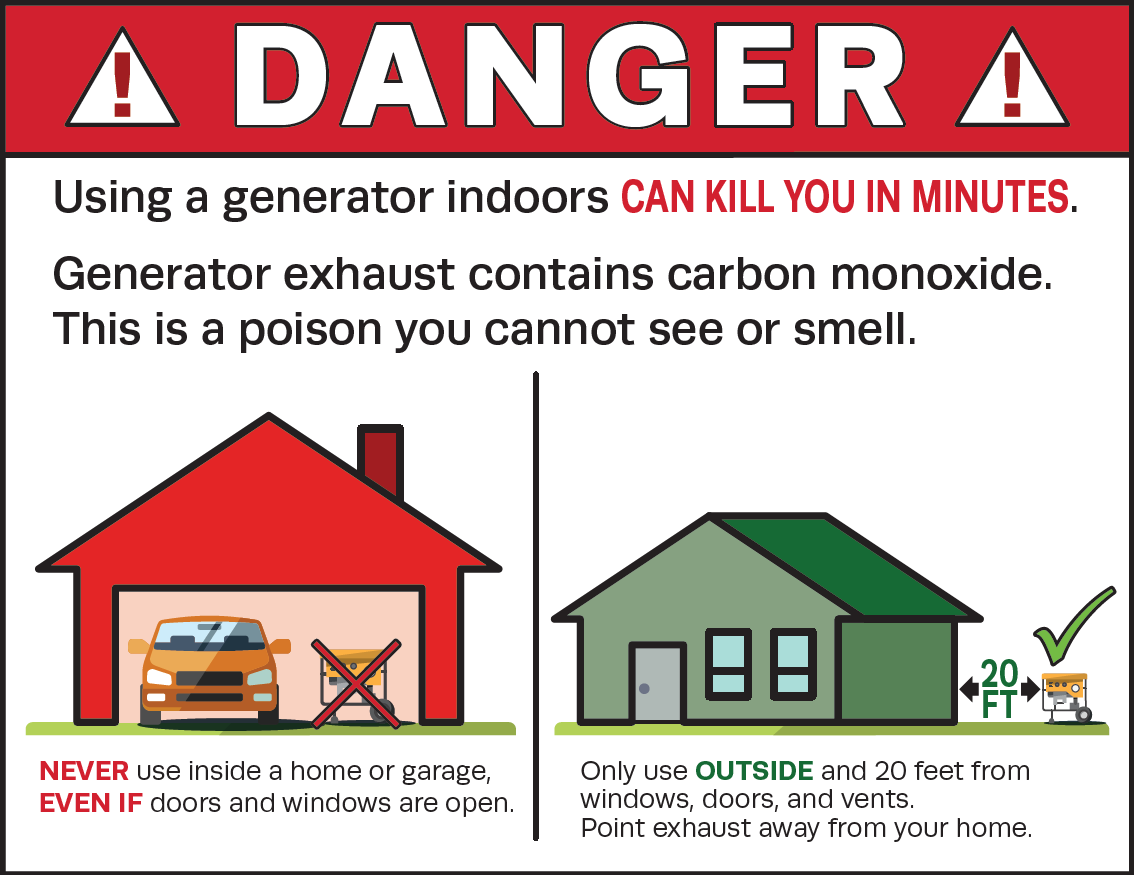
Generators are commonly used as a backup power source during a prolonged power outage, but they can also be dangerous – even deadly – if not used correctly. The Coastal Health District is reminding all residents to ONLY use generators outdoors, at least 20 feet away from doors and windows, directing the generator’s exhaust away from the home, and ALWAYS have working carbon monoxide detectors in the home.

Portable back-up generators produce the poison gas carbon monoxide (CO). CO is an odorless, colorless gas that kills without warning. It claims the lives of hundreds of people every year and makes thousands more ill.

Follow these steps to keep your family safe.

Portable Generators:

  • Never use a generator inside your home or garage, even if doors and windows are open.
  • Only use generators outside, more than 20 feet away from your home, doors, and windows.

Carbon Monoxide Detectors:

  • Install battery-operated or battery back-up CO detectors near every sleeping area in your home.
  • Check CO detectors regularly to be sure they are functioning properly.

The most common symptoms of CO poisoning are headache, dizziness, sleepiness, upset stomach, vomiting, chest pain, and confusion. CO symptoms are often described as “flu-like.”

If you or someone you’re with has symptoms of carbon monoxide poisoning, get into fresh air immediately and call 911 for emergency medical help.

There is a risk of long-term, permanent heart and brain damage even if a person survives carbon monoxide poisoning, which is why prevention is the most important step.

Health and Safety After the Storm

Coastal Health District Operational Status

Due to the potential for severe weather associated with Hurricane Milton, all Camden and Glynn County clinics and offices will be closed on Thursday, October 10. Both counties are expected to reopen on Friday, October 11 at the regularly scheduled times.


Boil Water Advisories

Various private water service companies have issued boil water advisories for several communities across the state, including customers in the Coastal Health District.

Click here for the latest information about known boil water advisories for our area.


Power Outages

Food Safety After a Power Outage

Once power is off, the refrigerator keeps food at safely cold temperatures for 4 hours. A full freezer will keep the temperature for approximately 48 hours (24 hours if it is half full) if the door remains closed.

If your power is off longer, your food is not safe to eat and should be discarded.

For more information on food safety after a storm, please visit Food and Water Safety During Power Outages and Floods | FDA and Keep Food Safe After a Disaster or Emergency | CDC.


Guidance for Restaurants After a Power Outage

If you own or operate a food service establishment and your facility experienced flooding or an extended power outage, you must close the facility and contact your local Environmental Health office prior to reopening.


Prevent Carbon Monoxide Poisoning

Never use a generator inside your home or garage, even if doors and windows are open. Only use generators outside, more than 20 feet away from your home, doors and windows.

Install battery-operated or battery backup carbon monoxide detectors near every sleeping area in your home.

Click here for more generator safety information from FEMA.


Flooding

Please Keep Kids Out of Floodwater

Keep in mind that floodwater often carries germs. If you touch it, be sure to wash your hands with soap and water. If you don’t have soap or water, use alcohol-based wipes or sanitizer.

Do not allow children to play in any free-flowing, run-off, or floodwater. This water can be contaminated with bacteria or chemicals. Floodwater often carries organisms that can cause infections if they get into cuts or scrapes.

Floodwater can also displace insects and reptiles which can be dangerous to people.


Is Your Tetanus Vaccination Up to Date?

If you’re cleaning up after floodwater or assisting with the recovery, it’s important to be up-to-date on your tetanus vaccine. Tetanus bacteria is found naturally in soil. If you wade through flood water, you could encounter sharp objects and sustain an injury that allows the tetanus bacteria to enter your body. Although tetanus infection is rare, it can be very serious or even fatal.

The best way to prevent infection is to be vaccinated prior to exposure, which is why all adults should receive tetanus booster shots every 10 years. However, tetanus vaccination is still effective if given within 48 hours after an injury.

Avoid contact with flood waters if you have an open wound. Keep open wounds as clean as possible by washing well with soap and clean water and covering with a waterproof bandage to reduce chance of infection.

You may need a tetanus vaccine if:

  • It has been more than 10 years since your last tetanus vaccination.
  • You have a puncture wound and it has been more than 5 years since your last tetanus vaccination.
  • You have a wound that has come in contact with floodwater and it has been more than 5 years since your last tetanus vaccination.

If you’re not sure if you need a tetanus vaccine, contact your local county health department or your regular healthcare provider.

The cost of tetanus vaccination is covered by most health insurance plans. If you do not have insurance coverage for this vaccine, no-cost options may be available at the health departments of the Coastal Health District.


Emergency Wound Care After a Disaster

Flood waters and standing waters pose various risks, including infectious diseases, chemical hazards and injuries. Prompt first aid can help heal small wounds and prevent infection.

Click here for information about emergency wound care after a disaster. [PDF, 344.62 KB]


Decontaminating Private Wells After Flooding

The Coastal Health District urges private well owners to take precautions and disinfect any well that flooded during recent severe weather.

When a well is flooded, the water can become contaminated with bacteria that could cause waterborne illness. Disinfection of a flooded private well cannot begin until the water covering the affected well has receded.

Click here for steps to decontaminate your private well.


Floodwater and Mosquitoes

Standing water can bring mosquitoes that carry disease. To avoid mosquito bites when outdoors, use insect repellent with DEET or Picaridin, IR3535, or Oil of Lemon Eucalyptus. Follow label directions.

Wear long sleeves, pants and socks when you’re outside.

Be sure to drain water from any containers in your yard to eliminate breeding locations for mosquitoes and prevent the spread of illness. Tip out standing water in flowerpots, planters, children’s toys, wading pools and buckets.


Mold Cleanup After a Flood

Mold will grow where there is moisture, so if your home flooded, you may begin to find mold in your house. The Centers for Disease Control recommends that you clean up and dry out your home fully and quickly (within 24–48 hours) after a flood to reduce the growth of mold. Remove or replace carpets and upholstery that have been soaked and cannot be dried right away.

If you see or smell mold, you should remove it. Click here for more detailed information about mold removal from the CDC.

All Health Department Locations Resume Normal Operations as of October 3

As of October 3, all clinics and offices in the Coastal Health District have resumed normal operations.

However, phone service may be disrupted at the Long County Health Department. We apologize for the inconvenience.

Click here for important health reminders associated with a prolonged power outage, floodwater, and other post-storm concerns.

Camden County Health Department Offers Cancer Screening Event for Women on October 17

The Camden County Health Department will offer cancer screenings and no-cost mammograms on October 17th at the clinic at 905 Dilworth Street in St. Marys. Appointments are limited and can be scheduled by calling the health department at 912-882-8515.

Clinical breast exams and cervical cancer screenings will be offered inside the health department, and a mobile mammogram unit will be stationed in the health department’s parking lot from 8:30 a.m. – 2 p.m. All services, including mammograms, are free for qualifying women aged 40 and older without health insurance. Women with health insurance are also welcome to schedule an appointment, and health insurance will be billed for the services.

“When breast and cervical cancer are found early, treatment can lead to a cure,” said Melissa Perkins, nurse manager of the Camden County Health Department. “But screening is the first step, which is why we want all women in Camden County to have access to these lifesaving services.”

Breast cancer is the most common cancer in woman after skin cancer. It is estimated about one in eight women in the United States will develop breast cancer over the course of her lifetime. Mammograms are the best way to detect breast cancer early. The earlier breast cancer is detected, the easier it is to treat.

Early detection is also key for cervical cancer. In early stages, cervical cancer may not cause noticeable signs or symptoms. But cervical cancer is highly treatable when found early through screenings.

For more information about the Camden County Health Department’s Breast and Cervical Cancer Program, or to schedule an appointment for the event, call the health department at 912-882-8515.

Raccoon Tests Positive for Rabies in Brunswick

The Glynn County Health Department is alerting residents that a raccoon has tested positive for rabies in Brunswick. On September 8, the raccoon entered a residential backyard in a neighborhood near the Glynn Isles Shopping Center and confronted a family dog. Fortunately, the dog is current on its rabies vaccination and was not seriously injured. No humans were exposed to the rabid raccoon.

This is an important reminder to avoid contact with wild animals and ensure your pets get regular rabies shots.

Several species of wild animals in coastal Georgia – including raccoons, foxes, and bats – can carry rabies. Feral cats and dogs can carry rabies as well. Rabies is a deadly virus that is primarily spread by infected animals.

The Glynn County Health Department’s Environmental Health office has these tips to protect you and your family from rabies:

  • Avoid contact with animals you don’t know.
  • Make sure your pets receive the proper immunizations. Dogs and cats should get rabies vaccines after 12 weeks of age, followed by a booster shot within one year and vaccination every 1-3 years depending on veterinary recommendation and vaccine used.
  • Do not handle, feed, or unintentionally attract wild animals with open garbage cans or by leaving pet food out at night.
  • Never adopt wild animals or bring them into your home. Do not try to nurse sick animals to health. Call animal control or a properly licensed animal rescue agency for assistance.
  • Teach children to never handle unfamiliar animals, wild or domestic, even if they appear friendly. “Love your own, leave other animals alone” is a good principle for children to learn.

Symptoms of rabies in animals include a change in behavior, biting, aggression, showing no fear of natural enemies (such as humans), foaming at the mouth, and paralysis. If an animal ever bites you, seek medical care immediately and contact Glynn County Animal Control at 912-554-7500 and the Glynn County Health Department Environmental Health office at 912-279-2940.

Boil Water Advisory Issued for Argyle Village

Chatham County, Ga. – Coastal Water Utilities will turn water back on in Argyle Village on Wednesday night, August 28, and a boil water advisory has been issued. The water in this part of Chatham County was turned off earlier this month due to flooding from Tropical Strom Debby.

Residents may notice discoloration in their tap water; however, the water may be contaminated even if you do not see discoloration. To protect households from a potential health hazard, residents are advised to either use bottled water or boil all tap water prior to use for drinking, cooking, making ice, brushing teeth, or preparing baby food.

To properly boil water:

  • Fill a pot with water.
  • Heat the water until bubbles come from the bottom of the pot to the top.
  • Once the water reaches a rolling boil, let it boil for at least 1 minute.
  • Turn off the heat source and let the water cool.
  • Pour the water into a clean container with a cover for storage.

Residents should continue to boil their water until they are notified by public health or their drinking water utility that the water system has been restored to full operation and the water is safe to drink.

For more information on how to properly and safely perform water-related daily tasks during a boil water advisory, please visit bit.ly/CDC-BoilWaterAdvisory.

Chatham County Health Department Hosts Community Baby Shower August 30

The Chatham County Health Department welcomes expecting moms and the families and caregivers of young children to a Community Baby Shower on Friday, August 30th. The event will feature giveaways like free diapers and other infant care items, along with raffle prizes and light refreshments.

“In addition to all the free items, we’ll also introduce families to organizations that can provide ongoing support,” said Katee Sykes, Public Health Educator with the Chatham County Health Department. “This baby shower is a way to bring a variety of local resources under one roof so families can get connected.”

The baby shower will be held on Friday, August 30, 2024, at the health department’s midtown clinic at 1602 Drayton Street from 10 a.m. to 12 p.m. The event is open to pregnant moms and caregivers of children up to age 5. No RSVP is required.

At the community baby shower, there will be information on safe infant sleep practices, breastfeeding support, nutrition programs, car seat safety, and more. Parents can also sign up for safe infant sleep classes where they can receive a free pack-n-play.

The event is sponsored by the Chatham County Health Department, the Women, Infants, and Children (WIC) Program, Babies Can’t Wait, Coastal Children’s Advocacy Center, Grow Initiative GA, Savannah Care Center, Over the Moon Diaper Bank, CORE, Safe Kids Savannah, Healthy Savannah, and the Coastal Coalition for Children.

Mosquito Pools Test Positive for West Nile Virus in Glynn County

The following public service announcement was issued by the Glynn County government on August 22, 2024.

Glynn County Public Works was notified on the evening of Thursday, August 22 by Vector Disease Control International (VDCI), the Mosquito Control contractor, of positive mosquito pool test results for West Nile virus in two neighborhoods in Glynn County.

The samples were collected at North Harrington (St. Simons Island) and Selden Park (Brunswick) by VDCI and tested by Research Associates Laboratory.

Following the positive test results, VDCI began their Expanded Transmission Protocols which includes the following:

  1. The locations described will serve as the area where inspection, sampling, and control efforts will be conducted.
  2. VDCI personnel will be assigned to inspect these areas. The purpose of the search will be to locate vector mosquito (Culex quinquefasciatus and Culex nigripalpus) breeding sites. Once located, VDCI will treat the larvae.
  3. Gravid Traps will be used to sample the adult mosquito population within the area. The number of mosquitoes collected will serve to quantify the adult population and provide specimens for testing.
  4. During the evening hours, truck mounted sprayers will be assigned to spray this area to reduce the vector population below the critical level. Three consecutive spray applications will be made. The first application was conducted on the evening of August 21st, and a second application was conducted in the early hours of August 22nd. One more application will be done on the evening of the 22nd, weather permitting.
  5. The effectiveness of this operation will be determined using Gravid Traps that will be set up following the spray efforts. The number of mosquitoes collected will serve to quantify the adult population and provide specimens to be submitted for testing in our laboratory. Elevated abatement operations will continue until vector mosquito numbers fall below established threshold levels.

The positive tests were discovered in mosquitoes; there are not any reported human cases in Glynn County at this time. Glynn County has notified the Georgia Coastal Health District of these positive tests. Public Works, along with VDCI, will continue to remain vigilant monitoring ongoing test results. We will also ensure additional information, and any additional positive tests are quickly shared with the public.

Human Case of West Nile Virus Confirmed in Chatham County

A person living in Chatham County has been diagnosed with West Nile Virus (WNV), a potentially serious illness transmitted to humans through the bite of an infected mosquito. The individual was symptomatic prior to recent severe weather events, so this case is not a result of mosquito activity related to flooding. This is the first human case in the Coastal Health District in 2024.

According to the Centers for Disease Control and Prevention (CDC), 80% of people who get WNV won’t have any symptoms. Those who do become sick typically develop a fever, headache, body aches, joint pain, vomiting, diarrhea, or rash. However, about 1 in 150 will develop severe symptoms affecting the central nervous system, which could be fatal.

There is no vaccine to prevent WNV, and no treatment other than supportive care for the symptoms. The Coastal Health District is urging everyone to take precautions to avoid mosquito bites.

Mosquitoes that carry WNV are more likely to bite during the evening, night, and early morning. Wearing insect repellent containing the chemical DEET will help keep mosquitoes away. Eliminate standing water around the home and yard to keep mosquitoes from breeding.

Tip containers such as children’s toys, flowerpots, and planters after every rain or at least once a week, and toss out anything that holds water, such as old tires or cans. Also, clean out gutters, remove piles of leaves, and keep vegetation cut low to reduce landing sites for adult mosquitoes.

The Five D’s of mosquito bite prevention can also help prevent mosquito bites and breeding:

  • Dusk/Dawn: Avoid dusk and dawn activities during the summer when mosquitoes are most active.
  • Dress: Wear loose-fitting, long-sleeved shirts and pants to reduce the amount of exposed skin.
  • DEET : Cover exposed skin with an insect repellent containing DEET, which is the most effective repellent against mosquito bites.
  • Drain: Empty any containers holding standing water – buckets, barrels, flowerpots, tarps – because they are breeding grounds for virus-carrying mosquitoes.
  • Doors: Make sure doors and windows are in good repair and fit tightly, and fix torn or damaged screens to keep mosquitoes out of the house.