The Coastal Health District of Georgia serves the counties of Bryan, Camden, Chatham, Effingham, Glynn, Liberty, Long & McIntosh

View Upcoming Events

News & Events


McIntosh County Veterinarian Receives Prestigious State Public Health Award

Doctor of Veterinary Medicine at Pine Harbor Animal Hospital, Lara Bailey, is the recipient of the Al Dohany Award for Community Service by the Georgia Public Health Association. Bailey was nominated for the award by McIntosh County Health Department Environmental Health Manager, Eric Rumer.

Established in 1999, the Al Dohany Award for Community Service honors public health leader, Al Dohany, who was highly respected among his peers and who made great contributions to the promotion of public health through his work with family connection and community groups at the local level. This award is presented annually to an individual who has made a positive contribution to community health through collaboration with the community and its leaders. This contribution involves encouraging a collaborative approach with existing community entities that is essential to realizing the long-term health outcomes of a community while recognizing the importance of communities and celebrating the diversity that makes a community vital.

Below is an excerpt from Dr. Bailey’s nomination:

Since 2003, Dr. Bailey has vaccinated more than 2,600 dogs and cats for rabies, a viral disease that is spread through the bite and sometimes scratches of infected animals. Rabies is deadly for both animals and humans. Although most pet owners get their pets vaccinated against rabies, some may not have the resources to pay for such vaccinations, especially in more rural parts of the state such as McIntosh County. That’s where Dr. Bailey holds her rabies vaccination clinics and provides – free of charge –rabies vaccinations for pets during Saturday clinics. She also amputates suspected rabid animals so that they can be processed to determine whether or not they have rabies. Testing suspected rabid animals helps us to alert and caution the public if there is an issue with rabies. Dr. Bailey also performs this service for the McIntosh County Health Department at no charge.

While Dr. Bailey does not charge for rabies vaccinations during the public clinics, she does take donations from those who can afford to pitch in. Over the years, she has collected $13,000 and donated it to local animal rescue programs such as the Humane Animal Resource Team of McIntosh County and McIntosh County Animal Control.

“Dr. Bailey has consistently been an invaluable asset to McIntosh County Animal Control and Animal Services,” said Marianna Hagan, Director of McIntosh County Animal Services. “She is a true humanitarian and animal lover. She has made a huge impact on McIntosh County’s human and animal population. McIntosh County is a better community because of her generous and selfless work.”

Every animal that is vaccinated against rabies is one less animal that is a threat to spread the deadly disease to residents in McIntosh County. Dr. Bailey never asks for recognition; doesn’t want anything in return for giving up her Saturdays, her vaccine, needles and other supplies; and would likely protest if she knew that this nomination was being submitted. But the truth is that even though “technically” Dr. Bailey is not a part of our public health family, she is very much a part of what we do and what we stand for when it comes to preventing illness and disease. Her efforts have had a tremendous impact on our community. Everybody knows “Doc Bailey” and appreciates not only the compassion she has for our animals but the dedication she shows to the improving the health of our small coastal community.

[JPG, 396.35 KB] From L to R: Dr. Selina Smith, GPHA President at the time the Award was presented; Dr. Lara Bailey; Eric Rumer, McIntosh County Environmental Health Manager; Dr. Lawton Davis, Coastal Health District Health Director.
 

School Health Summit Planned for May 31; School Officials Encouraged to Attend

 The Coastal Health District Chronic Disease Prevention Program will host a School Health Summit from 9 a.m. to 3 p.m. on Wednesday, May 31, at the Liberty County Schools Performing Arts Center located at 2140 E. Oglethorpe Hwy. in Hinesville.

The free one-day training is being offered to school administrators, teachers, nutrition directors, and principals to develop and execute nutrition and physical activity policies and to offer resources to help prevent the incidence of chronic disease in children.

“Obesity continues to be a real problem in children of all ages and unhealthy habits developed early translate into unhealthy habits later in life,” said Coastal Health District Chronic Disease Prevention Director, Cristina Gibson. “The Summit is a way for school leaders to learn about tools that can help promote better health in students and how to go about using those tools.”

Those interested in attending the training can register by calling Gibson at 912-644-5818 or by emailing cristina.gibson@dph.ga.gov.

The 2017 School Health Summit is sponsored by the Georgia Department of Public Health, healthMpowers, Georgia SHAPE, and the Coastal Health District.

Liberty County Health Department Offers Late Hours Every Thursday

The Liberty County Health Department is now open until 7 p.m. every Thursday. Health department officials hope that staying open late one day a week will help make it easier for people with busy schedules to get the public health services they need. The health department opens every day at 8 a.m.

For more information on Liberty County Health Department services, click HERE or call 912-876-2173.

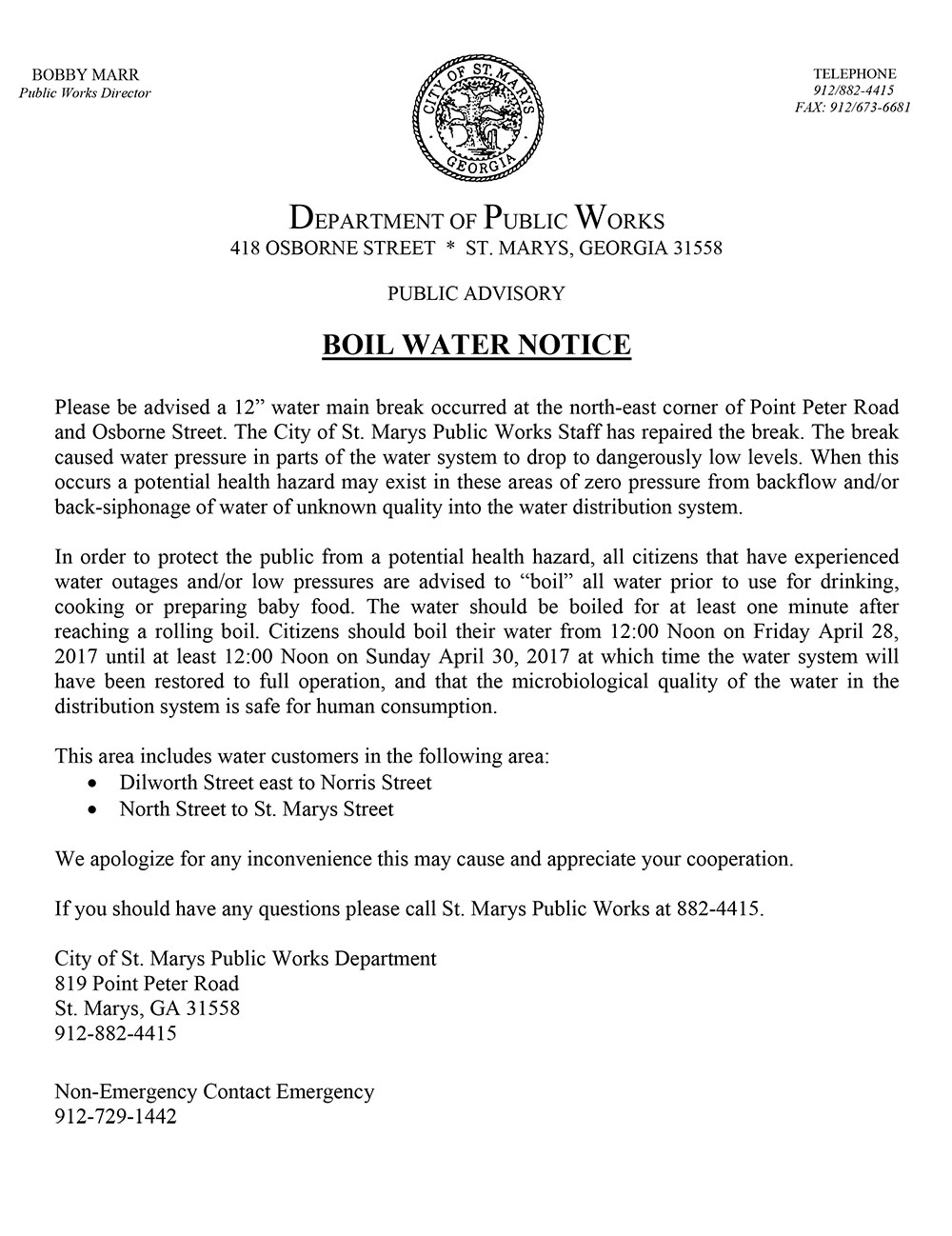
Boil Water Advisory for Part of St. Marys

[JPG, 219.85 KB]

Health Officials Encourage Wildfire Smoke Precautions

Smoke from wildfires burning in South Georgia is making its way into some coastal counties and as a result, Coastal Health District officials are encouraging residents to take precautions. For healthy people, smoke from wildfires that contains particles from burning trees and shrubs can irritate your eyes and respiratory system. However, smoke can worsen chronic health problems such as lung disease, asthma, and allergies. People with existing respiratory conditions, young children and elderly people are especially susceptible to health effects from this smoke.

It’s important to limit your exposure to the smoke and take precautions to protect your health and the health of your family.

  • Stay inside and away from the smoke.
  • Keep indoor air as clean as possible. Keep windows and doors closed. Run an air conditioner if you have one, but keep the fresh-air intake closed and the filter clean to prevent outdoor smoke from getting inside.
  • Avoid activities that increase indoor pollution. Vacuuming stirs up particles already inside your home, contributing to indoor pollution. Smoking also puts even more pollution into the air.
  • Keep airways moist by drinking plenty of water.
  • Do not rely on dust masks for protection. Paper “comfort” or “dust” masks commonly found at hardware stores are designed to trap large particles, such as sawdust. These masks will not protect your lungs from the small particles found in wildfire smoke.
  • Follow the advice of your doctor or other health care provider about medicines and about your respiratory management plan if you have asthma or another lung disease.

Seek medical attention if you are having difficulty breathing or if your symptoms worsen.

CDC: Georgia’s Early Childhood Vaccination Rates Among Nation’s Highest

ATLANTA – Georgia is leading the country with above average early childhood vaccinations with 75.6 percent of children 19-35 months old protected, compared to national averages of 72.2 percent for the 7-vaccine series. However, health officials here say statewide immunization statistics show that more can be done to stop vaccine-preventable disease outbreaks in Georgia.

As recent disease outbreaks demonstrate, immunizing infants and young children remains a critical component of protecting vulnerable infants against potentially deadly diseases.

So far in 2017, the Centers for Disease Control and Prevention has reported more than 1,200 cases of mumps across the U.S. Other recent outbreaks include a pertussis outbreak in 2012 that infected more than 48,000 people, and a measles outbreak that started at Disneyland and impacted 188 people in 2015. Each of these diseases is preventable by vaccines.

During National Infant Immunization Week, April 22-29, the Georgia Department of Public Health and the Georgia Chapter of the American Academy of Pediatrics urge parents to check with their pediatrician to ensure their child is up-to-date on vaccinations.

“Immunizations are the best way to protect infants and children from childhood diseases, like whooping cough and measles that can be life-threatening at young ages,” said Brenda Fitzgerald, M.D., commissioner of the Georgia Department of Public Health. “It is critical for parents to talk to their child’s doctor to ensure they are up-to-date on immunizations, because no child should have to suffer a vaccine-preventable illness.”

The American Academy of Pediatrics encourages parents to become aware of vaccination rates in their community. The AAP offers an interactive map (https://immunizations.aap.org/) that highlights vaccination rates in each state for recommended childhood vaccines, including vaccines that protect against measles, mumps, pertussis, polio and influenza. It also offers state-by-state information about community immunity thresholds, which is the level at which disease outbreaks are prevented.

“High immunization rates in the community provide a buffer of protection that makes it harder for diseases to break through,” said Georgia Chapter AAP President Ben Spitalnick, M.D., Savannah. “Vaccines protect children from diseases, and they also keep communities healthy by protecting infants who are too young to be vaccinated, or those who have compromised immune systems.”

The Georgia Department of Public Health and the Georgia Chapter of the American Academy of Pediatrics encourage everyone – in observance of National Infant Immunization Week – to protect the little ones who cannot yet protect themselves. Please contact your pediatrician or your local public health department to ensure your infant is up-to-date on vaccinations. For more information contact the Georgia Department of Public Health http://dph.georgia.gov/immunization-section or http://www.gaaap.org/immunizations/.


Five Important Reasons to Vaccinate Your Child

You want to do what is best for your children. You know about the importance of car seats, baby gates and other ways to keep them safe. But, did you know that one of the best ways to protect your children is to make sure they have all of their vaccinations?

Immunizations can save your child’s life. Because of advances in medical science, your child can be protected against more diseases than ever before. Some diseases that once injured or killed thousands of children are no longer common in the U.S. – primarily due to safe and effective vaccines. Polio is one example of the great impact that vaccines have had in the United States. Polio was once America’s most feared disease, causing death and paralysis across the country, but thanks to vaccination the United States has been polio-free since 1979. Due to continual worldwide vaccination efforts, Afghanistan and Pakistan are the only two countries in the world that have never interrupted the spread of wild poliovirus, and only small pockets of polio still exist in these countries.  [JPG, 33.60 KB]

Vaccination is very safe and effective. Vaccines are only given to children after careful review by scientists, doctors, and healthcare professionals. Vaccine side effects are almost always mild such as redness or swelling at the site of the shot, but this is minimal compared to the pain, discomfort, and risk of injury and death from the diseases these vaccines prevent. Serious side effects following vaccination, such as severe allergic reaction, are very rare. The disease-prevention benefits of getting vaccinated are much greater than the possible side effects for almost all children.

Immunization protects others you care about. Children in the U.S. still get vaccine-preventable diseases. In fact, we have seen resurgences of measles and whooping cough (pertussis) over the past few years. For example, in 2014, there were 667 cases of measles in 27 states, the greatest number of cases since measles was eliminated in 2000. The following year saw measles cases as well. During 2015, 147 people were part of a large, multi-state measles outbreak linked to an amusement park in California. Almost one in 10 people who became sick with measles in this outbreak were babies too young to be vaccinated. While some babies are too young to be protected by vaccination, others may not be able to receive certain vaccinations due to severe allergies, weakened immune systems from conditions like leukemia, or other reasons. To help keep them safe, it is important that you and your children who are able to get vaccinated are fully immunized. This not only protects your family, but also helps prevent the spread of these diseases to your friends and loved ones.

Immunizations can save your family time and money. A child with a vaccine-preventable disease can be denied attendance at schools or daycare facilities. Some vaccine-preventable diseases can result in prolonged disabilities and can take a financial toll because of lost time at work, medical bills or long-term disability care. In contrast, getting vaccinated against these diseases is a good investment and usually covered by insurance. The Vaccines for Children program is a federally funded program that provides vaccines at no cost to children from low-income families. To find out more, visit the CDC VFC site, or ask your child’s health care professional.

[JPG, 95.57 KB]Immunization protects future generations. Vaccines have reduced and, in some cases, eliminated many diseases that killed or severely disabled people just a few generations ago. For example, smallpox vaccination eradicated that disease worldwide. Your children don’t have to get smallpox shots anymore because the disease no longer exists anywhere in the world. By vaccinating children against rubella (German measles), we have dramatically reduced the risk that pregnant women will pass this virus on to their fetus or newborn, and birth defects associated with that virus are seen in only rare cases in the United States when a pregnant woman who was never vaccinated against rubella is exposed to someone who contracted rubella in another country. If we continue vaccinating now, and vaccinating completely, parents in the future may be able to trust that some diseases of today will no longer be around to harm their children in the future.

For more information about the importance of infant immunization, visit CDC’s vaccine website for parents.

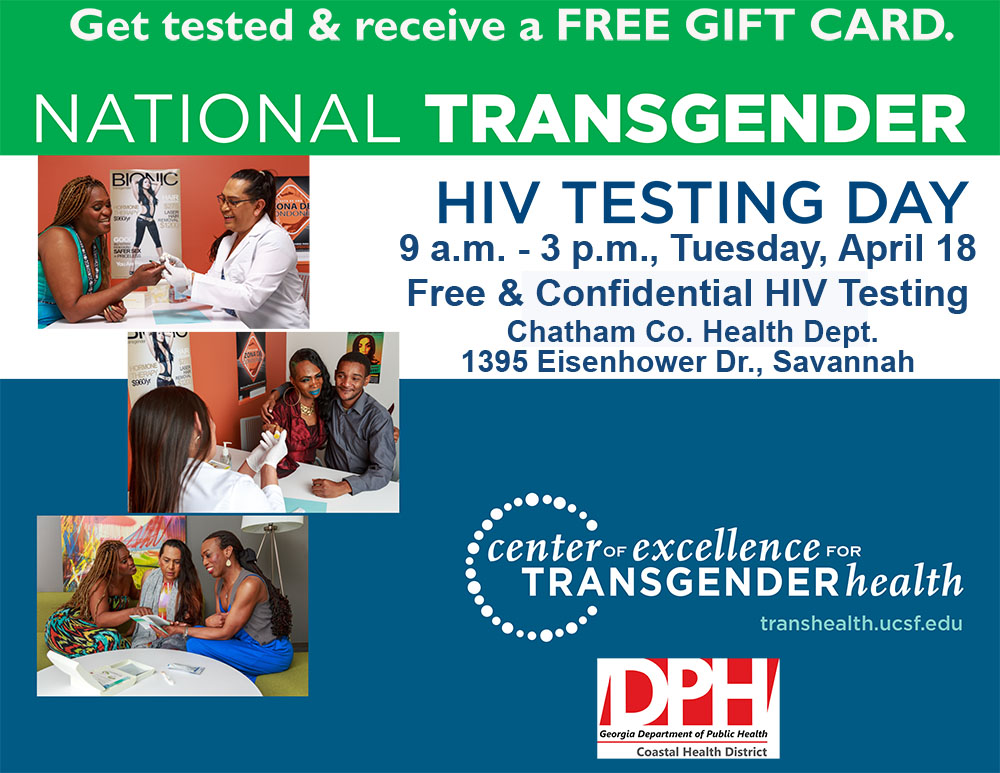
National Transgender HIV Testing Day Event Scheduled for April 18

The Coastal Health District Prevention Program will offer free and confidential HIV testing event in observance of National Transgender HIV Testing Day from
9 a.m. to 3 p.m. on Tuesday, April 18, at the Chatham County Health Department located at 1395 Eisenhower Drive in Savannah.

National Transgender HIV Testing Day (NTHTD) is a day to recognize the importance of routine HIV testing, status awareness, and continued focus on HIV prevention and treatment efforts among transgender and gender non-binary people. In observance of this day, the Coastal Health District will offer free, rapid confidential testing. No appointment is necessary. Anyone who gets tested at the event will receive a gift card.

[JPG, 225.17 KB]

Syphilis Strikes Back

Nearly 20 million new sexually transmitted infections occur in the United States every year costing the American healthcare system nearly $16 billion in direct medical costs alone, says a report by the U.S. Centers for Disease Control and Prevention (CDC). America’s youth shoulder a substantial burden of these infections. CDC estimates that half of all new STDs in the country occur among young men and women aged 15 to 24.

The high incidence of STIs in the general population suggests that many Americans are at risk of exposure to STDs, underscoring the need for prevention. Despite this news, there are effective ways to prevent, diagnose, and treat STDs. STD screening and early diagnoses are essential in preventing transmission and the long term health consequences of STDs.

Abstaining from sex, reducing the number of sexual partners, and consistently and correctly using condoms are all effective prevention strategies. Safe, effective vaccines are also available to prevent hepatitis B and some types of the human papillomavirus (HPV) that cause disease and cancer. And for all individuals who are sexually active – particularly young people – STI screening and prompt treatment (if infected) are critical to protect a person’s health and prevent transmission to others.

Syphilis is a sexually transmitted disease (STD) that can have very serious complications when left untreated, but it is simple to cure with the right treatment. It’s divided into three stages with primary and secondary (P&S) being the most infectious stages of the disease. Without appropriate treatment, long-term infection can result in severe medical problems affecting the heart, brain, and other organs of the body. Having syphilis also makes it easier to get HIV.

At one point, syphilis was almost gone. Now, it’s back with a vengeance. According to the CDC, the number and rate of cases is higher than it’s been in more than 20 years. If syphilis isn’t treated, it can cause severe health problems affecting the brain, eyes, heart, and other organs.  Syphilis can be cured with the right treatment. Find out more about preventing and treating syphilis HERE [PDF].
Syphilis Strikes Back #STDMONTH17


The Lowdown on Preventing STDs

[JPG, 1.24 MB]


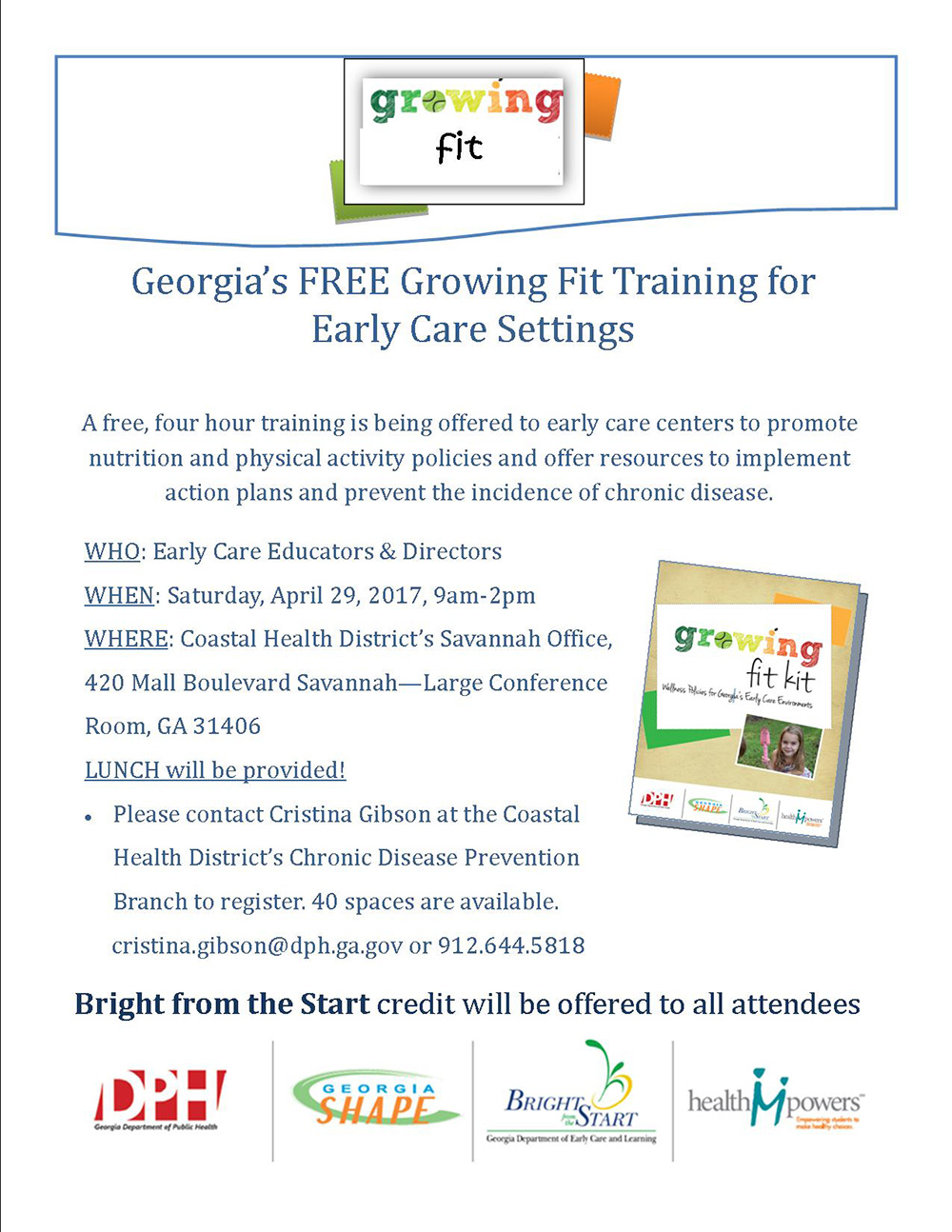
Free “Growing Fit” Training Offered for Early Care Centers

Physical activity and nutrition are essential for children to develop healthy lifestyles that will help reduce the risk of chronic disease later in life. To that end, the Georgia Department of Public Health, Georgia Shape, HealthMPowers, Inc. and Bright from the Start: Georgia Department of Early Care and Learning have developed Growing Fit Kit: Wellness Policies for Georgia’s Early Care Environment. A free training on the kit will be offered to staff from early care centers from 9 a.m. to 2 p.m. on Saturday, April 29, at the Coastal Health District office located at 420 Mall Blvd. in Savannah.

Training will center around a tool kit which provides a step-by-step process to guide early care educators in the development and/or improvement of nutrition and physical activity policies and practices.  It also contains an explanation of the importance of a wellness policy, a self-assessment tool to evaluate current policies and practices, success stories from other early care settings, healthy eating and physical activity resources, and a planning document with suggestions and examples for writing the policy.

This educational learning experience is a Bright from the Start: Georgia Department of Early Care and Learning approved CEU course allowing participants to earn required training units while strengthening their wellness policy efforts to create healthy environments for students to learn and teachers to work. This training also helps move centers toward achievement of Quality Rated standards set by the Department of Early Care and Learning.

To register for either training session, please contact Cristina Gibson at 912-644-5818 or email cristina.gibson@dph.ga.gov.

[JPG, 344.33 KB]